

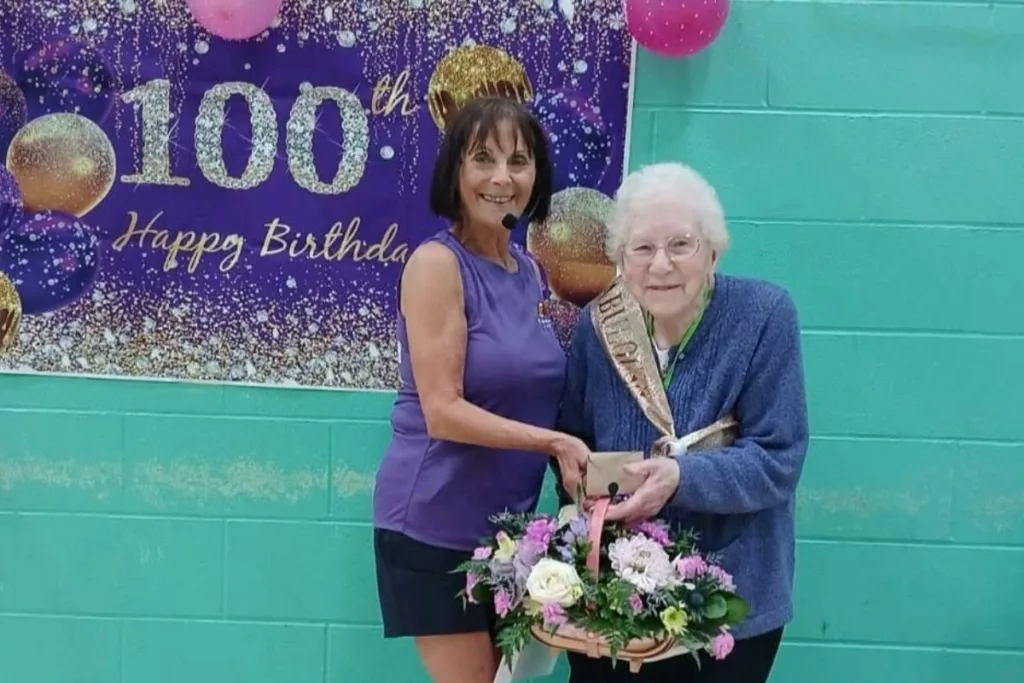
A 100-year-old woman from the Isle of Man has attributed her remarkable longevity to a lifetime of staying active, eating well and keeping alcohol intake low. Lilian Pike, who celebrated her centenary this week, continues to attend her weekly Stretch and Flex class at the Isle of Man’s National Sports Centre (NSC) – a commitment she has maintained for the past 20 years.
Ms Pike, who lives independently, said that beyond her exercise routine, decades of proper nutrition and moderation in drinking have kept her healthy. She also spoke of being deeply moved by the birthday messages she received, admitting she had never expected such a warm response. Among her happiest memories, she recalled time spent with her children, particularly family road trips in her Volkswagen Caravanette – the iconic VW Type 2 campervan that first appeared in the late 1940s and became a symbol of freedom and adventure.
Her instructor, Elizabeth Corran, who leads the Stretch and Flex class, described Ms Pike as a role model for the whole group. “She is full of energy with a positive outlook on life and everything she does – this just shows that no one is too old to exercise,” Ms Corran said. She also noted that Ms Pike’s continued independence is a testament to what regular exercise can offer. Ms Corran herself has a long history in fitness, having been a competitive race walker and now a key organiser of the Isle of Man’s Parish Walk event.
The science of strength training in later life
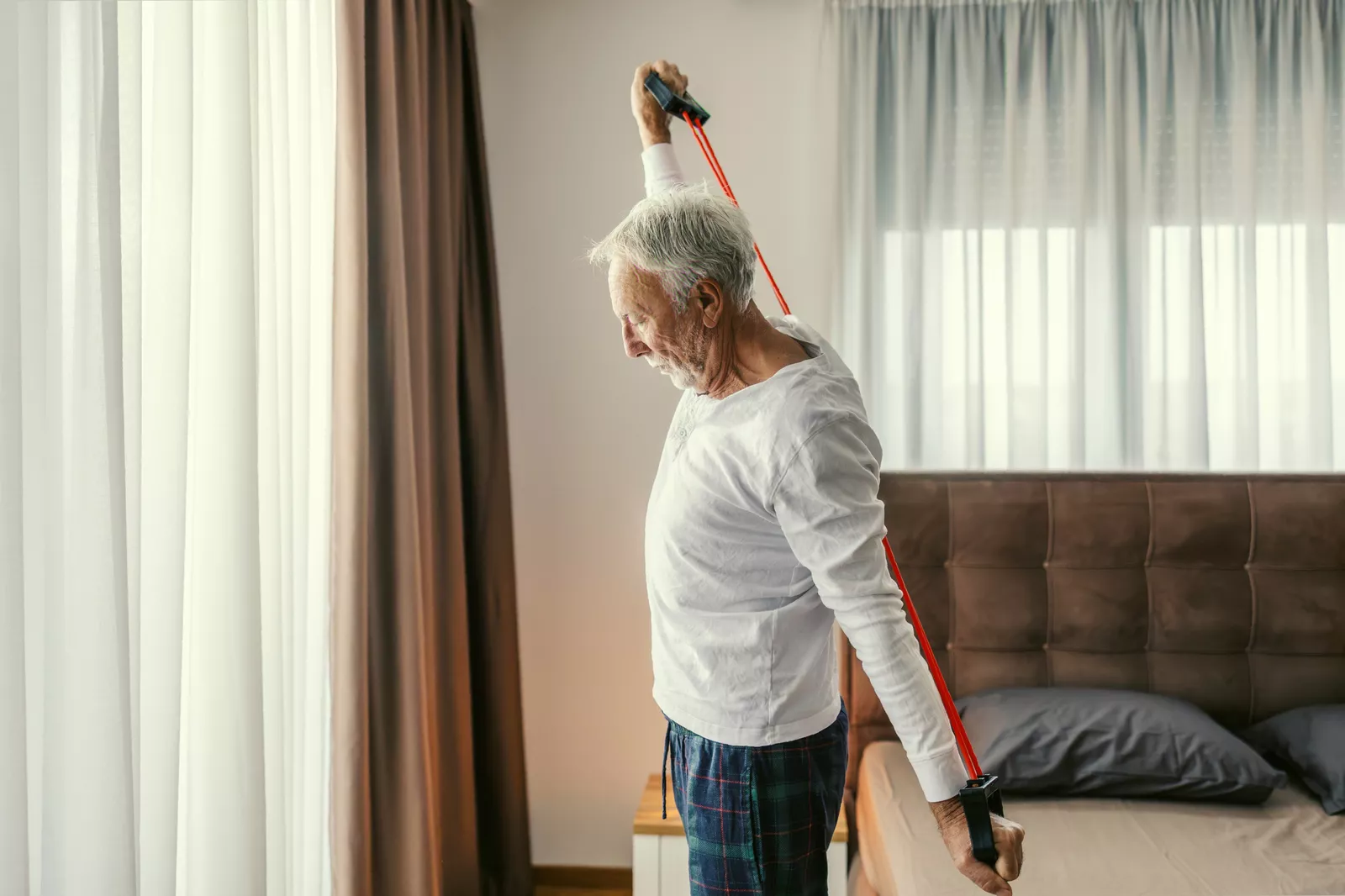
Ms Pike’s routine aligns closely with what medical experts consider the most effective form of exercise for older adults. Dr Mariam Zakhary, a clinical advisor at Ikon Recovery Centre and a physician double-board certified in Physical Medicine and Rehabilitation and Sports Medicine, told GB News that for people aged 60 and over, strength training should be the priority. Dr Zakhary, who also serves as Medical Director of Downtown Rehabilitation and Human Performance at the Icahn School of Medicine at Mount Sinai and treats conditions such as low back pain, chronic pain, and arthritis, highlighted five key movement patterns: squats, hip hinges, pushing movements, pulling movements and loaded carries.
According to Dr Zakhary, these exercises “engage multiple muscle groups and assist in preserving the necessary physical strength for performing daily functions, such as climbing stairs, standing up from a seated position, walking while carrying grocery bags and preventing falls”. She emphasised that maintaining muscle mass and strength significantly reduces disability, loss of independence and all-cause mortality. “It’s not about lifting heavy weights,” she explained. “It’s about being able to challenge your body consistently throughout your life using functional movement patterns to maintain your ability to perform daily tasks effectively.”
Research supports this approach. Studies indicate that adopting five key lifestyle practices – never smoking, maintaining a healthy Body Mass Index (BMI), regular physical activity, a healthy diet, and moderate alcohol consumption – can significantly prolong life. For example, adherence to these five factors could extend life expectancy at age 50 by over 14 years for women and 12 years for men compared to those who adopt none. Moderate alcohol intake is generally defined as 5–15 grams per day for women and 5–30 grams per day for men.
Centenarians often follow a pattern of consistent, low-level daily movement rather than intense, sporadic workouts – walking, gardening and everyday chores that help maintain stable blood sugar, lubricated joints and efficient circulation. Walking, in particular, is regarded as a foundational activity that improves cardiovascular health and preserves joint health without overloading the body. While centenarians may not have the muscular physiques of younger fitness enthusiasts, they maintain sufficient strength for daily tasks, which is a key predictor of lifespan. Strength training is recommended for building muscle mass in younger years and for maintenance later in life, while avoiding chronic overtraining and prioritising recovery to preserve hormonal and immune function.
The Stretch and Flex class Ms Pike attends at the NSC focuses on mobility, functional capacity, recovery and injury prevention. The NSC, operated by Manx Sport & Recreation, offers a variety of fitness classes and is committed to promoting accessible sports and physical activity for all ages. Ms Corran, a qualified instructor for these classes, praised Ms Pike’s consistency and energy, adding that her example proves age is no barrier to adopting an active lifestyle. For Lilian Pike, the formula is simple: keep moving, eat sensibly, drink in moderation – and never stop showing up.