

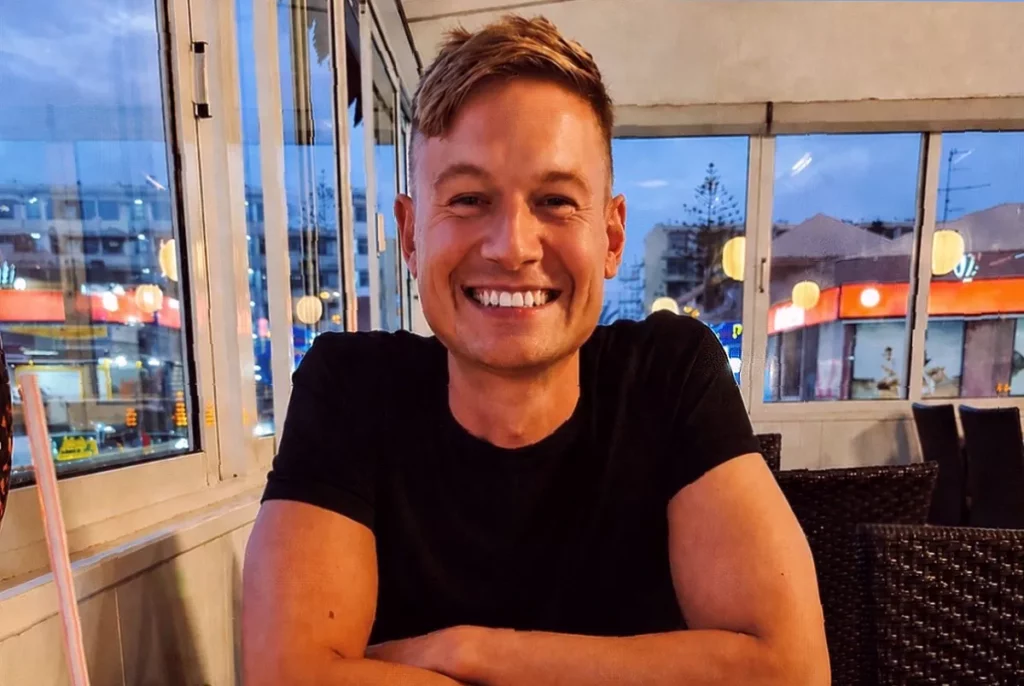
A Briton has died after taking part in a frog poison ritual in his London flat, prompting urgent warnings from medical and complementary medicine authorities about the unregulated and potentially lethal practice known as kambo.
Kristian Trend, a 40-year-old wellness coach and cancer survivor from Leicester, collapsed and died on 11 April at a building in Queen’s Road, Leicester, after consuming the dried skin secretions of the giant leaf frog (Phyllomedusa bicolor). The ritual, which originated among Amazonian tribes and has spread globally in recent decades, involves practitioners burning small superficial holes in a participant’s skin and rubbing the secretion — known as kambo — into the wounds. Trend’s mother, Angie, told reporters her son had said he was going to “cleanse himself” and described him as “very spiritual”. He had previously survived Burkitt lymphoma, a rare and aggressive cancer, after four months in hospital. “That’s the worst part,” she said. “He recovered from that and for this to happen is just awful. It was his birthday the week after and I’d bought all these presents.” Leicestershire Police have confirmed an investigation is ongoing, and a 41-year-old man was arrested on suspicion of administering poison in connection with Trend’s death. Toxicology tests are underway.
The ritual and its rising popularity
Kambo ceremonies — often held in group settings known as “kambo circles” — are marketed as a “detox” or “purge” intended to release physical toxins, emotional baggage, or negative energy. The dried secretion is harvested from the defensive skin of the Amazonian giant monkey tree frog (Phyllomedusa bicolor). Proponents claim it offers a range of benefits including physical and spiritual cleansing, treatment for various ailments, and even use as a “vaccine” that is “good for everything”. However, experts describe the term “detox” as one hijacked by entrepreneurs to sell bogus treatments. There is no scientific evidence to support any therapeutic benefit from kambo, according to multiple medical authorities, including the British Pharmacological Society (BPS) and Professor Penny Ward, a pharmaceutical expert. The body’s natural organs — the kidneys and liver — are responsible for detoxification, medical professionals emphasise.
Deadly risks and lack of regulation
The dangers associated with kambo are well documented and severe. The substance can induce intense physiological reactions including severe vomiting, diarrhoea, sweating, rapid heart rate (tachycardia), dizziness, fainting, abdominal pain, muscle weakness, and spasms. Life-threatening complications include seizures, liver failure, heart attacks, hyponatremia (dangerously low sodium levels caused by excessive water intake), oesophageal rupture, and death. In some cases, these severe reactions have been misinterpreted by participants as spiritual experiences. Kambo has been linked to multiple fatalities worldwide, including Natasha Lechner (Australia, 2019), Jarrad Antonovich (Australia, 2021), Marcela Alcazar Rodríguez (Mexico, 2024), a man in Italy (2018), a man in Brazil (2008), a woman in New South Wales (subject of a coronial investigation), a woman who suffered oesophageal rupture, tension pneumothorax and septic shock, and a woman who developed psychosis after frequent kambo rituals.
Despite these risks, kambo remains legal to buy in the UK and is not a licensed medicine. The Medicines and Healthcare Regulatory Agency (MHRA) does not regulate its use. Some legal analysts have suggested that kambo’s active peptides — dermorphin and deltorphin — could classify it as a psychoactive substance under the Psychoactive Substances Act 2016, but this has not been tested in UK courts. Internationally, the substance faces far stricter controls. Australia classifies kambo as a Schedule 10 poison, effectively banning its use; Brazil outlawed its sale and marketing in 2016; Chile prohibits the import of both the frog and its secretions; and the US embassy in Peru has formally advised citizens against using it.
Following Kristian Trend’s death, the British Complementary Medicine Association (BCMA) urged the public to use only qualified, registered, and insured practitioners for any form of alternative treatment. “You would not go to a doctor without checking they were registered, properly qualified and insured; the same follows for a complementary therapist,” it said. “These questions are very reasonable and should not cause any problems for the therapist to answer. If any of these questions cannot be answered to your satisfaction, consider moving on to another therapist.”
The British Pharmacological Society (BPS) also issued warnings, advising people to speak to licensed healthcare professionals before using any medicines. “Many licensed medicines come from natural sources, but they are carefully tested for safety, quality and effectiveness before being approved for use,” the BPS said. “Safe prescribing depends on this evidence, proper clinical oversight, and an understanding of possible risks, side effects and interactions with other medicines. This is especially important where a product or treatment has not been assessed or approved by the MHRA, as unlicensed treatments may be harmful, interfere with prescribed medicines, or delay people getting the care they need.”
Professor Roger Byard, a forensic pathologist, and Bryan Kuhn, a toxicology management specialist, have separately warned about the risks of alternative therapies involving unverified substances, with Kuhn stating there is no evidence to support therapeutic benefits for any medical condition from kambo.
Indigenous groups have additionally raised concerns about cultural appropriation, warning against the use of kambo by non-Indigenous practitioners who may lack proper understanding and permission. Kristian Trend, who was a well-known figure in wellness circles and had spoken openly about how his cancer diagnosis led him to spiritual and holistic practices, had launched a plant-based coffee alternative and shared health tips on social media. His mother, Angie, said: “I do hope this is banned and nobody has to go through this devastating pain, but it can’t and won’t be me who campaigns for it. I have no fight left. We are obviously heartbroken and realise going forward this is not going away anytime soon.”