

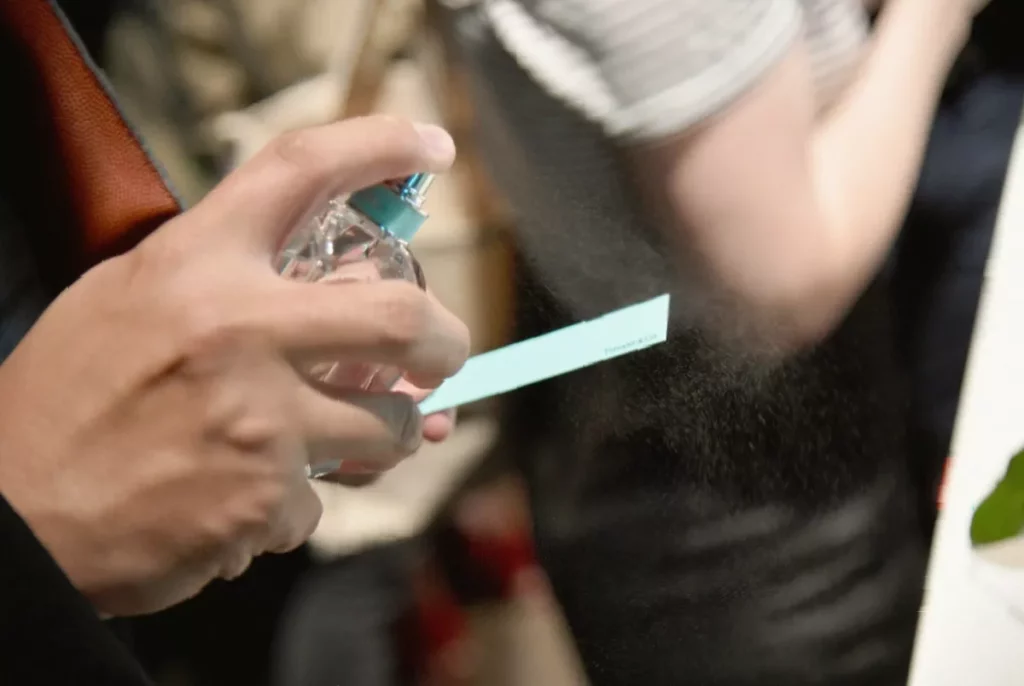
Some users of GLP-1 weight-loss drugs are discovering an unexpected and costly side effect: a sudden, intense obsession with perfume. Reports from online communities describe people who, after starting medications such as Ozempic, Wegovy, Mounjaro or Zepbound, find themselves drawn to sweet, dessert-like scents — vanilla, cinnamon, caramel — and spending heavily on niche fragrances. One 46-year-old teacher in the Washington, D.C., suburbs, who asked to be identified only as Katie, told The Independent that her interest in fragrance increased “by a factor of a thousand” after she began taking Eli Lilly’s Zepbound in March 2024, following years of unsuccessful weight-loss attempts after a medically necessary total hysterectomy. She went from owning a handful of designer perfumes from Sephora or Macy’s to a collection of more than 50 full bottles, mainly from niche houses, and estimates she has spent around $3,000 (£2,400) on perfume over two years. Her current favourite, Byredo’s Alto Astral, which smells of coconut water and incense, retails for $330 (£260).
The phenomenon, nicknamed “Ozempic smell” by users, is thriving on Reddit, where people share recommendations and photographs of their growing collections. One user wrote: “I started taking a GLP-1 last May and I’ve gone from owning two perfumes to 24, and that doesn’t include my travel sizes and decants. I’m also a total gourmand girl, I just want to smell like a bakery all the time lol.” Another said: “I’ve always been into scents … but it became obsessive when I started Zepbound. I want to smell everything, from soap to dog shampoo — as long as it’s fragranced I’m gonna smell it.” A third noted that gourmand, sweet fragrances no longer trigger hunger: “This has opened up my world of fragrances significantly.” For many, perfume has become a non-caloric substitute for food cravings, filling a sensory and emotional void as appetite diminishes.
Scientists point to the biological pathways that link GLP-1 drugs to the olfactory system. Leslie Kay, a professor of psychology and neuroscience at the University of Chicago, told The Independent that the drugs make the part of the brain that processes smells extremely sensitive to food-related odours. “The drugs could help engage the olfactory pleasure circuits and feelings of satisfaction, hijacking them for non-real food smells, like gourmand and other types of perfumes,” she said. This hedonic shift, researchers believe, may explain why users seek out sweet scents as a reward signal when actual food cravings fade. Paule Joseph, a senior investigator at the National Institutes of Health, explained that GLP-1 receptors sit on mitral cells, the main output neurons of the olfactory bulb that carry smell signals to the brain. “A drug that reshapes appetite is also acting on the tissue that processes odor,” she told The Independent.
Other experts emphasise that the changes occur in the brain rather than the nose. Hiroaki Matsunami, a professor of molecular genetics and microbiology at Duke School of Medicine, theorised that GLP-1 drugs affect the brain’s nerve cells, including those related to nausea. “It is not too surprising that it could also influence odor perception or odor-associated responses,” he said. Catherine Dulac, Xander University Professor at Harvard University’s Department of Molecular and Cellular Biology, noted that the sense of smell is highly affected by internal states — people are more sensitive to odour when hungry and less so when full. “Because GLP1 affects so much the organism metabolic state, in ways that we do and do not understand, this is not extremely surprising,” she said. The research briefing also highlights that GLP-1s stimulate the vagus nerve, which connects the gut and brain and is involved in processing taste and smell, potentially increasing sensitivity to sensory input. Additionally, some users report a faint “eggy” or sour body odour as a side effect of slower digestion, which may drive them to use sweet, strong perfumes to mask it.
Long-term impact on wallets and the fragrance market
So far, heightened smell sensitivity has not appeared in clinical trials as a recognised side effect of GLP-1 drugs. For users, the main consequence appears to be financial. Katie, who stopped taking Zepbound for six months after surgery, said her interest in fragrance did not fade during that time. “I’ve learned so much, and am fascinated by the whole process — the artistic side of the creation of a scent, but also the sourcing of ingredients, the creation of new aromachemical molecules and the industry as a whole,” she said. The phenomenon is not universal: individual variability means some users experience only temporary changes, while others notice fluctuations around injection times or dose increases.
The UK fragrance market, valued at approximately £1.74 billion in 2024 and projected to exceed £2 billion by 2029, is already seeing trends that align with the “Ozempic smell” effect. Demand for premium and niche fragrances is rising, driven by a desire for individuality and quality. Gourmand and edible notes such as vanilla, praline and dessert-inspired accords are gaining sophistication. The global market for sweet-scented fragrances exceeds £24 billion. In the UK, 45% of consumers own more than two fragrances, and 4% own more than ten. Women are more likely than men to prioritise scent over brand name. Online sales, heavily influenced by social media platforms such as TikTok — where #PerfumeTok has billions of views — are a key channel. GLP-1 medications are available in the UK: Ozempic for type 2 diabetes (off-label for weight loss), Wegovy specifically licensed for weight loss, and Mounjaro, the identical medication to Zepbound, available privately for weight loss. As more Britons gain access to these drugs, the perfume industry may see a new wave of obsessive, calorie-free indulgence — one that hits neither the stomach nor the blood sugar, but squarely on the wallet.