

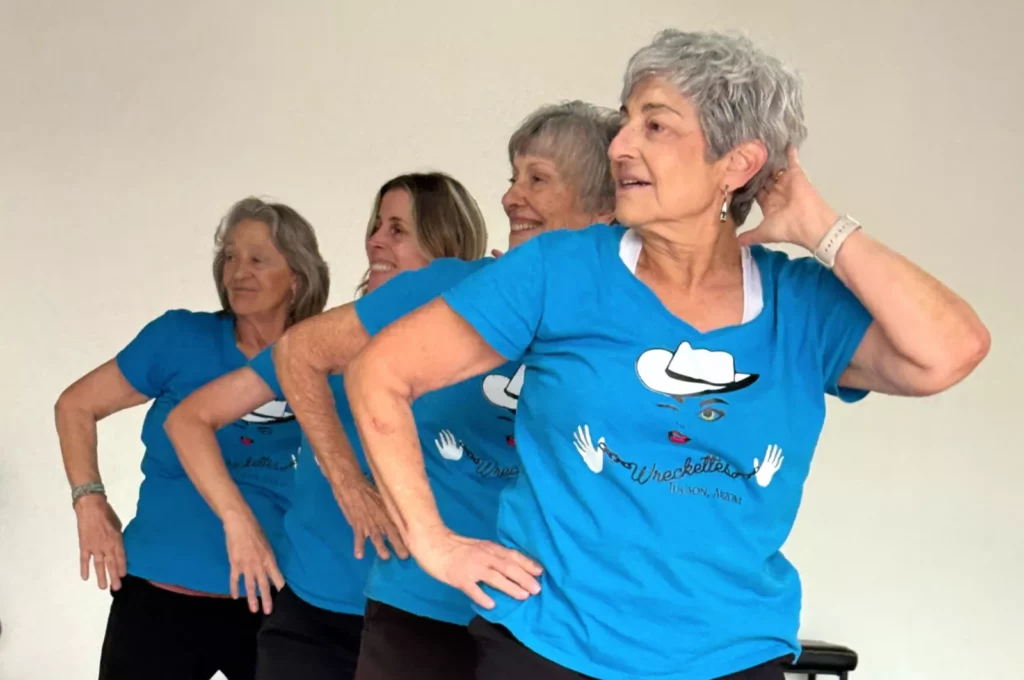
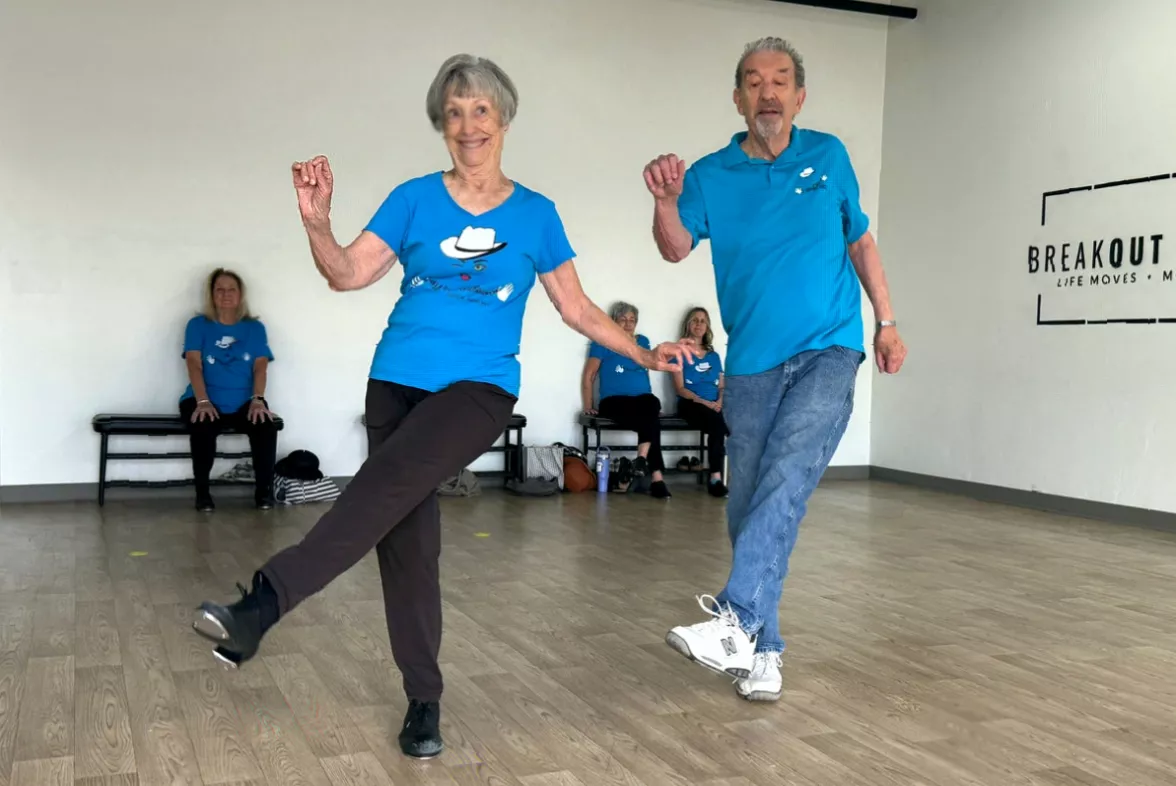
Carol Ross, 87, can barely contain her smile as she calls out the steps at a tap and jazz rehearsal for the Rodeo City Wreckettes, a dance troupe she founded 23 years ago for women aged 50 and over. “I’ve been dancing my whole life, it’s the best,” she said. She and her 89-year-old husband, John, her lifelong dance partner, have long known what medical professionals now confirm: moving to music is one of the most effective ways for older adults to stay healthy.
High-energy performances and a sense of purpose
The Wreckettes practise their routines for two hours at least twice a week in a rented studio in Tucson, Arizona. John Ross typically joins his wife for at least one number — at a recent session it was a playful saunter to Merle Haggard’s “Let’s Chase Each Other Around the Room.” “I learned early on that dancing was a great way to attract the chicks,” he joked, sliding across the floor like a much younger man.
The troupe performs throughout the year, from holiday events to rodeo shows, dressed in matching sparkly costumes. But what they love most, the members say, is being hired by retirement homes to perform for memory care patients. “When we first arrive, people will be distracted or sleeping,” said Cindy Soffrin, 74. “But once the music comes on, they perk up right away.” The Wreckettes take turns choosing a favourite charity to donate their earnings from such gigs.
A similar group, the Vegas Golden Gals in Las Vegas, also performs at retirement homes, adding pompoms to their routines. Its president, Cheryl Cortez, 69, said: “I must now know close to 40 routines — and that alone has to be great for the memory.”
Why dancing is powerful for older bodies and minds
Julio Loya, a nurse and geriatric programme coordinator at the Tucson Medical Centre, said: “Dancing is one of the most powerful activities for older people. It engages their brain, it changes their mood, and it connects them socially while getting them moving. And it’s fun. Everybody has a good time.”
Dr Tom Johnson, a gerontologist at the UC Health Seniors Clinic in Aurora, Colorado, which serves about 2,500 people aged 75 and older each year, said dance can improve balance significantly. He recalled one patient in his late 80s who willed himself to attend one last dance class before he died. “His No. 1 priority was that he danced until the day that he died,” Johnson said. He recommends older patients add two to three dance sessions to the 150 minutes of weekly aerobic exercise he prescribes, because dancing often involves movements that help with balance, such as walking backwards or standing on one foot.
Research supports these observations with striking figures. Ballroom dancing, in particular, reduces the chances of developing dementia by up to 76%, a benefit attributed to the complex cognitive demands of learning and remembering steps, which stimulates neuroplasticity and strengthens brain connectivity. Dance interventions have also been shown to improve global cognitive function and executive function, and studies indicate they can increase hippocampal volume, gray matter and white matter integrity. For individuals with dementia, dance can help improve agitation, mood and social interaction while reducing anxiety and depressive symptoms.
Physical benefits extend well beyond balance. The “Dance to Health” project, a social prescribing programme that combines falls prevention with dance, demonstrated up to a 58% reduction in falls among older adults. Dance also improves lower body muscle endurance, agility, gait, flexibility and mobility. It increases heart rate, enhancing cardiovascular health and reducing the risk of death from cardiovascular disease by up to 46%. Regular dancing can aid weight management and muscle strengthening, and it can be beneficial in managing chronic conditions such as arthritis, Parkinson’s disease and COPD.
Mentally and emotionally, group dancing releases endorphins that lift mood and counteract depression. It combats loneliness by fostering social connection and a sense of community, and it provides a platform for emotional expression and positive reminiscence. Many older adults report increased confidence and self-esteem from participating in dance.
The UK’s National Health Service advises older adults aged 65 and over to be physically active every day and to incorporate strength, balance and flexibility exercises at least twice a week. Dance can contribute to both moderate and vigorous intensity aerobic activity. Programmes such as Dance to Health, Dance On (a Sport England-funded initiative for those over 55), the English National Ballet’s ENBEldersCo, and Sadler’s Wells’ Company of Elders (whose dancers range from 60 to 89) all show that the “oldest old” — even those over 85 — can benefit from regular dance classes, improving well-being and mobility. Classes can be adapted for various mobility levels, including chair-based options, and can be delivered in community centres, care homes and online.
Member stories: Why they keep dancing
Cindy Soffrin joined the Wreckettes after watching her mother’s decline. “My mom was sedentary the last 20 years of her life. It was pretty rough,” she said. For Gail Kowalski, 67, joining three years ago meant finding new friends after her husband died and she moved from Utah to Tucson. “Plus, it’s so dang fun,” she said.
Carol Ross studied ballet as a girl and later moved on to ballroom and tap. When she and her husband retired to Tucson from Philadelphia, she said it “made sense” to keep dancing. Her husband agrees: “Dancing was a great way to attract the chicks.”
How to start dancing later in life
Health professionals and dance instructors offer the following advice for older adults who want to begin moving to music:
Before starting: Check with your health provider before beginning any exercise programme. Choose something simple, such as line dancing, rather than complex tango steps.
Find a class: Look at a YMCA, parks and recreation department, senior or community centre, or local community college — many offer classes tailored for older people. Local dance studios and YouTube videos are other options. If you have a Medicare Advantage plan with the Silver Sneakers benefit, check whether your local gym offers free Zumba or other dance classes. In the UK, Age UK, Dance On, Xpress-Yourself Dance CIC (which runs Keep Dancing classes for over-60s in Birmingham, Solihull and Walsall), and community centres all provide affordable or free sessions. The NHS also lists local exercise schemes.
Before the session: Dress comfortably for easy movement. Warm up and stretch before class.
Most importantly: Have fun. You are doing great things for your mind and body.