

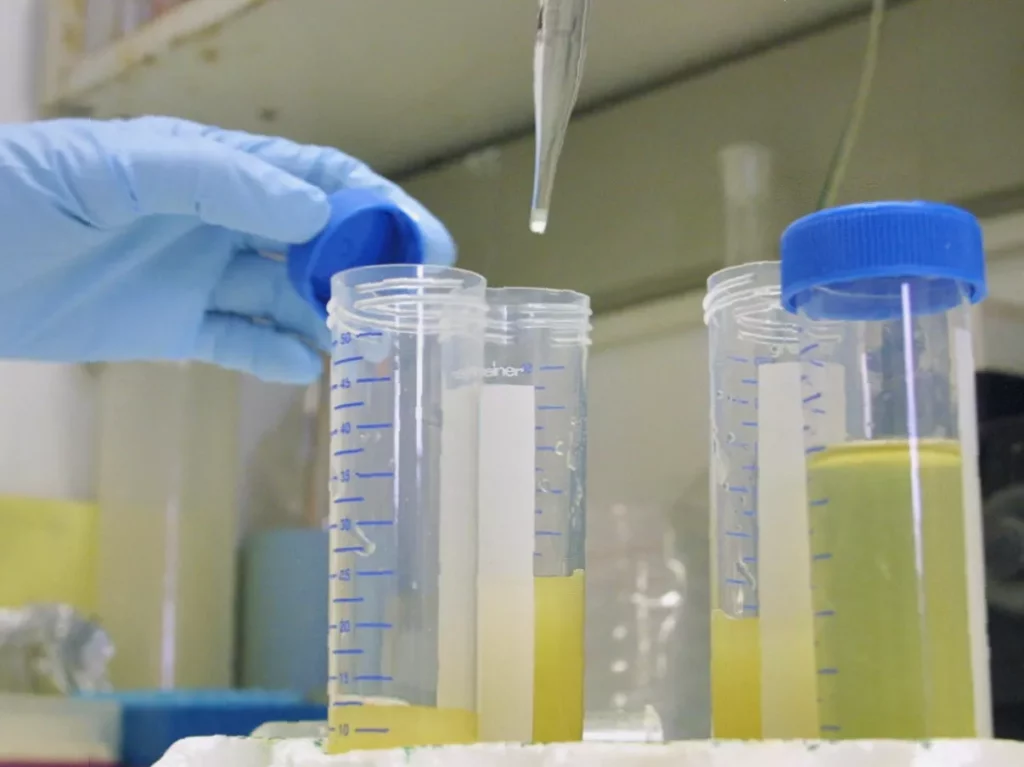
A urine test for lung cancer could be available on the NHS within five years, offering a simple, non-invasive way to catch the disease long before symptoms appear. The test, developed by scientists at the University of Cambridge and funded by Cancer Research UK, targets so-called “zombie cells” whose abnormal activity can signal the earliest stages of lung cancer.
NHS rollout on the horizon
Professor Ljiljana Fruk, from the University of Cambridge’s Department of Chemical Engineering and Biotechnology, said she hoped to see the test “working in real patients and rolled out across the NHS within the next five years, making a real difference to people at risk of this devastating disease”. The sensor has not yet been tested in humans, and clinical trials are the next step. “It is likely it will take a few years to bring it to patients, but it is a first big step,” she added.
If successful, the test could become a routine screening method in GP surgeries and hospitals. Such a tool is urgently needed: lung cancer is the UK’s most common cause of cancer death, claiming around 32,800 lives each year. In England, nearly half (46%) of cases are diagnosed at an advanced stage, when treatment options are limited and survival rates plummet. At stage 1, almost 65% of patients survive for five years or more; at stage 4 that figure drops to around 5%.
How ‘zombie cells’ betray early lung cancer
The test works by detecting specific proteins excreted by senescent cells, commonly known as “zombie cells”. These are cells that have stopped dividing but remain metabolically active. Instead of dying off, they linger in the body and release inflammatory signals that damage surrounding tissue, reprogramming the local environment to help promote the emergence of cancer cells.
Researchers have developed an injectable sensor that interacts with these zombie cell proteins. When it does, it triggers the release of a detectable compound into the urine. The sensor is designed to detect peptide-cleaving proteins, which are found at higher levels in the presence of senescent cells and are associated with early cancer stages. The detection itself involves a silver-based solution that produces a visible colour change, similar to the chemistry used in analogue photography — meaning it could be read without expensive equipment.
The biomarker was validated in human tissue using real patient samples and large genetic datasets, with the findings published in the journal Nature Ageing. The research involved scientists from the University of Cambridge’s Department of Chemical Engineering and Biotechnology, the Early Cancer Institute, the Cancer Research UK Cambridge Centre Thoracic Cancer Programme, and Royal Papworth Hospital NHS Foundation Trust. “Our previous studies showed that senescent cells in response to chemotherapy can cause treatment resistance and an aggressive lung cancer relapse,” said Professor Daniel Munoz-Espin, from the Early Cancer Institute and co-lead for the Thoracic Cancer Programme. “We also found that senescent immune system cells promote lung cancer development by causing immunosuppression. Our urine nano sensor may allow primary care detection of therapy resistance and lung cancer early development in future clinical settings.”
Beyond lung cancer and next steps
The team has already adapted the probe for detecting pulmonary fibrosis, another serious lung disease. Professor Fruk said the team is currently fundraising to adapt it for other types of cancer. The sensor may also be effective for other lung conditions. “Novel approaches for lung cancer detection and response to treatment are urgently needed to improve patient outcomes,” said Professor Robert Rintoul, of the Department of Oncology and co-lead for the Thoracic Cancer Programme. “This work forms the basis for testing within clinical trials with a view to future use in the clinic.”
Cancer Research UK’s spokesman for the east of England, Patrick Keely, said: “With new technologies opening doors to new discoveries, we’re living in a golden age of research, which is powerfully underlined by this innovative new urine test to detect early lung cancer.” The charity has invested more than £231 million in lung cancer research over the past decade. Meanwhile, NHS lung health checks have already shown the value of early detection: between April 2019 and March 2024, more than 2.5 million people were invited for checks, leading to 7,193 lung cancers being found, 75.7% of them at stages 1 or 2. Professor Rintoul highlighted that success, underscoring the urgent need for even simpler tools to catch the disease earlier.
The Early Cancer Institute — the UK’s only institute dedicated to early cancer research, established in 2022 — is driving this work, with a focus on detection, risk prediction and interception. Related research, including the SPORT study funded by Cancer Research UK and involving Royal Papworth Hospital, is also exploring blood tests to detect the risk of second primary cancers after initial lung cancer treatment. The new urine test, if proven in humans, could transform how lung cancer and its recurrence are caught, giving doctors a window of months or even years before symptoms emerge.