

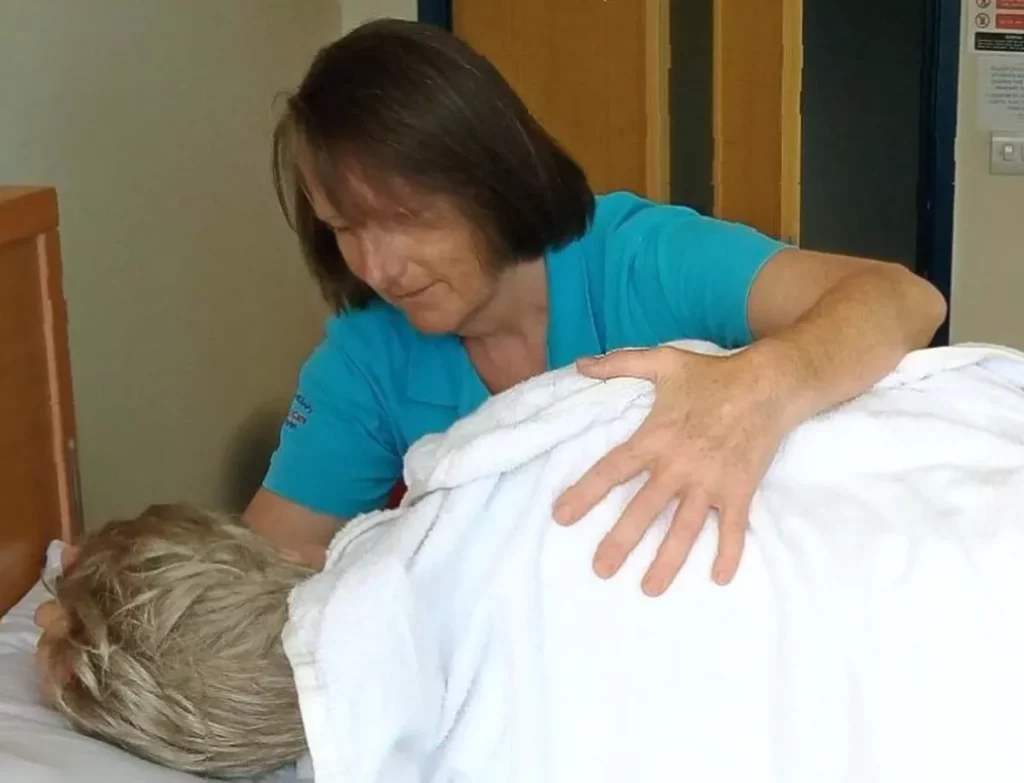
A physiotherapist who spent 31 years caring for people with dementia has invented a bathing aid designed to preserve dignity and reduce distress during personal care. Pat O’Brien, 66, from Cambourne in Cornwall, developed the Pobroll in 2018 after growing frustrated that bed-bound patients were being washed with only towels or wet wipes, leaving them cold, frightened and humiliated.
Dementia is now the UK’s biggest killer, accounting for more than 76,000 deaths in 2024, according to the Alzheimer’s Society. An estimated 982,000 people live with the condition, a figure projected to rise to 1.4 million by 2040. The disease costs the economy approximately £42 billion each year, with families shouldering a significant share. For carers, the emotional and physical toll is immense. Personal hygiene tasks become increasingly difficult as memory, mobility and judgment decline, and the act of undressing can trigger a “fight or flight” response in patients, leading to agitation, resistance and even aggression.
“There are people who have had a long day at work, and they are dreading going home, because they know they have to wash the intimate areas of a parent, something they never imagined they would have to do in their wildest dreams,” said O’Brien, a chartered physiotherapist with expertise in dementia care, falls prevention, elderly care, community rehabilitation and palliative care. She is also a moving and handling trainer and conflict management tutor. “It is demanding, challenging and very upsetting.”
O’Brien recalled one gentleman who refused care until she noticed the wardrobe door was open. He had been in the army, and the lack of order unsettled him. Another wandered corridors saying he “didn’t know where to put it” until she realised he was looking for the toilet. “Understanding these small idiosyncrasies allows you to build a genuine connection,” she said. But when it comes to washing, she argued, the system itself is broken. “There’s very little you can do to preserve the dignity of a large 80-year-old man who needs to be washed in bed using nothing more than a towel. How are carers meant to keep that person warm and dignified with just that? It drove me to despair. I used to think – how is it that in the 21st century we can put a man on the moon, but not solve this problem?”
How the Pobroll works
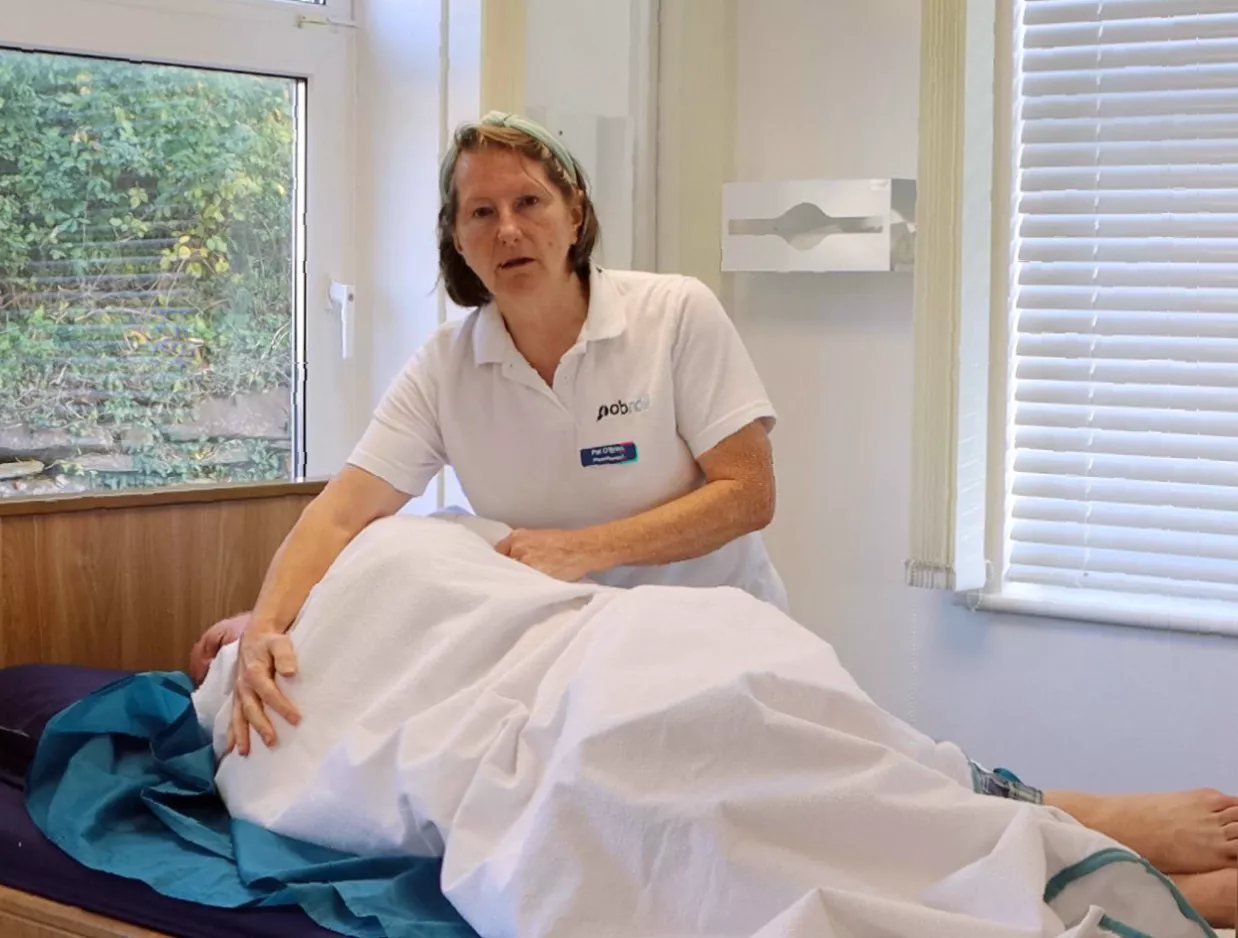
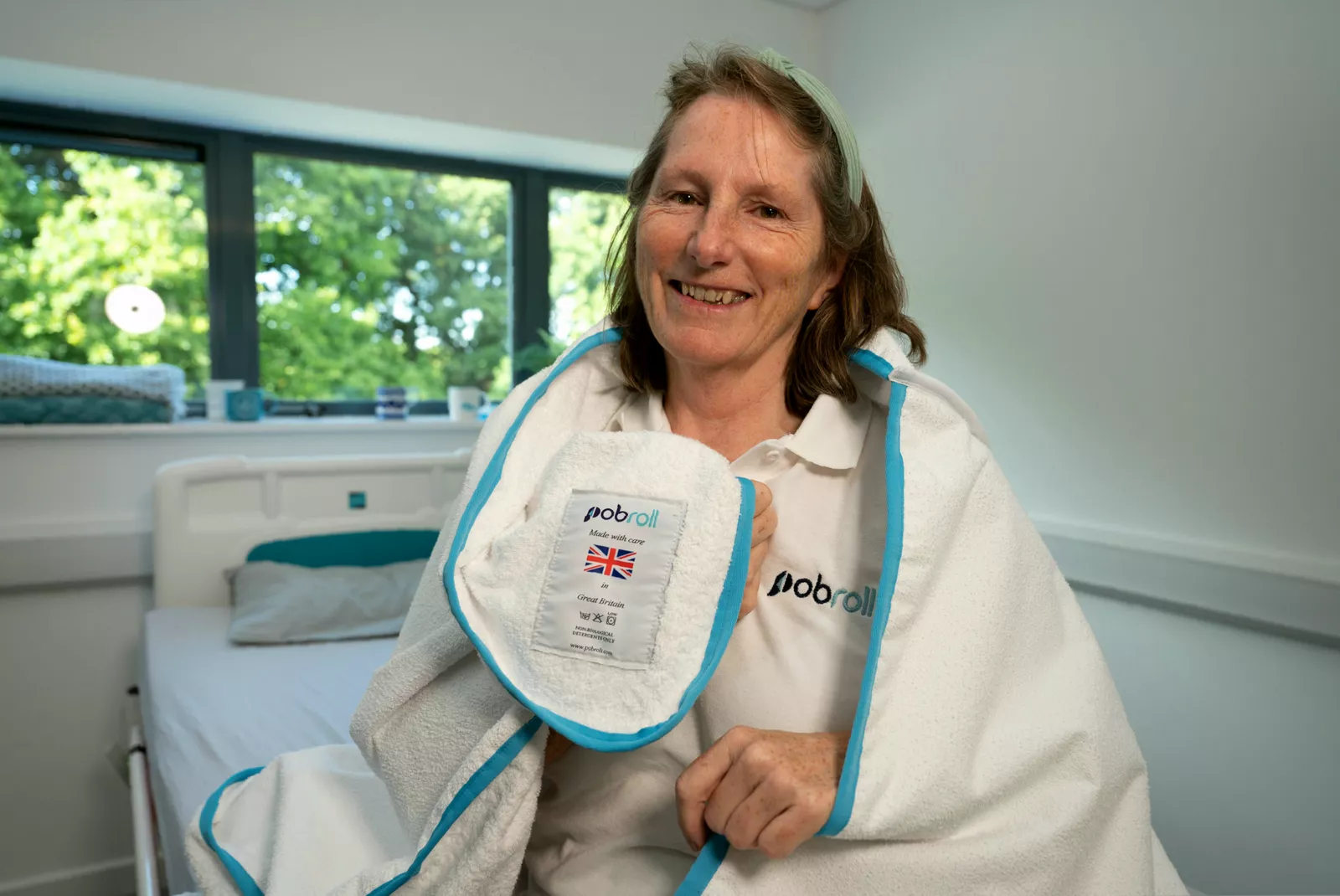
O’Brien’s solution is a rectangular, sleeping bag-like towel the size of a single bed. A patient is rolled onto it, staying warm and covered while carers wash one part of the body at a time. It is completely waterproof, protecting sheets and mattresses from moisture. The Pobroll is made of two layers of high-quality cotton-terry towelling with a waterproof membrane in between. The design allows carers to wash discreetly between the layers, exposing only the area being cleaned. The product is reusable, reducing reliance on disposable wipes and cutting laundry costs by minimising linen changes.
“It creates a warm environment which helps prevent distress. It also reduces embarrassment,” said O’Brien, who was a member of the first-ever women’s rugby squad to play a club match at Twickenham and holds Red Rose number 16. “It’s simple, but it allows carers to engage more calmly. If behaviour is triggered by embarrassment, cold or the experience of undressing, then it’s about reducing that. The idea is that they are swaddled like a baby and feel safely held.”
The Pobroll received a UK patent, recognising its unique design. It was nominated for the Outstanding Care Awards for Devon and Cornwall in 2020. The Alzheimer’s Society later selected it as one of their 2023 Accelerator partners, providing support for market entry. The company donates 10% of each purchase to the charity. While developed for people with dementia, it is also suitable for anyone requiring bed-bound intimate care, including children and young people with physical disabilities or complex medical needs.
O’Brien began introducing the Pobroll to private homes and care providers in 2020 after pandemic-related delays. She saw its transformative potential while caring for a patient with complex needs. “He was very vulnerable, and attempts to carry out personal care would trigger panic. He could become physically aggressive and so distressed that he would vomit,” she said. “Some carers were reluctant to work with him because they felt unsafe. He was often being physically held during care, which is distressing for everyone.” When O’Brien tried the Pobroll, the patient calmed down and lay still. “A nurse said to me she felt safe for the first time and that he wasn’t hurting himself. It was a turning point.”
The impact on family carers can be equally profound. O’Brien described a friend, whom she calls “Debbie” to protect her family’s privacy, whose mother was diagnosed with Alzheimer’s. Debbie and her sister had promised to keep their mother at home but found bathing increasingly difficult as their mum resisted and pulled her clothes back on. “The situation became overwhelming. Both sisters were extremely distressed, and worst of all, it was damaging their relationship with their mother. All three of them would end up in tears, and their mum began to see them as a threat,” O’Brien said. “They were close to deciding they would need to move her into a care home to preserve their relationship – then they remembered the Pobroll I’d given them.” It proved transformative. Their mother remained calmer, and the sisters felt more in control. “Debbie later told me she was able to care for her mum at home until she died three months later. They were incredibly grateful.”
Advice for carers
O’Brien, who has been smacked, punched and abused during her career, and who has comforted distressed elderly people struggling to accept care, offers simple advice for families supporting a loved one with dementia. “It is very hard for families. Often, there is a tendency to correct or challenge – for example, if someone doesn’t recognise a person in a photograph. But that can increase anxiety and remind them of what they are losing. Instead, distract, reassure and be gentle. People can sense genuine kindness.”
She stresses the need to meet the person where they are, not where you want them to be. “Letting go of Mum or Dad 10 or 20 years ago is incredibly difficult, but essential. If you treat people with kindness, gentleness and respect, you won’t go far wrong. It will still be painful, but it will be better. In the face of a disease that only moves in one direction, acceptance is key. Focus on how the person is today, and try to create the calmest, most comfortable space you can for them.”