

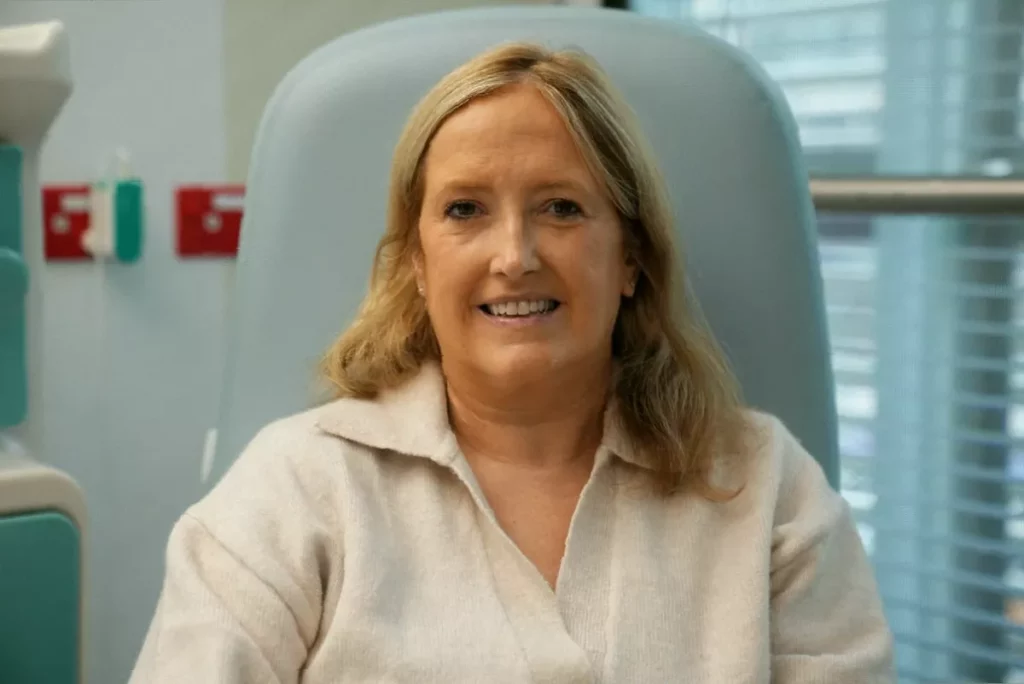
A mother has described spending years in a cycle of pyjama-clad school runs, retreating to bed after dropping her children off and remaining there until the afternoon alarm prompted her to collect them again.
“Regularly for years, when the kids were at school, I’d get up in my pyjamas, drop them to school in my pyjamas, come back to bed, stay in bed, put the alarm on for 2.50pm, get up and go back, pick them up, and then survive til my husband came home,” she said. “That was my life for years.”
The routine, she explained, began each morning with the school drop-off still in nightwear. Returning home, she would climb back into bed, setting an alarm for just before the end of the school day. The afternoon collection was followed by a period she described simply as “surviving” until her husband’s return from work in the evening.
The emotional toll of this prolonged isolation was profound. For years, the woman’s daily existence was confined to the bedroom between the school gates, a pattern that stripped away any sense of structure, purpose or adult connection. The bed became both a refuge and a prison — a place to escape the demands of the world but also a marker of how far her own life had contracted. She offered no specific explanation for what drove the behaviour, but the description of “surviving” rather than living points to a deep, unspoken weight carried alone through the long, quiet hours of the day.
The experience echoes the kind of profound disconnection that can accompany chronic illness, caregiving or mental health struggles — circumstances where the simplest daily tasks become monumental and the outside world fades to a distant hum. In such situations, the return of a partner at the end of the day often marks the only break in an otherwise unbroken solitary stretch. For this mother, the hours between drop-off and pick-up were not filled with errands, work or social contact, but with the still, heavy presence of the bed and the ticking clock.
Her testimony comes amid growing awareness of the hidden emotional costs borne by those who slip through the cracks of support systems — particularly parents juggling invisible burdens. While she did not link her own behaviour to any specific medical condition, the pattern she describes mirrors the experience of individuals caring for seriously ill family members, where exhaustion and isolation can become all-consuming.
Medical breakthroughs in immune therapy
Separately, research into advanced treatments such as CAR T-cell therapy — a highly personalised immunotherapy — has highlighted the intensity of care required for patients with certain life-threatening conditions. CAR T-cell therapy, which involves genetically modifying a patient’s own T-cells to recognise and attack diseased cells, has been a breakthrough for blood cancers such as B-cell acute lymphoblastic leukaemia and certain lymphomas. The National Institute for Health and Care Excellence (NICE) has approved several CAR T therapies for NHS use, including Kymriah, Yescarta, Tecartus and Obe-cel, often initially through the Cancer Drugs Fund. The cost per patient is estimated at around £280,000.
The therapy is also being trialled for autoimmune diseases. A pioneering NHS trial at University College London Hospitals (UCLH) and University College London (UCL) saw five out of six patients with severe lupus achieve remission — the first time CAR T-cell therapy has been used for lupus in the UK. Experts believe it could also help with multiple sclerosis and other conditions where the immune system attacks healthy tissue.
Despite its promise, CAR T-cell therapy carries serious risks, including cytokine release syndrome (CRS) and neurotoxicity (ICANS), which can be life-threatening. Patients require close monitoring during and after treatment, and face prolonged infection risks due to the immune system’s suppression. For families, the treatment journey — from diagnosis to infusion to recovery — can mean months of hospital visits, isolation, and the kind of relentless daily pressure that leaves little room for normal life.
The mother’s account, though unconnected to any specific medical treatment, illustrates the kind of emotional depletion that can take hold when a person’s world shrinks to a narrow loop of school runs and bed rest. After years of that pattern, she said, the end of each day brought the only real relief: the moment her husband walked through the door.