

Close Menu
    Useful
    • About Us
    • Contact Us
    • Advertise With Us
    • Health Explainers
    • Our Editorial Team
    Facebook
    HealthNewsDaily.co.uk
    • Home
    • NHS

      Patient spends £62,851 on height increase surgery to 6ft despite agonising and potentially fatal side effects

      3 June 2026

      Four in five frail pensioners missing essential NHS checks due to regional disparities

      3 June 2026

      Critical care patients at King’s College Hospital given new rooftop garden

      31 May 2026

      Resident doctors in England plan four-day June walkout

      27 May 2026

      New surgical assistant caught off guard by relaxed atmosphere in operating theatre

      25 May 2026
    • Health Policy

      Government stops short of promising no further aid cuts in letter to parliamentary committee

      3 June 2026

      Anti-abortion activists in NSW signal push to further restrict abortion access

      3 June 2026

      Health officials urged to probe fatalities connected with illicit diet injections

      3 June 2026

      Trial overhaul to provide prostate cancer screening for black men

      2 June 2026

      Asda and Amazon recall children’s sand kits over asbestos risk

      1 June 2026
    • Mental Health

      Federal workers suffer trauma after Trump administration’s unlawful sackings

      3 June 2026

      2026’s monk mode: manosphere trick or imperative

      2 June 2026

      Husband’s rare condition leaves him unable to produce sperm

      31 May 2026

      Diagnosis halted monthly rage attacks that had been tearing my family apart

      31 May 2026

      Nottingham killer’s mother says family tried to get help before triple murder

      29 May 2026
    • Wellness & Lifestyle

      Tenth of employees forgoing meals to afford fuel

      3 June 2026

      Disturbing statistic could bring social media scrolling to a halt

      3 June 2026

      GP stocks five freezer staples to extend life

      2 June 2026

      Doctor pinpoints triggers for after-lunch tiredness and remedies

      2 June 2026

      Peril in dismissing wellness influencers while doctors remain unsure, warns Ranjana Srivastava

      2 June 2026
    • Disease & Prevention

      DRC Ebola outbreak may have started in January, WHO chief suggests

      3 June 2026

      Major US Covid vaccine probe to hear from two UK doctors

      3 June 2026

      At 27 weeks pregnant, mother began chemotherapy and insists she never surrendered

      3 June 2026

      GLP-1 drug use linked to 30% lower breast cancer risk in women

      2 June 2026

      Cause of twin’s sudden 3st weight gain emerged post-mortem

      2 June 2026
    • Treatment & Research

      Poor sleep quality tied to feeling older than one’s actual age

      3 June 2026

      Drug allows bladder cancer patients to avoid surgery, doctors say

      2 June 2026

      Melanoma recurrence could be cut by new vaccine and drug combination

      1 June 2026

      Devi Sridhar: Cancer brings promise, trouble, horror and hope

      1 June 2026

      MHRA seizes 12,000 unlicensed weight-loss medicines in biggest operation to date

      1 June 2026
    HealthNewsDaily.co.uk
    • NHS
    • Health Policy
    • Mental Health
    • Wellness & Lifestyle
    • Disease & Prevention
    • Treatment & Research
    Home » Treatment & Research » Climate crisis fuelling faster antibiotic resistance globally, study finds
    Treatment & Research

    Climate crisis fuelling faster antibiotic resistance globally, study finds

    Sophie HargreavesBy Sophie Hargreaves27 May 2026
    Global map showing recorded increases in Salmonella antibiotic resistance genes across 139 countries

    The climate crisis is accelerating a global increase in antibiotic resistance that poses a serious and growing threat to human health, experts have warned, as new research reveals a direct link between rising temperatures, changing rainfall and the spread of resistance genes in one of the world’s most common bacterial diseases.

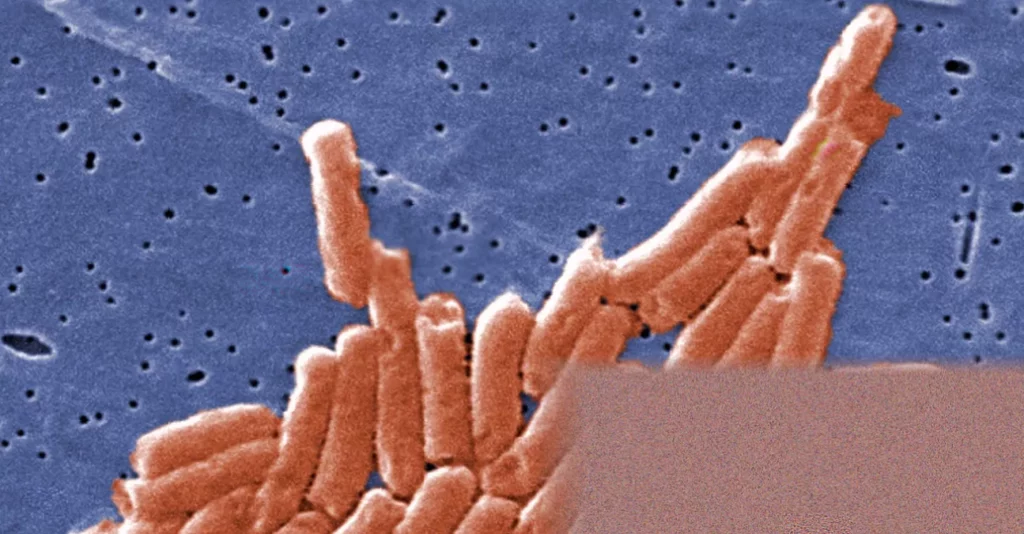
    While the misuse and overuse of antibiotics remain the primary drivers of antimicrobial resistance (AMR), a first-of-its-kind study published in The Lancet Planetary Health provides what the authors call “robust evidence” that climate change acts as an accelerating force. The research analysed more than 480,000 genomes of Salmonella bacteria collected from 139 countries between 1940 and 2023, and found a 10% global increase in Salmonella antibiotic resistance genes (ARGs) associated with climate change over that period.

    Rising temperatures and altered precipitation patterns are thought to be driving this increase through several biological mechanisms. Warmer conditions can accelerate bacterial growth and the exchange of genetic material, including resistance genes, between microbes. Heat stress triggers bacterial survival responses such as reinforced cell walls and superior DNA repair systems – the same tools bacteria use to resist antibiotics. A 1°C rise in environmental temperature above 5°C could lead to a 5%–10% increase in Salmonellosis cases, while a 2018 study found that a 10°C local temperature increase was associated with a 2.2% to 4.2% rise in resistance in common pathogens like E. coli and S. aureus.

    Changes in rainfall patterns also play a crucial role. Floods can accelerate the spread of ARGs through waterways, while droughts concentrate antibiotic residues and resistant bacteria in dwindling water sources. Together, these environmental shifts disrupt microbial ecological stability and speed up the evolution of resistance across human, animal and environmental reservoirs, the researchers said. Bacteria can evolve rapidly in response to climate change – sometimes in as little as 18 months – meaning that by warming the planet, humans are inadvertently “training” pathogens to become tougher and harder to treat.

    The study found that 82% of the countries examined recorded increases in Salmonella ARGs. The strongest climate-associated rises were seen in the Middle East and north Africa, followed by south Asia and sub-Saharan Africa – regions that already face a double burden of high climate vulnerability and weaker health systems. The model used by the researchers showed that the relationship between temperature, rainfall and resistance genes is non-linear; resistance does not simply increase steadily as the mercury rises, but changes over time in a more complex fashion depending on both climatic factors.

    Antimicrobial resistance already kills more than one million people a year globally, according to estimates, and was directly responsible for 1.27 million deaths in 2019, with a further 4.95 million deaths associated with it. Without intervention, deaths directly attributable to AMR could reach nearly two million by 2050. The economic toll is also severe: antibiotic-resistant infections led to an estimated US$693 billion in global hospital costs in 2019 and US$194 billion in productivity losses. Projections suggest uncontrolled AMR could result in $412 billion in annual treatment costs and $443 billion in lost productivity by 2035, potentially shaving 3.8% off global GDP by mid-century.

    The study authors stressed that their work does not prove climate change directly causes the increase in resistance genes – it demonstrates an association. But they said the findings highlight the urgent need to consider climate change when designing global strategies to tackle AMR. “The accumulated evidence suggests that climate change is an accelerating force behind the global spread of antimicrobial resistance,” they wrote. “Urgent integration of climate change-mitigation policies, particularly those aligned with the Paris agreement – with enhanced antimicrobial stewardship and One Health surveillance – is essential to curtail the future burden of antimicrobial resistance.”

    Urgent action needed to curb future spread

    The researchers’ model offers a clear incentive for action: if countries meet low-emission climate targets and strengthen responsible antibiotic use, Salmonella ARG levels could be 24% lower by 2100 compared with a highest-emission scenario. The study underscores the need for a “One Health” approach that recognises the interconnectedness of human health, animal health, agriculture and the environment – a framework already adopted by the UK government in its five-year national action plan, “Confronting antimicrobial resistance 2024 to 2029”. That plan aims to optimise antimicrobial use, reduce the need for antibiotics and support the development of new drugs.

    Previous studies had linked higher temperatures to greater levels of resistant bacteria, but until now global quantitative studies on the link have been limited. The authors called climate change a “threat multiplier” for infectious diseases, expanding vector ranges, increasing breeding sites for pathogens and accelerating human displacement. “Our findings provide supporting evidence that rising temperatures and altered precipitation patterns non-linearly amplify the abundance and dissemination of antimicrobial resistance genes in bacterial pathogens such as salmonella,” they wrote. “These findings reinforce the idea that climate change alters microbial ecological stability and accelerates resistance evolution across human, animal, and environmental reservoirs.”

    Antibiotic Resistance Antibiotics Stress
    Share. Facebook Twitter LinkedIn WhatsApp Telegram
    Sophie Hargreaves
    Sophie Hargreaves

    Health Correspondent
    Sophie Hargreaves covers medical research, new treatments, disease outbreaks and prevention for Health News Daily. She holds a Master's degree in Health Sciences from the University of Leeds and has spent several years translating complex medical science into clear, accessible reporting for a general audience. Sophie focuses on the latest clinical trials, NICE and MHRA approvals, vaccination programmes and emerging health threats, always with an eye on what these developments mean for people in the UK.
    · MSc Health Sciences (University of Leeds), science communication volunteer, medical research literacy
    · Clinical trials and drug approvals (NICE, MHRA), cancer screening programmes, vaccination and outbreak response, women's health (endometriosis, PCOS, menopause), weight management treatments, AI in diagnostics

    Related Posts

    Treatment & Research

    Poor sleep quality tied to feeling older than one’s actual age

    3 June 2026
    Treatment & Research

    Drug allows bladder cancer patients to avoid surgery, doctors say

    2 June 2026
    Treatment & Research

    Melanoma recurrence could be cut by new vaccine and drug combination

    1 June 2026
    Treatment & Research

    Devi Sridhar: Cancer brings promise, trouble, horror and hope

    1 June 2026
    Join Our Community & Win

    Each month we select one lucky follower to receive a prize from our partners. Follow us on our social channels for your chance to win.

    • Facebook
    Latest
    Disease & Prevention

    DRC Ebola outbreak may have started in January, WHO chief suggests

    3 June 2026
    Wellness & Lifestyle

    Tenth of employees forgoing meals to afford fuel

    3 June 2026
    Health Policy

    Government stops short of promising no further aid cuts in letter to parliamentary committee

    3 June 2026
    NHS

    Patient spends £62,851 on height increase surgery to 6ft despite agonising and potentially fatal side effects

    3 June 2026
    Health Policy

    Anti-abortion activists in NSW signal push to further restrict abortion access

    3 June 2026
    Disease & Prevention

    Major US Covid vaccine probe to hear from two UK doctors

    3 June 2026
    News Categories
    • NHS
    • Health Policy
    • Mental Health
    • Wellness & Lifestyle
    • Disease & Prevention
    • Treatment & Research
    Help
    • About Us
    • Contact Us
    • Advertise With Us
    • Health Explainers
    • Our Editorial Team
    About Us
    About Us

    Health News Daily provides trusted UK health news, covering NHS updates, medical research, public health and wellbeing with clear and reliable reporting.

    Facebook
    • Cookie Policy
    • Privacy Policy
    • Complaints Policy
    • Corrections Policy
    • AI Disclosure Policy
    • Editorial Policy & Ethics
    • Accessibility Statement
    • Medical Disclaimer
    • Terms & Conditions
    • Sponsored Content Disclosure
    • Copyright Notice
    © 2026 Healthnewsdaily.co.uk. All rights reserved.

    Type above and press Enter to search. Press Esc to cancel.