

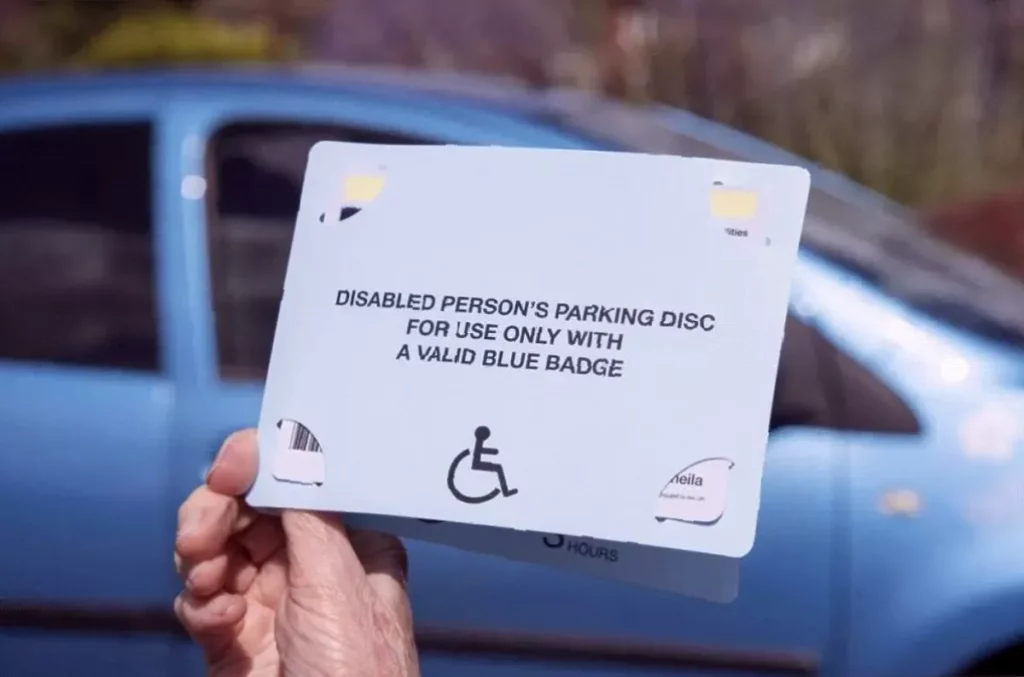
The number of drivers with non-visible conditions being granted Blue Badge parking permits has tripled over the past three years, according to official figures. In 2021, 18,000 badges were issued for hidden disabilities; by last year that figure had risen to 55,000.
The surge follows a landmark expansion of the scheme in August 2019 – the biggest change in nearly 50 years – which extended eligibility to people with conditions such as dementia, arthritis, autism and Parkinson’s disease. The Department for Transport (DfT) issued fresh guidance to councils in England clarifying how applicants with non-visible disabilities should be assessed.
Data from the DfT shows that in the year ending March 2025, 55,000 badges (4.3 per cent of all new permits) were issued for non-visible disabilities, up from 18,000 (2.2 per cent) in the year ending March 2021. Overall, 1.27 million Blue Badges were handed out in England between April 2024 and March 2025 – a 12.3 per cent increase on the previous year.
Eligibility and assessment for hidden disabilities
Under the revised rules, eligibility is not based on a diagnosis alone but on how a condition affects a person’s ability to get around. Drivers may qualify if a hidden disability causes severe difficulty when travelling between a vehicle and their destination. This includes being “constantly a significant risk” to themselves or others near vehicles, in traffic or in car parks; severely struggling to plan or follow a journey; finding it difficult or impossible to control their actions and lacking awareness of the impact on others; regularly experiencing intense and overwhelming responses to situations that cause temporary loss of behavioural control; frequently becoming extremely anxious or fearful of public or open spaces; or experiencing considerable psychological distress when undertaking a journey.
For those applying on the basis of psychological distress, scoring 10 points in the “Planning and following a journey” section of the Personal Independence Payment (PIP) – descriptor E, which states the applicant “cannot undertake any journey because it would cause overwhelming psychological distress” – can lead to automatic eligibility. Other PIP scores in this category may still allow eligibility subject to a full assessment.
Local councils are responsible for assessing each application on its own merits. Applicants must provide proof of identity, proof of address, a recent head-and-shoulders digital photo, their national insurance number and other contact details.
The scheme’s expansion has drawn both praise and criticism. Social media users have welcomed the change, with one saying she had to write “a War and Peace” on how the condition affected her. But concerns have been raised by some experts and groups. A report from Policy Exchange argued that public services are being stretched by “overdiagnosis” of mental health and neurodevelopmental conditions, and that “concept creep” has broadened definitions, creating perverse incentives for families to seek diagnoses for support.
Dr Becky Spelman, a psychologist who has ADHD herself, told The Telegraph that Blue Badges for conditions such as ADHD may give some groups an advantage rather than being genuinely accommodating. She said she would “never apply” for a Blue Badge, describing it as “an abuse of a system” designed for those with “profound” mobility limitations.
There are also concerns about misuse. The AA has estimated that up to one in five badges may be used by someone other than the holder or an authorised user, and there have been reports of fake, stolen or doctored permits. Holders of Blue Badges for invisible disabilities increasingly face suspicion, filming and accusations of “faking it” when using disabled parking spaces, making them feel unsafe and reluctant to go out.
Broader context and official response
Around one in 20 people in England – 5.2 per cent – now holds a Blue Badge. An NHS report published last November cited a study indicating that 1.8 per cent of UK adults have a professional ADHD diagnosis, though wider estimates suggest 2.5 million people in England have the condition, including those without a formal diagnosis. The National Institute for Health and Care Excellence (NICE) suggests around 3-4 per cent of adults and 5 per cent of children and young people have ADHD. Only about one in nine people with ADHD in the UK is diagnosed, according to a study of nine million GP records. The estimated cost of untreated ADHD to the UK economy is around £17 billion per year.
In any given week in England, six in 100 people are diagnosed with generalised anxiety disorder. The UK anxiety disorder rate is approximately 5.6 per cent, higher than the global average of 4.4 per cent. Anxiety rates among young adults aged 16 to 24 have risen from 17.5 per cent in 2007 to 25.8 per cent in 2023/24, and in 2023-24 there were 204,526 new referrals for anxiety in patients aged 17 or under – more than double the pre-pandemic rate.
A DfT spokesperson stressed that a diagnosis of ADHD does not automatically qualify someone for a Blue Badge, with eligibility depending on the impact of the condition. “Local councils are responsible for assessing each application on its own merits, and have powers to tackle misuse of the scheme, which is a criminal offence,” the spokesperson said. “The Blue Badge scheme is a vital lifeline for many disabled people, and we are committed to ensuring it reaches those who genuinely need it.”
The DfT’s guidance to local authorities is non-statutory, and the department does not intervene in individual application decisions. Efforts to improve enforcement have included a review into Blue Badge fraud and measures to toughen up penalties. Meanwhile, the rise in badge numbers is placing increased pressure on the availability of accessible parking bays, and there remains a significant disconnect between the expanded eligibility criteria and public perception of who should be entitled to use disabled parking spaces.