


A nurse delivered life-altering news about infertility on a Post-it note. Slipping the yellow square from the patient’s chart as she lay groggy from anaesthesia, he read two words aloud: “Infertility likely.” Before she could respond, he added, “Let me know if you need anything!” and left the room.
The woman, now 40 and speaking about her experience, had just undergone surgery to remove her left ovary and a four-inch cyst that had caused months of debilitating pain. She had been counting down the days to the operation, which took place in November 2020. The cyst was a dermoid – also known as a mature cystic teratoma – a type of growth that forms when developed tissue collects in an unusual location like the ovary. Such cysts can contain hair, teeth, skin or bone, and can grow large enough to press on other organs. Hers had left her bedridden during ovulation, requiring multiple trips to A&E where only morphine could cut through the pain.
Her gynaecologist had diagnosed the problem shortly after her first emergency visit, explaining that the cyst was so large and awkwardly positioned that the attached ovary would need to come with it. Fertility concerns were not on her radar at that point; she had been reassured that her body would function perfectly well with one ovary. Medical guidelines confirm that when a single ovary is removed, the remaining one typically continues normal function, though conception may become slightly harder. It was only after the surgery, as the anaesthesia wore off, that the careless delivery of the infertility news forced a reckoning.
A long-brewing truth
Despite the shock, the woman recalls feeling an unexpected wave of relief. “I could finally accept the truth I’d struggled to acknowledge for so long: motherhood wasn’t – and isn’t – for me,” she later said. That truth had been forming since she was about 25. Watching friends have babies, she noticed how constantly exhausted they were, and she valued her alone time and deep involvement in hobbies. “All in all, I knew being a parent would be a struggle for me,” she explained.
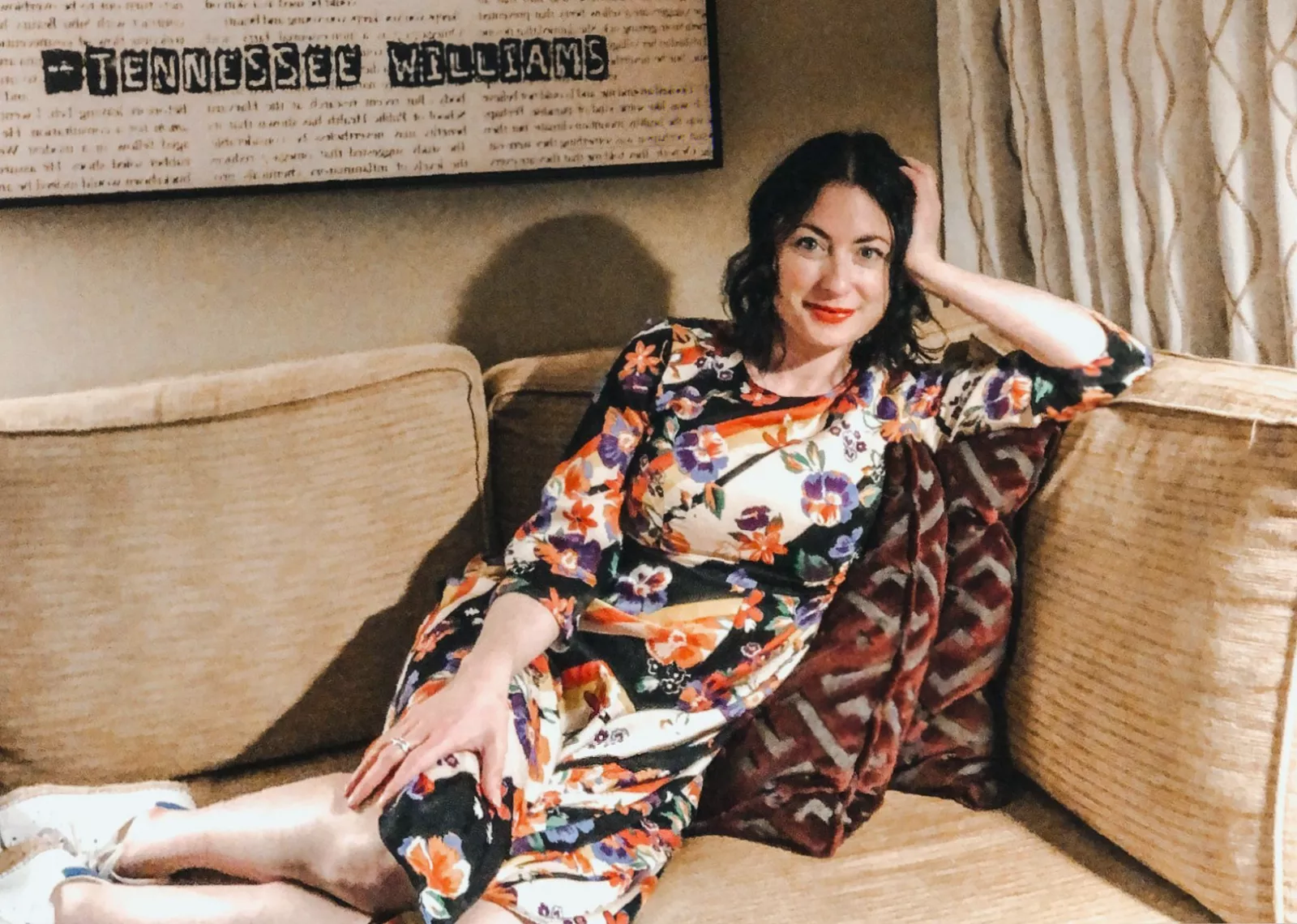
By her early thirties, the pressure from friends, family and her then-partner to have children grew intense. Her partner was a good man, but the thought of having a baby with him, she said, felt “like a giant pair of hands was slowly squeezing the air out of my chest.” She also carried health concerns: she has degenerative disc disease – three vertebrae with premature wear – and a history of obsessive-compulsive disorder and depression. No matter how often her partner reassured her, the idea of pregnancy worsening her back or triggering post-partum depression left her in a cold sweat. At 31, she ended the relationship because she could not see herself in his version of the future – children and marriage.
For years afterward, she told people she would consider having children if she met the right person. “I wasn’t ready to admit the truth: I just didn’t want to be a mother,” she said. “As women, we’re taught that we’re supposed to want children; so admitting that I didn’t want to be a parent felt like a character flaw.”
The emotional journey of accepting a child-free life
When she heard “infertility likely” on the Post-it note, the words felt, after the initial shock, like “a puzzle piece falling into place.” But that did not spare her a complicated process of grief. She found herself crying in her therapist’s office, sobbing, “I don’t want kids, so why do I still feel sad?” At the same time, her father had just been permanently hospitalised with dementia. “Perhaps if I hadn’t been losing my Dad piece by piece, the words on that Post-it wouldn’t have hurt as much; but at the time, it felt like it was another irreversible loss,” she recalled.
Her therapist encouraged her to seek a second opinion, as she was still unclear what “infertility likely” actually meant. She made an appointment with the doctor who had written the note. The doctor explained that the dermoid cyst had become infected, causing extensive scar tissue throughout her reproductive organs. The only routes to conception would be IVF or using a surrogate. “But you don’t want kids, so you don’t need to worry about that,” the doctor added, signalling the end of the appointment. The woman felt her concerns were being dismissed. In hindsight, she wishes she had confronted the doctor about the Post-it, but the brusque interaction left her stunned.
The grief she experienced is not unusual. Research into fertility-related distress shows that the inability to conceive – even when a person does not want children – can trigger complex, non-linear grief involving cycles of hope and loss. Specialist counselling services in the UK support individuals and couples through such emotions, helping them manage decisions about treatment, donor options or child-free living. The NHS Constitution also guarantees patients the right to be involved in their care, receive clear information and have their concerns taken seriously. Poor communication, as occurred here, is a common factor in complaints against healthcare services.
Gradually, through therapy, she began to accept that the loss she felt was not about the children she would never have, but about the life she thought she was supposed to want. “I could finally accept the truth I’d struggled to acknowledge to myself for so long: motherhood wasn’t – and isn’t – for me.”
Finding community and reclaiming agency
Shortly after the doctor’s appointment, she discovered the child-free-by-choice community online – and it was revelatory. For years, she had felt there was something wrong with her for not wanting children. “Although technically, my body had made the choice for me, meeting other women with similar stories made me feel less alone,” she said. The child-free-by-choice movement is a growing stance where individuals actively decide not to become parents, a choice that can attract stigma and judgment in a society that often equates parenthood with fulfilment. The term “child-free” emphasises personal freedom, distinguishing it from “childless,” which implies a lack of children due to circumstance.
She now proudly identifies as child-free by choice, saying the label has given her agency back. Inspired by the community, she relishes her free time to invest in hobbies and friendships. “I realised that getting my ovary removed didn’t just help me physically; it also lifted the weight of other people’s expectations.”
But she remains angered by the way she was told. “Not once did a medical professional ask me how I felt about the news or whether I needed support. Thankfully, I don’t want kids; but what if I had? I can only imagine how traumatic it would be to receive heartbreaking news so flippantly.”
By embracing a child-free path, she says she is finally free to write her own story on her terms. “But it doesn’t negate the fact that no one should get life-changing news via a sticky note.”