

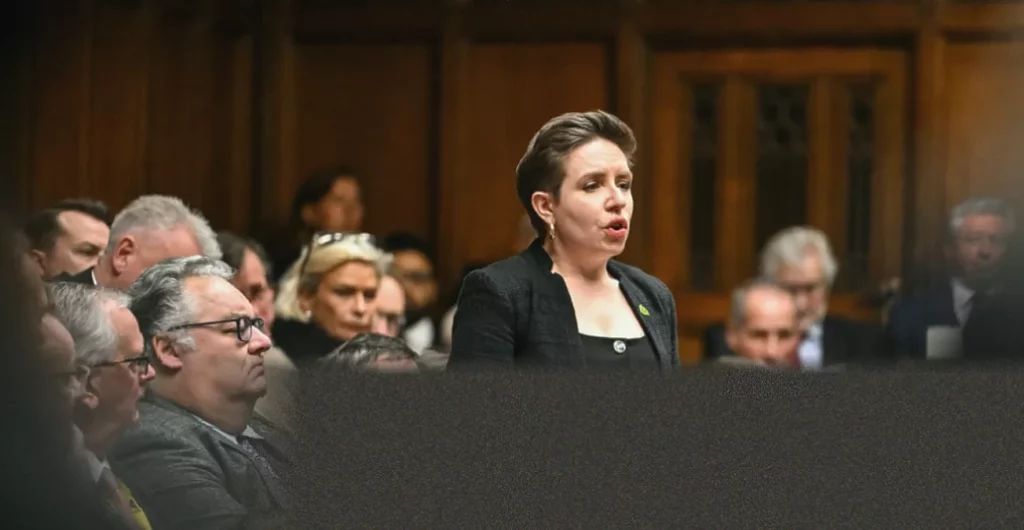
Carla Denyer, the Green Party MP for Bristol Central, has taken a leave of absence from her parliamentary duties after being diagnosed with burnout, sparking a wider debate about the unsustainable workload placed on elected representatives and the expectations the public places upon them. Denyer, who served as co-leader of the Green Party, announced she will be off work for “several weeks” on her doctor’s advice, citing “persistent health issues” that she had attempted to manage alongside the demanding hours and responsibilities of her role. She said she hopes that by speaking openly, she can help combat the stigma surrounding burnout and encourage a more honest conversation about the pressures of public life. Her constituency office will continue to operate as normal during her absence.
The response from fellow politicians was largely supportive, with many MPs from rival parties offering their best wishes on the grounds that one never truly knows what is happening beneath the surface of another person’s life. However, Denyer’s call for an “open conversation” has also drawn the predictable backlash: online venom, snark, and angry men on radio phone-ins questioning why politicians cannot handle “a few emails” without needing a lie-down, particularly when nurses and teachers are expected to soldier on regardless. Yet as Denyer herself noted, mental health issues are the most common cause of days off in the NHS in England, and teachers report the highest levels of work-related stress, depression and anxiety in Britain — suggesting that those in caring professions are most likely to understand. A harder-to-dismiss strand of criticism has come from people who say they too feel burnt out, often from caring for elderly parents or disabled children, but either cannot afford to stop or have no choice.
I can understand a minister or shadow minister suffering from burnout and consequently returning to the back benches.
But a backbench MP? With no formal responsibility other than voting? What is it that time is being taken out from?
What is it that there is a ‘leave of absence’… https://t.co/BiTrp2whm9
— Tom Harwood (@tomhfh) May 22, 2026
What burnout means — and why it matters
The term burnout was first identified in the 1970s to describe a specific combination of stress and high levels of dedication in caring professions — a kind of price paid for being conscientious under pressure. The World Health Organization defines it as a syndrome resulting from chronic workplace stress that has not been successfully managed, characterised by three dimensions: feelings of energy depletion or exhaustion; increased mental distance from one’s job, or feelings of negativism or cynicism; and reduced professional efficacy. The WHO classifies burnout as an “occupational phenomenon” rather than a medical condition. In its strict sense, burnout involves not just exhaustion but often moral injury — people becoming anxious that they cannot exercise life-and-death responsibilities in the way they were trained to, and consequently worrying that bad things will happen because of something they have overlooked.
The scale of the problem across the UK is stark. A Gallup survey found that 76% of workers claim to feel burnt out at work sometimes, but clinical burnout is distinct: it means dreading going to work every morning, having panic attacks, or becoming alarmingly detached from the job as a coping mechanism. A report from summer 2024 found that 65% of UK workers experienced burnout, a figure that had surged by 11 percentage points since 2022. By 2025, almost two-fifths of workers (39%) reported feeling burnt out. Stress is pervasive: 57% of workers feel stressed multiple days each week, and 15% report daily stress. Work-related mental health issues, including stress and burnout, are estimated to cost the UK economy £28 billion annually. More than half of all sick days are linked to stress, anxiety or burnout, and 91% of workers reported high or extreme levels of stress over the past year. Younger generations, particularly Gen Z, report higher rates of burnout than older demographics. Nurses, teachers and social workers are among those in high-stress, people-facing professions who are particularly susceptible.
The emotional toll of being an MP
The idea that being a backbench MP is not a real job appears particularly popular with certain commentators, though many of those same presenters are themselves backbench MPs who seem to find ample spare time for television appearances. Done properly, the role is several jobs in one: legislator, campaigner, representative and social worker. MPs routinely find themselves dealing with constituents facing severe personal crises — people who are about to lose their home or their children, or face deportation; families whose relatives are trapped by wars abroad; parents of children who have not been to school for months because no provision exists for their special needs or disabilities; families whose toddlers are coughing because their flat is rife with mould. Sometimes an MP can work miracles, but often all they can do is write a letter to someone else who might help, or seek a meeting with a junior minister who may — as the former safeguarding minister Jess Phillips said when she resigned — find that they cannot get the machine to respond either. Phillips, who resigned over disagreements with the government’s handling of safeguarding issues, stated that “the desire not to have an argument means we rarely make an argument, leaving opportunities for progress stalled and delayed.”
Research underscores the emotional toll of political work. A study of over 500 elected councillors and MPs in the UK found that emotional labour is a significant feature of political work, negatively impacting occupational well-being. This can manifest as “false-face acting,” where politicians feel they must manage others’ emotions without expressing their own — a behaviour linked to burnout. A survey revealed that 34% of MPs had probable common mental health problems, such as anxiety or depression, compared to 17% in a high-income comparison group. Despite this, many MPs are unaware of or unwilling to access in-house mental health support, with a significant portion hesitant to discuss their mental health with party whips or fellow MPs due to stigma. Like most stressful workplaces, parliament is full of people running on adrenaline all day and struggling to get to sleep at night.
Potential solutions — and the limits of stigma
One easy way never to burn out in such roles is to learn not to care that much — to treat constituents, patients or pupils as a necessary irritant, dodge obligations that are not career-enhancing, and develop a rhino hide. But if workplaces were filled entirely with hardened cynics, it would be the rest of society that suffers. The WHO definition points to the need for better management, training and resources to prevent chronic workplace stress. Yet those most at risk are often individuals whose stress cannot easily be managed because it does not come solely from work — unpaid carers in desperate need of a break at home, for instance — or because it arises from crises beyond any employer’s control. Denyer’s honesty is commendable, but stigma is not the only obstacle. Sick leave needs to be properly paid, and carers need properly funded respite. The truly burnt out need to stop, not just for their own sake but for everyone else’s.