


A mother from Michigan has described the “relief” she felt after being diagnosed with Mosaic Down’s syndrome at the age of 23 — a discovery that came only once doctors began investigating why three of her pregnancies had tested positive for the condition.
Ashley Zambelli, now 26, had spent years in and out of doctors’ surgeries with a baffling array of health problems, from a persistently high heart rate and dislocating joints to difficulties with reading and finishing tests at school. Yet no one could give her a clear explanation. It was only after her third child, Katherine, was born in 2023 that her obstetrician became suspicious. “Alarm bells started ringing for my OBGYN,” Zambelli told Metro. “She’d never had a patient with that many positive results before.”
Zambelli’s first pregnancy, in 2019, ended in a missed miscarriage. Hospital protocol required genetic testing on the tissue removed during the subsequent D&C procedure, and the result showed the baby had Down’s syndrome. Her second pregnancy, with daughter Lillian, now five, also tested positive for Trisomy 21, as did her fourth child, Katherine. At first, Zambelli and her husband, Taylor, assumed it was simply a matter of chance. “Everyone who has a baby has a small chance of having a child with Down’s syndrome,” she said. “We just thought that we must have a higher chance than others, as not all of our kids tested positive.”
But the repeated pattern eventually prompted her gynaecologist to refer her to a genetic counsellor. Initial blood tests came back normal, but the counsellor was not satisfied. She performed a buccal smear test — swabbing the inside of Zambelli’s cheek and mouth to collect tissue cells — and that finally provided the answer. Zambelli was diagnosed with Mosaic Down’s syndrome, a rare form of the condition in which only some cells carry an extra copy of chromosome 21.

What is Mosaic Down’s syndrome and why is it often missed?
Mosaic Down’s syndrome accounts for roughly 2 to 4 per cent of all Down’s syndrome cases, according to the Down’s Syndrome Association and other research cited by advocacy groups. The condition occurs when a person has a mix of two types of cells: some with the standard 46 chromosomes and some with an extra copy of chromosome 21 (trisomy 21). The proportion of affected cells can vary across different tissues — blood, brain, muscle or skin — and that percentage does not reliably predict a person’s clinical outcome, such as IQ or the presence of heart defects.
The prevalence of diagnosed Mosaic Down’s syndrome is estimated at around one in 27,000 people, but experts believe the true figure is higher because many cases go undetected. Some research suggests that up to 15 per cent of individuals diagnosed with standard Trisomy 21 Down’s syndrome may actually have the mosaic form, having been misdiagnosed. “People with Mosaic Down’s syndrome may have fewer characteristics of the condition than those with other types,” the Down’s Syndrome Association notes. However, because individuals with Down’s syndrome can display a wide range of abilities and physical features, broader generalisations are difficult to make.
Mosaicism can be uncovered only through genetic testing. Standard karyotyping — analysing a blood sample — can detect mosaicism when more than 26 per cent of cells are affected, but evaluating a larger number of cells can identify it even when only one per cent of cells are involved. In Zambelli’s case, the buccal smear test revealed that up to 20 per cent of her cells carry the extra chromosome. “I have a low-level mosaicism of Trisomy 21 in up to 20% of my cells,” she explained. The delay in diagnosis is common: Mosaic Down’s syndrome is frequently diagnosed in adulthood when people experience unexplained health problems or, as in Zambelli’s situation, have multiple pregnancies affected by Down’s syndrome.
Prenatal screening — such as the non-invasive prenatal screening (NIPS) done from about 10 weeks — can estimate the likelihood of Down’s syndrome but does not provide a definitive diagnosis. Invasive tests like amniocentesis or chorionic villus sampling can confirm it, but they carry a small risk of miscarriage. After birth, a physical examination can raise suspicions, but a chromosomal karyotype on a blood sample is used to confirm the diagnosis and identify mosaicism or translocations. Because Mosaic Down’s syndrome may present without distinct physical features, it can easily be overlooked.
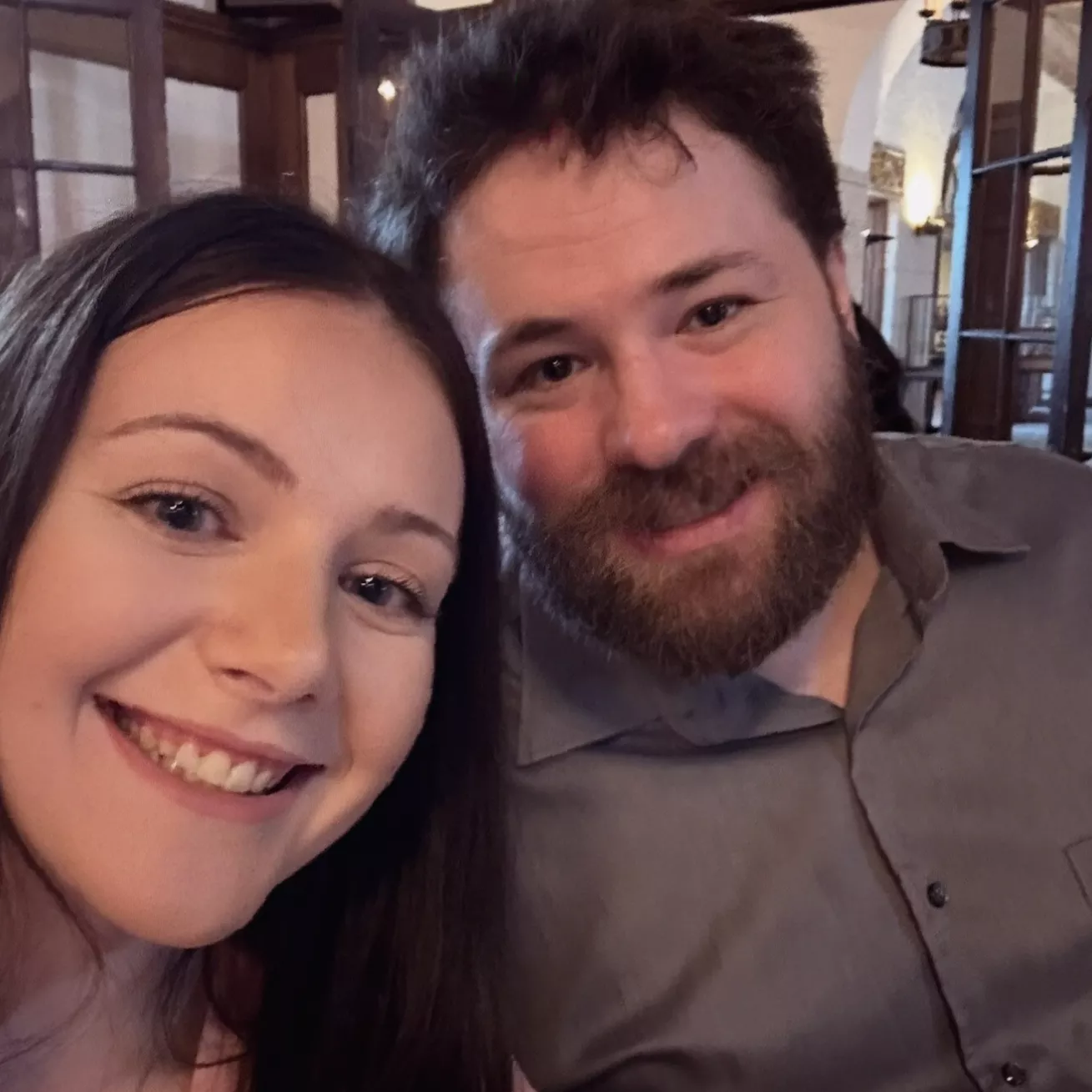
Lifelong health struggles finally explained
For Zambelli, the diagnosis brought an end to years of confusion. As a child, she had struggled at school. “I found school difficult,” she said. “It took me a lot longer to learn to read, and I struggled to do homework. I never managed to finish tests as I couldn’t answer the questions in time, so I often failed.” Doctors suspected lupus because her father had the condition, but when that diagnosis fell apart, “the doctors just stopped looking.”
Her physical symptoms included knee dislocation, jaw issues affecting movement, and a condition called inappropriate sinus tachycardia — an abnormally high heart rate. “Doctors knew something was going on with me, they just didn’t know what,” she recalled. The diagnosis, she said, was a moment of pure relief. “I was so happy when they gave me that diagnosis — it was finally an answer that I could add to my medical chart and use it to get the help I needed.”
Zambelli said she was at the hospital with Lillian when she received the call. “I got off the phone just as a nurse was coming in, and I was so happy. I’ve never seen so much concern on somebody’s face. She didn’t understand why I was so pleased to have been diagnosed with Down’s syndrome.” Zambelli now feels the diagnosis has deepened her bond with her two daughters who also have Down’s syndrome. “I almost feel like I can understand more of what they are going through and how their brain processes things — it takes me longer to process things too, so I can just relate with them a little better.”
Yet the condition has also created new difficulties in healthcare. “It’s been harder than I thought to get help for some of the symptoms I’m experiencing, because now everything is just chalked up to my diagnosis. Everything is blamed on Mosaic Down’s syndrome,” she said. Compounding the problem, some doctors do not believe her. “I’ve had people tell me I don’t have ‘real’ Down’s syndrome, and that I don’t look ‘Down’s syndrome enough’ because I don’t have any of the phenotypes of the condition. The only thing I have is that my ears are smaller and they sit a little lower, but nobody ever sees my ears.”

Advocacy and awareness on social media
Frustrated by the lack of medical knowledge, Zambelli began posting content about her experience on TikTok and Instagram. “I get messages all the time from doctors and nurses who tell me they didn’t know about it at all,” she said. “The main doctor I see for checkups wasn’t even aware that Mosaic Down’s syndrome was a thing.” Her videos have become so widely shared that biology professors have started using them in their lessons. “I feel honoured, but I can’t believe people are watching my videos in classes. I’m not a doctor, I don’t have a degree in science or biology, I’m just sharing my own experience.”
Zambelli has a 50 per cent chance of passing on the extra chromosome to any future children — a fact she now understands in the context of her own diagnosis. She also knows that adults with Down’s syndrome face increased risks for certain health conditions, including vision and hearing problems, thyroid issues, diabetes, heart disease, sleep apnoea and Alzheimer’s disease — regular health screenings are crucial. Organisations such as the Down’s Syndrome Association and Down Syndrome UK campaign for better support and challenge stereotypes, and World Down Syndrome Day on 21 March is a key date for raising awareness.
For now, Zambelli continues to share her story online, hoping to change perceptions. “I do really appreciate that they believe me and use me as an example – it’s cool, but weird,” she said. She added: “I’ve had people tell me I don’t look ‘Down’s syndrome enough’ — but nobody ever sees my ears.”