

Close Menu
    Useful
    • About Us
    • Contact Us
    • Advertise With Us
    • Health Explainers
    • Our Editorial Team
    Facebook
    HealthNewsDaily.co.uk
    • Home
    • NHS

      Patient spends £62,851 on height increase surgery to 6ft despite agonising and potentially fatal side effects

      3 June 2026

      Four in five frail pensioners missing essential NHS checks due to regional disparities

      3 June 2026

      Critical care patients at King’s College Hospital given new rooftop garden

      31 May 2026

      Resident doctors in England plan four-day June walkout

      27 May 2026

      New surgical assistant caught off guard by relaxed atmosphere in operating theatre

      25 May 2026
    • Health Policy

      Government stops short of promising no further aid cuts in letter to parliamentary committee

      3 June 2026

      Anti-abortion activists in NSW signal push to further restrict abortion access

      3 June 2026

      Health officials urged to probe fatalities connected with illicit diet injections

      3 June 2026

      Trial overhaul to provide prostate cancer screening for black men

      2 June 2026

      Asda and Amazon recall children’s sand kits over asbestos risk

      1 June 2026
    • Mental Health

      Federal workers suffer trauma after Trump administration’s unlawful sackings

      3 June 2026

      2026’s monk mode: manosphere trick or imperative

      2 June 2026

      Husband’s rare condition leaves him unable to produce sperm

      31 May 2026

      Diagnosis halted monthly rage attacks that had been tearing my family apart

      31 May 2026

      Nottingham killer’s mother says family tried to get help before triple murder

      29 May 2026
    • Wellness & Lifestyle

      Tenth of employees forgoing meals to afford fuel

      3 June 2026

      Disturbing statistic could bring social media scrolling to a halt

      3 June 2026

      GP stocks five freezer staples to extend life

      2 June 2026

      Doctor pinpoints triggers for after-lunch tiredness and remedies

      2 June 2026

      Peril in dismissing wellness influencers while doctors remain unsure, warns Ranjana Srivastava

      2 June 2026
    • Disease & Prevention

      DRC Ebola outbreak may have started in January, WHO chief suggests

      3 June 2026

      Major US Covid vaccine probe to hear from two UK doctors

      3 June 2026

      At 27 weeks pregnant, mother began chemotherapy and insists she never surrendered

      3 June 2026

      GLP-1 drug use linked to 30% lower breast cancer risk in women

      2 June 2026

      Cause of twin’s sudden 3st weight gain emerged post-mortem

      2 June 2026
    • Treatment & Research

      Poor sleep quality tied to feeling older than one’s actual age

      3 June 2026

      Drug allows bladder cancer patients to avoid surgery, doctors say

      2 June 2026

      Melanoma recurrence could be cut by new vaccine and drug combination

      1 June 2026

      Devi Sridhar: Cancer brings promise, trouble, horror and hope

      1 June 2026

      MHRA seizes 12,000 unlicensed weight-loss medicines in biggest operation to date

      1 June 2026
    HealthNewsDaily.co.uk
    • NHS
    • Health Policy
    • Mental Health
    • Wellness & Lifestyle
    • Disease & Prevention
    • Treatment & Research
    Home » Disease & Prevention » WHO says six to nine months for Ebola outbreak vaccine
    Disease & Prevention

    WHO says six to nine months for Ebola outbreak vaccine

    Sophie HargreavesBy Sophie Hargreaves20 May 2026
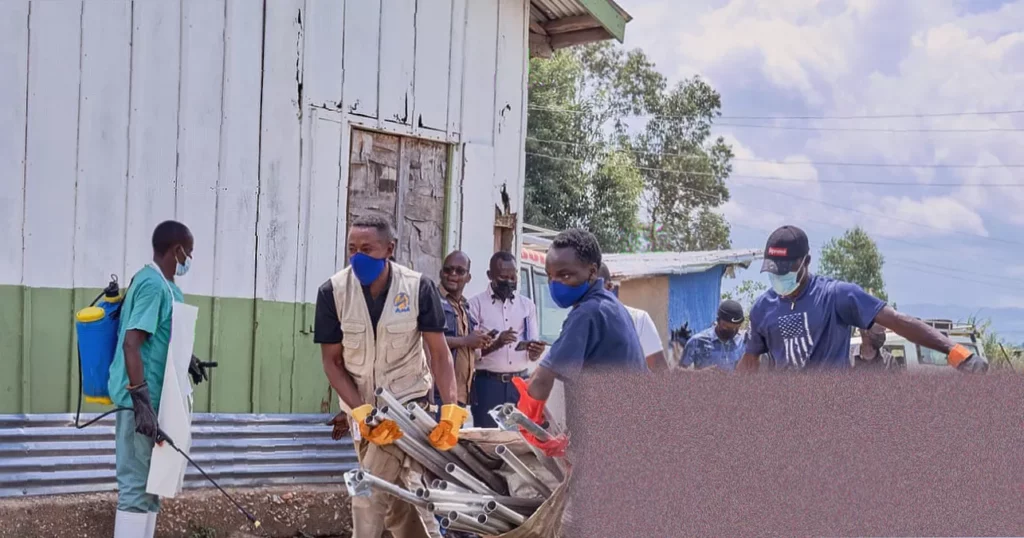
    WHO officials speaking at a press briefing about the Ebola outbreak in central Africa

    Doses of the most promising potential vaccine against the Bundibugyo virus driving the Ebola outbreak in central Africa will not be available for six to nine months, the World Health Organization has said, as the number of suspected cases climbed to nearly 600.

    Dr Tedros Adhanom Ghebreyesus, the WHO director-general, told a press briefing on Wednesday that there had been 139 suspected deaths from the outbreak, which has spread across the Democratic Republic of the Congo and into Uganda. The WHO declared the outbreak a Public Health Emergency of International Concern (PHEIC) on May 18, its highest global alert level, after laboratory analysis confirmed the Bundibugyo ebolavirus in eight of 13 blood samples collected from Ituri province.

    Dr Vasee Moorthy, who leads the WHO’s research and development blueprint, said the candidate vaccine uses the same basis as existing Ebola vaccines targeting the Zaire strain, but no doses are currently available for clinical trials. “The information that we have is this is likely to take six to nine months,” he said.

    An alternative vaccine, developed on the same Oxford University platform used for AstraZeneca’s Covid-19 jabs, could be available for clinical trials in two to three months, Dr Moorthy said, but there is “a lot of uncertainty” because data from animal efficacy tests are not yet available. Scientists at the University of Oxford are also working on multivalent vaccines that could protect against multiple filoviruses, including Bundibugyo, using platforms such as ChAdOx and mRNA, but no licensed vaccine or specific treatment currently exists for the disease.

    The outbreak is believed to have begun spreading “a couple of months ago”, according to WHO officials, who said a “super-spreader event” – possibly a funeral – in early May accelerated transmission. The WHO was first alerted by Congolese authorities in early May to a high-mortality outbreak of an unknown illness in Ituri province, and an investigation team dispatched on May 12 collected samples that confirmed Bundibugyo virus disease three days later. The DRC’s health ministry officially declared the country’s 17th Ebola outbreak on May 15, and Uganda confirmed its first imported case the following day. An American doctor working in the DRC also tested positive for the virus.

    As of the latest figures, there are 34 confirmed cases and 134 confirmed deaths, with nearly 600 suspected cases and 139 suspected deaths overall. The primary epicentre remains Ituri province in northeastern DRC, where more than 100,000 people have been displaced by armed conflict, and cases have also been detected in Goma, North Kivu province. Uganda has reported two confirmed cases and one death linked to travel from the DRC. Rwanda closed its land border with the DRC in response, and the US Centers for Disease Control and Prevention issued a Level 3 Travel Health Notice for the DRC and a Level 1 notice for Uganda. The WHO assesses the risk as high at the national and regional levels and low globally, while modelling from Imperial College London suggests the true number of cases could already exceed 1,000.

    The challenge of diagnosis and security

    The response effort is being severely hampered by a combination of endemic diseases and a volatile security situation, making it extremely difficult to identify and contain the virus. Dr Tedros said the security situation in Ituri, where armed conflict has displaced more than 100,000 people in recent months, had “complicated detection efforts”. Health facilities cannot provide care or carry out surveillance if health workers are fleeing, he warned, and access issues such as frequently cancelled flights are making it difficult to deliver tests and supplies to the remote, war-torn area.

    Compounding the problem, other illnesses endemic to the region, such as malaria and typhoid, share the same early symptoms as Ebola – fever, headache and muscle pain. This similarity can delay diagnosis, as patients may be treated for those diseases before Ebola is considered. The rarity of the Bundibugyo strain also makes detection through testing more difficult. Later symptoms of the virus include vomiting, diarrhoea and bleeding; the incubation period is 2 to 21 days, and infected individuals are typically not infectious until symptoms appear. The virus spreads through direct contact with blood or body fluids of an infected person or contaminated objects, not through the air. Previous Bundibugyo outbreaks have had case fatality rates between 25% and 50%, comparable to the Zaire strain. The virus was first identified in 2007 in western Uganda.

    Officials said identifying all existing chains of transmission is the absolute priority. “That will then enable us to really define the scale of the outbreak and be able to provide care,” said Dr Chikwe Ihekweazu, the WHO emergencies lead.

    WHO defends its response to criticism

    The WHO has pushed back against criticism from US Secretary of State Marco Rubio, who said the organisation had declared the outbreak “a little late”. Dr Tedros said such remarks were probably based on “a lack of understanding” of how the International Health Regulations (IHR) work. “We don’t replace the country’s work, we only support them,” he said. A senior State Department official had suggested it took the WHO ten days to confirm the outbreak, implying a faster response could have been possible. The WHO maintained that initial detection falls under national health authorities and that it provided support as soon as it was aware.

    The Trump administration withdrew the United States from the WHO earlier this year, a move criticised by some as weakening global health security and pandemic preparedness. The withdrawal has reduced WHO funding and led to the recall of US personnel. Despite this, the US has committed approximately $13 million in assistance and aims to open about 50 clinics in the DRC. The US has also implemented enhanced travel screening and entry restrictions to prevent the virus from entering the country.

    Clinical Trials COVID-19 Public Health Screening
    Share. Facebook Twitter LinkedIn WhatsApp Telegram
    Sophie Hargreaves
    Sophie Hargreaves

    Health Correspondent
    Sophie Hargreaves covers medical research, new treatments, disease outbreaks and prevention for Health News Daily. She holds a Master's degree in Health Sciences from the University of Leeds and has spent several years translating complex medical science into clear, accessible reporting for a general audience. Sophie focuses on the latest clinical trials, NICE and MHRA approvals, vaccination programmes and emerging health threats, always with an eye on what these developments mean for people in the UK.
    · MSc Health Sciences (University of Leeds), science communication volunteer, medical research literacy
    · Clinical trials and drug approvals (NICE, MHRA), cancer screening programmes, vaccination and outbreak response, women's health (endometriosis, PCOS, menopause), weight management treatments, AI in diagnostics

    Related Posts

    Disease & Prevention

    DRC Ebola outbreak may have started in January, WHO chief suggests

    3 June 2026
    Disease & Prevention

    Major US Covid vaccine probe to hear from two UK doctors

    3 June 2026
    Disease & Prevention

    At 27 weeks pregnant, mother began chemotherapy and insists she never surrendered

    3 June 2026
    Disease & Prevention

    GLP-1 drug use linked to 30% lower breast cancer risk in women

    2 June 2026
    Join Our Community & Win

    Each month we select one lucky follower to receive a prize from our partners. Follow us on our social channels for your chance to win.

    • Facebook
    Latest
    Disease & Prevention

    DRC Ebola outbreak may have started in January, WHO chief suggests

    3 June 2026
    Wellness & Lifestyle

    Tenth of employees forgoing meals to afford fuel

    3 June 2026
    Health Policy

    Government stops short of promising no further aid cuts in letter to parliamentary committee

    3 June 2026
    NHS

    Patient spends £62,851 on height increase surgery to 6ft despite agonising and potentially fatal side effects

    3 June 2026
    Health Policy

    Anti-abortion activists in NSW signal push to further restrict abortion access

    3 June 2026
    Disease & Prevention

    Major US Covid vaccine probe to hear from two UK doctors

    3 June 2026
    News Categories
    • NHS
    • Health Policy
    • Mental Health
    • Wellness & Lifestyle
    • Disease & Prevention
    • Treatment & Research
    Help
    • About Us
    • Contact Us
    • Advertise With Us
    • Health Explainers
    • Our Editorial Team
    About Us
    About Us

    Health News Daily provides trusted UK health news, covering NHS updates, medical research, public health and wellbeing with clear and reliable reporting.

    Facebook
    • Cookie Policy
    • Privacy Policy
    • Complaints Policy
    • Corrections Policy
    • AI Disclosure Policy
    • Editorial Policy & Ethics
    • Accessibility Statement
    • Medical Disclaimer
    • Terms & Conditions
    • Sponsored Content Disclosure
    • Copyright Notice
    © 2026 Healthnewsdaily.co.uk. All rights reserved.

    Type above and press Enter to search. Press Esc to cancel.