

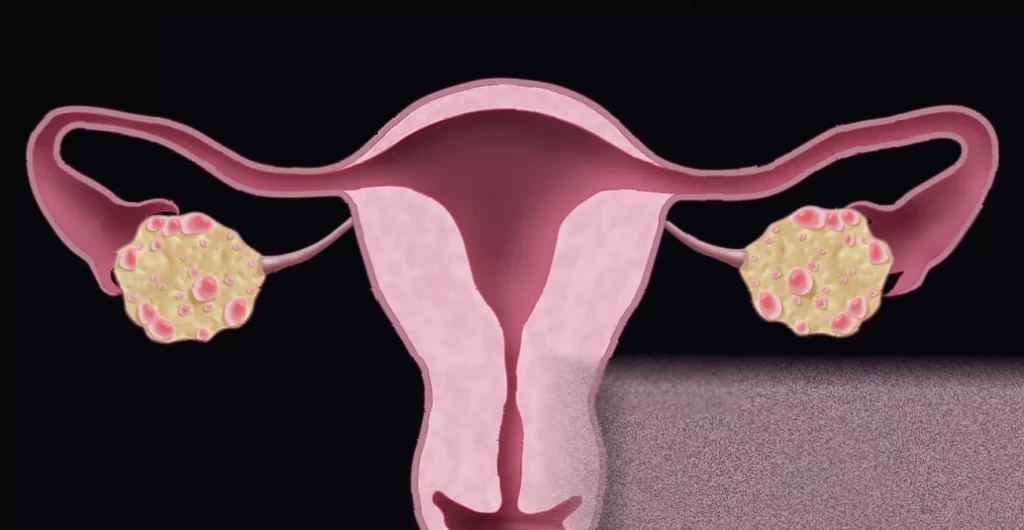
The NHS website has not yet updated its patient information to reflect the renaming of polycystic ovary syndrome (PCOS) to polyendocrine metabolic ovarian syndrome (PMOS), leaving the condition still listed under its previous name despite a formal change announced last week.
The condition, which affects an estimated one in eight women globally and more than 3.1 million people in the UK, was renamed after a 14-year international collaboration involving more than 50 patient and professional organisations, including the Endocrine Society, Verity (PCOS UK) and Monash University. More than 14,000 patients and health professionals contributed through surveys and workshops. The new name was chosen because the old one was considered inaccurate and misleading, overemphasising ovarian cysts that are not a defining feature of the syndrome. PMOS better describes the multisystem nature of the disorder, encompassing endocrine and metabolic dysfunction alongside reproductive effects.
Charity demands swift action
Neelam Heera-Shergill, CEO and founder of the grassroots charity Cysters, has urged the NHS to act quickly. “As an organisation rooted in reproductive and health justice, we welcome conversations around language that better reflect the realities and experiences of those living with PMOS/PCOS. But any name change must go beyond symbolism,” she said.
“Communities deserve clear, accessible and timely information so people are not left confused, excluded or struggling to access support and diagnosis. We hope to see the NHS move quickly to update patient information and public-facing resources in a way that is inclusive, culturally competent and centred on the needs of the communities most impacted.”
Heera-Shergill emphasised that clarity and visibility can make a real difference, particularly for people from marginalised backgrounds who already face barriers within healthcare.
Transition period and expert concerns
The announcement of the new name came with a three-year transition period for full implementation, with international guidelines expected to be updated by 2028. During this time both names are likely to be used interchangeably. Caroline Andrews, a trustee of the charity Verity, noted that the NHS is already navigating significant change, including the appointment of a new health secretary, James Murray, who replaced Wes Streeting, and the launch in April 2026 of the renewed Women’s Health Strategy for England. The UK National Institute for Health and Care Excellence (Nice) is also expected to publish the first standalone guidelines for PMOS/PCOS later this year.
“We fully appreciate that they [the NHS] need transition time just like we do, just like many other organisations do,” Andrews said. “And we’d much rather the NHS do this carefully and thoughtfully, considering this in placement with all the lines of care, such as the fact the Nice guidelines are coming through, and how this is fitting with the delivery of care.”
However, Dr Sophie Williams of the University of Derby, an expert on PCOS/PMOS and mental health, warned that the delay in updating the NHS website could cause confusion and undermine public trust. “When you go on the NHS website and it’s still [saying] polycystic ovaries, PCOS… as a member of the public, that might make you question the legitimacy of the information you’re getting,” she said.
Williams described the NHS website as one of the first places people turn to for rigorous, reliable healthcare advice. She suggested the NHS could run two shadow webpages that link together, one for PCOS and one for PMOS, or include text on the current page referring to the name change and noting that information is being reviewed. “The sooner all of those reliable sources of information can align, the clearer the messaging will be for somebody in the public who might not know where to go to get correct information,” she added.
Professor Channa Jayasena, an expert in reproductive endocrinology at Imperial College London, welcomed the name change as a “tremendous initiative” and a “great step forward” in helping women and clinicians understand the full seriousness of the condition. But he cautioned that the shift has only just occurred, with professional societies worldwide meeting to inform their members. “There’s a long history of many conditions sometimes still being called outdated things by clinicians because it takes a while for the workforce to be updated and upskilled. And I can guarantee you, not all doctors know about this at the moment, and therefore not all patients will,” he said. He said he fully expects professional societies, patient support groups and the NHS to update their websites over the next year or two.
NHS response
An NHS spokesperson said: “We routinely review and update content on the NHS website to ensure it reflects the latest clinical advice and will carefully consider these recommendations.” The spokesperson added that the NHS will continue work to improve women’s healthcare, including for this important group, which involves giving women more choice over their care, bringing down waiting times and delivering more care in communities.
As of the time of publication, the NHS website continues to describe the condition as polycystic ovary syndrome (PCOS). Its page lists three main features — irregular periods, excess androgen and polycystic ovaries — but notes that “despite the name, you do not actually have cysts if you have PCOS”. Treatment options detailed include lifestyle changes, medicines such as the contraceptive pill and clomifene, and in some cases laparoscopic ovarian drilling. The site also warns of increased risks of pregnancy complications and later-life health problems including type 2 diabetes and high cholesterol.