

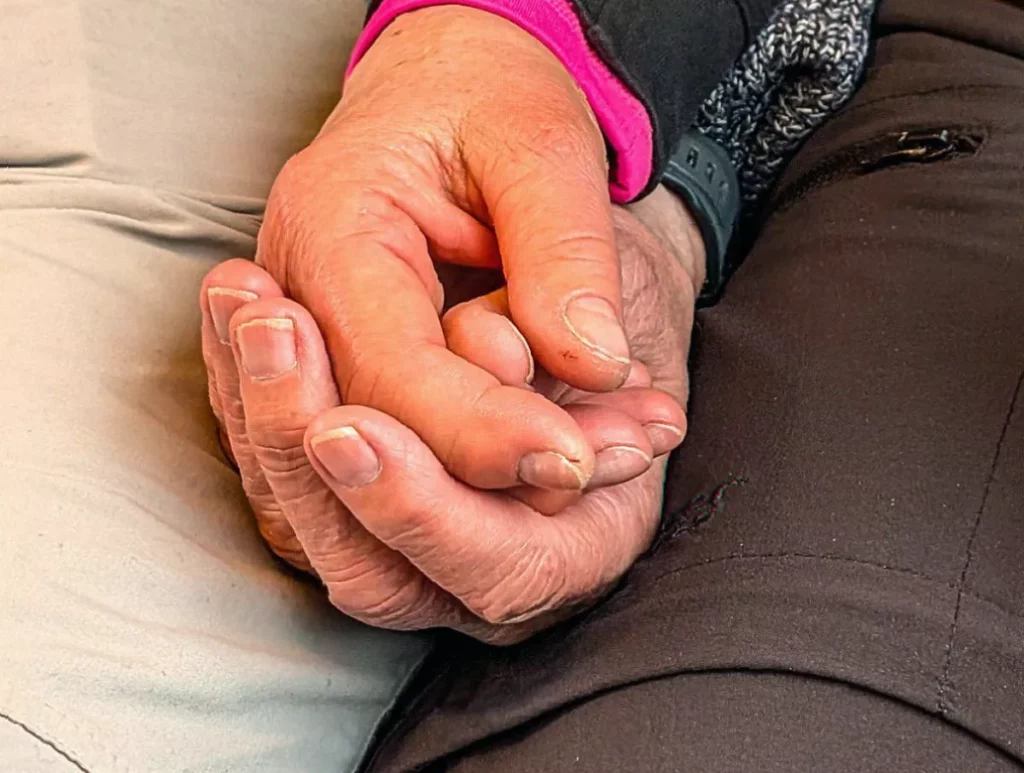
Britain’s poorest now face ill health in their 50s, experts have warned, as new analysis shows healthy life expectancy has crashed to the mid-50s in deprived communities and fallen by two years nationally over the past decade.
For some men in the worst-hit parts of England, the number of years they can expect to enjoy good health is barely 52, according to official data. In Blackpool, male healthy life expectancy stands at 50.9 years; in Hartlepool it is 51.2 years. Across the most deprived areas, healthy life expectancy has fallen to the mid-50s, meaning many cannot expect to remain well enough to work or live independently until the state pension age of 66.
The decline is not confined to the poorest neighbourhoods. Nationally, healthy life expectancy at birth in the UK is now 60.7 years for men and 60.9 years for women, according to the most recent figures for 2022–2024. That represents a fall of 1.8 years for men and 2.5 years for women compared with 2019–2021. The proportion of life spent in good health has also shrunk: from 79% to 77% for men and 77% to 73% for women between 2012–2014 and 2022–2024. In more than 90% of local areas across Great Britain, healthy life expectancy is now below the state pension age. In more than one in ten local areas it is below 55 years.
Britain is also falling behind comparable nations. Between 2011 and 2021, the UK was one of only five high-income countries to see a drop in healthy life expectancy, sliding from 14th to 20th place out of 21 comparable nations. Only the United States now records a lower figure. Countries such as Japan, Sweden and Switzerland continue to outperform the UK, with citizens typically remaining healthier for longer into old age.
The economic consequences are already severe. More than 2.8 million people are now economically inactive because of long-term illness — an increase of more than 400,000 since the start of the pandemic. The estimated cost to the UK economy of working-age ill health preventing people from working stood at between £240 billion and £330 billion in 2022, up by £126 billion to £181 billion since 2016. The rise in long-term sickness is now the primary driver of economic inactivity, particularly among those over 50.
But leading academics argue the crisis cannot be blamed on individual lifestyle choices alone. Professor Carl Heneghan, director of Oxford University’s Centre for Evidence-Based Medicine, and Dr Tom Jefferson, a researcher at the same centre, write on their Substack publication Trust the Evidence that the usual explanations — obesity, smoking, alcohol and poor diet — risk missing a bigger point. “These behaviours do not occur in a vacuum; they are shaped by income, education, environment, and opportunity,” they say. In one of the starkest conclusions of their analysis, they add: “Somehow, the UK has managed to build a society that makes ill health the default status.”
The societal drivers of decline
Research from Oxford Population Health has found that environmental factors — including smoking, socioeconomic status, physical activity and living conditions — have a greater impact on mortality and biological ageing than genetics. The experts argue that Britain’s health trends are rooted in these structural forces, not simply in the choices individuals make.

The UK is grappling with soaring rates of chronic disease. In 2023–2024, 64.5% of adults in England were estimated to be overweight or living with obesity, with 26.5% classed as obese — figures that have risen steadily since 2015–2016. Childhood obesity has also worsened: rates among reception-aged children rose from 9.9% in 2019–2020 to 14.4% in 2020–2021, and by the age of 10–11 more than a quarter of children are obese. Alongside obesity, levels of diabetes, cancer, heart disease and mental ill health are all elevated. By 2024, approximately 46% of adults over 16 had at least one long-term condition, and the prevalence of common mental health problems continues to increase, with one in four adults in England now experiencing such a problem each year.
The link between deprivation and poor health is stark. Over one in four people living in the most deprived areas report experiencing a common mental health problem each week, compared with around one in six in the least deprived areas. The cost of poor mental health in England alone is estimated at £300 billion a year. In Scotland, the gap in healthy life expectancy between the most and least deprived areas is 24.4 years for men and 24.2 years for women. In England, the gap between the most and least affluent areas is 19.4 years for men and 20.3 years for women. Some experts have suggested that years of austerity may have played a crucial role in entrenching these disparities.
The Covid pandemic accelerated the crisis, the researchers say, but it did not create it. Lockdowns led to reduced healthcare access, including a drop in cancer admissions and a sharp fall in primary care contact rates. Around one in three UK adults reported that their mental health deteriorated during the pandemic, and by January 2023 approximately two million people in the UK were living with long Covid — symptoms persisting at least 12 weeks after infection. “The pandemic, with its lockdowns and detrimental effects, accelerated the trend, but it did not create it,” Heneghan and Jefferson write. “The underlying issues that include rising chronic disease, widening inequalities, and a failure to focus on prevention were already entrenched.”
Professor Heneghan and Dr Jefferson say that governments have repeatedly ignored warnings about the need to address the drivers of ill health. “We need to be honest: we’ve been saying this for years, and it’s largely been ignored,” they said. “The economic consequences of ill-health are dire. Among working-age adults, labour market participation is already reducing and increasing pressure on public finances. We are, in effect, storing up costs for the future while failing to improve lives in the present.”
The academics say Britain now faces a defining moment over whether it confronts the crisis — or continues to drift. “The uncomfortable truth is that Britain’s health is coming apart at the seams,” they commented. “The question is whether this really is a watershed moment — or just another missed opportunity.”