

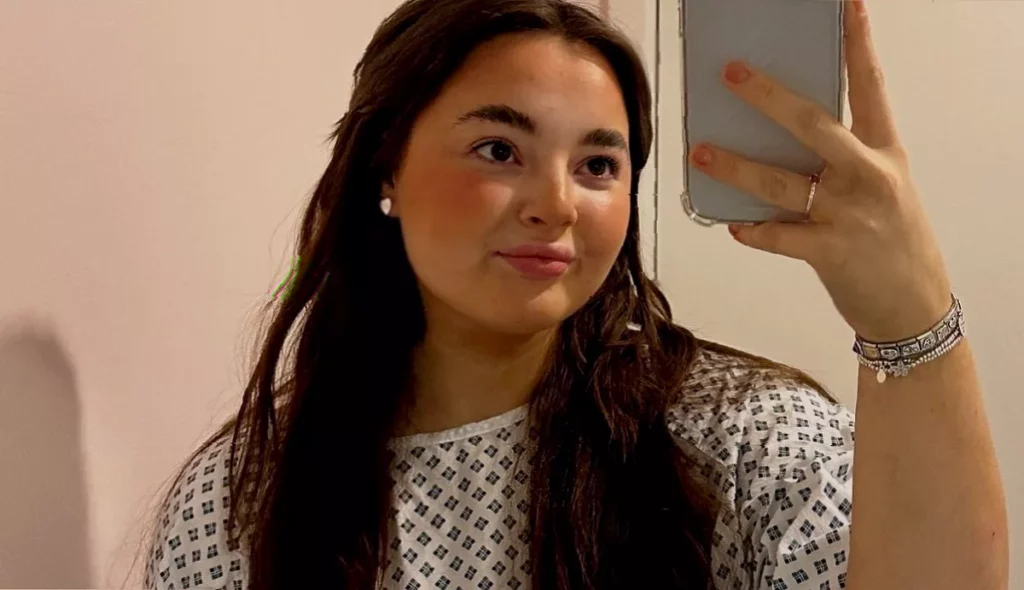
A student nurse from North Lanarkshire who dismissed her persistent cold symptoms as nothing more than a run of bad luck was given a devastating diagnosis when doctors confirmed she was suffering from an aggressive form of blood cancer that kills nearly 80 per cent of patients within five years.
Ayley Crawford, now 21, was 19 and studying nursing at Glasgow Caledonian University when she began experiencing repeated colds and sinus infections that simply would not clear up. The symptoms escalated into exhaustion, difficulty keeping food down, and a painful abscess under her arm. She initially sought help at an NHS out-of-hours clinic and was prescribed antibiotics, but it was only after she fainted during a practical nursing exam that her GP became seriously concerned.
A blood test revealed abnormal glucose levels, prompting a suspicion of diabetes. Ayley was referred to A&E at University Hospital Wishaw, where further tests confirmed high glucose levels and severe anaemia. On 23 May 2024, she was formally diagnosed with acute myeloid leukaemia (AML) carrying the NPM1-FLT3 mutation, and was immediately admitted to the Beatson Cancer Centre in Glasgow for urgent treatment.
An aggressive cancer with grave odds
Acute myeloid leukaemia is a fast-growing cancer of the blood and bone marrow that requires immediate intervention. According to charity Leukaemia UK, nearly 80 per cent of those diagnosed in the UK will not survive more than five years. Cancer Research UK figures for England show that survival rates vary significantly by age: more than 40 per cent of patients live for at least one year, but only just over 20 per cent survive five years or more, based on data from 2014–2016 for the longer-term measure. Other sources put the five-year survival rate at just 22 per cent.

In Ayley’s case, the specific genetic profile of her cancer – AML with the NPM1-FLT3 mutation – adds further complexity. The NPM1 mutation is common in AML and is generally linked to a better prognosis and improved survival, but the presence of a FLT3 mutation can alter that outlook depending on its type and level. Combined with other genetic changes, the disease becomes harder to treat.
Ayley herself recalled: “My first thought was ‘I’m going to die’. I knew something was wrong with me, but I never thought it would turn out to be cancer.”
Chemotherapy and a brief remission
She underwent four cycles of chemotherapy. The first cycle required six weeks in hospital as an in-patient, receiving intravenous chemotherapy. Subsequent cycles involved tablet-form medication and outpatient treatment via a continuous pump. The side effects were brutal: thinning hair, persistent sickness, and the constant struggle to keep her spirits up while far from home. “It was hard to be away from home, but I was honestly in quite good spirits throughout my treatment, thanks to the staff in the Beatson,” she said. “I kept thinking, I just need to get through this and then I’ll be able to get back to my life.”
By November 2024, doctors told Ayley she was in remission. She celebrated by picking up a part-time job, going on holiday, and making plans to return to university in September 2025. But those hopes were shattered in March 2025 when routine surveillance – a bone marrow biopsy – revealed that the leukaemia had returned. “I was devastated,” she said. “I felt like everything I went through with my treatment had been for nothing. I’d been saying to my family that I was feeling so well, it was a complete shock.”
‘The worst thing I’ve ever endured’
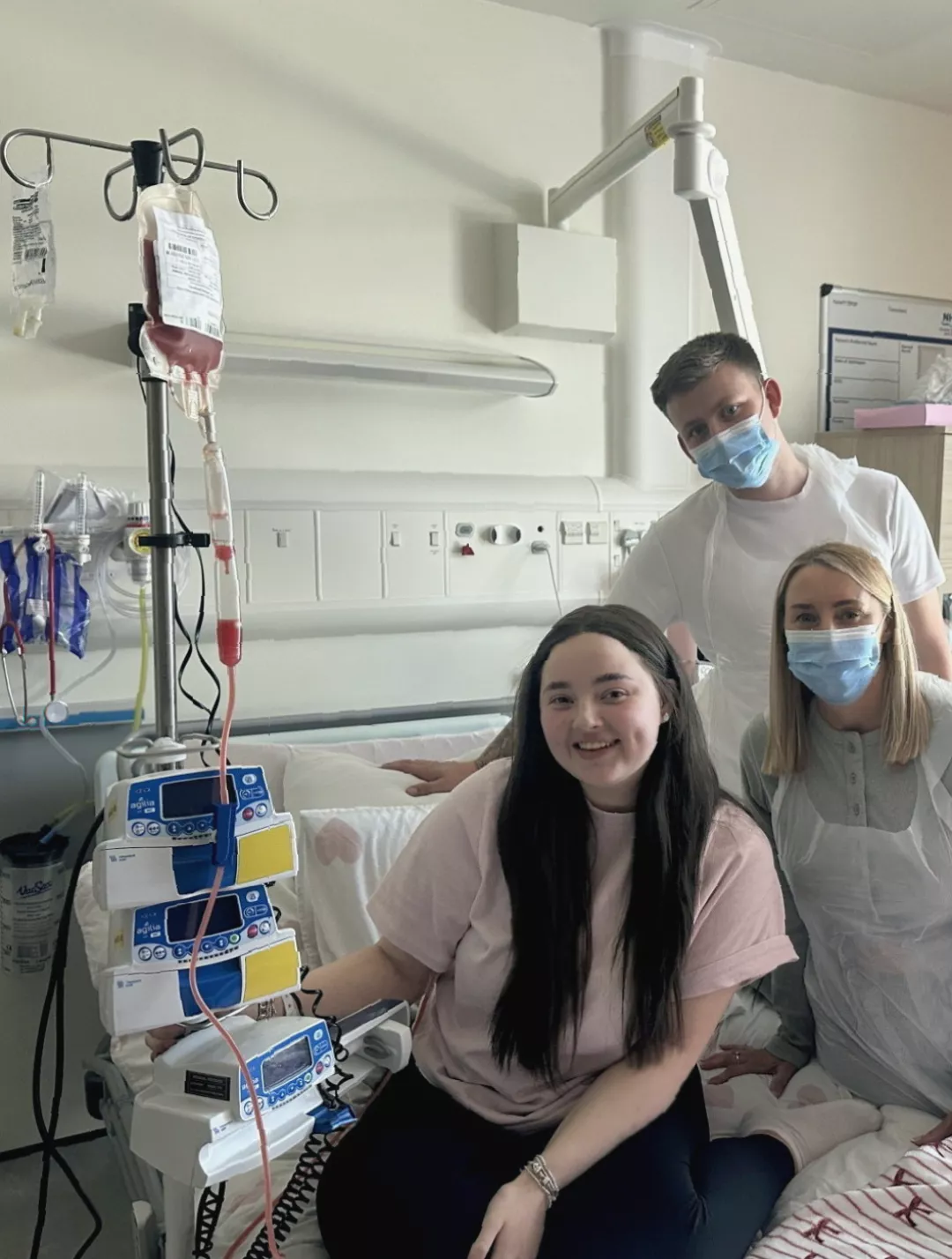
The relapse meant Ayley needed a stem cell transplant – a procedure that itself carries significant risks. Fortunately, a match was found with an anonymous 21-year-old male donor from Australia. In July 2025 she was admitted to the Queen Elizabeth University Hospital in Glasgow, where she spent five weeks in an isolation room on the Bone Marrow Transplant Unit (Ward 4B). The transplant itself, she said, was “the worst thing I’ve ever endured”.
The conditioning therapy caused mucositis – painful inflammation of the digestive tract lining – which led to severe ulcers in her stomach and oesophagus, making it impossible to eat or drink for four weeks. She lost significant weight. “I wasn’t allowed out of my room for five weeks, but my mum, boyfriend Riley and my friend Melissa were able to visit. They were my only three visitors allowed,” she recalled. After leaving hospital, Ayley spent three months in isolation at home, battling side effects from the medication and profound weakness that made even walking from the bedroom to the bathroom a challenge. “It was very hard for me dealing with how I looked as a young woman at the time,” she said. “Thankfully I had my family and friends, who supported me greatly.”
Rebuilding a life and a career
Ayley began to recover slowly. She was able to celebrate Christmas 2025, which she described as “so special”. She is now in remission once again, but the physical toll remains: she is still rebuilding muscle mass and recovering from the months of treatment. She lives with the anxiety of potential relapse, but is determined to move forward.

Her plan is to travel this summer and then return to Glasgow Caledonian University in September 2026 to complete her nursing degree. The experience has reshaped her ambitions. “Every ward I was on the nurses wanted me to come and join them once I was qualified,” she said. “So I may actually go into oncology.” She also acknowledged the emotional cost: “I was a 19-year-old finding my feet in the adult world and it was all taken away from me in the blink of an eye. I was supposed to be graduating this year, and I’ve missed countless experiences with friends. I feel so behind.”
Fiona Hazell, chief executive of Leukaemia UK, praised Ayley for sharing her story. “Many people aren’t aware of the signs and symptoms of leukaemia until they or someone they know is diagnosed,” she said. “Early diagnosis saves lives, so we want to make sure more people are aware of the signs and symptoms, and to contact their GP to ask for a Full Blood Count test if they’re experiencing them.” Common symptoms include fatigue, breathlessness, frequent or severe infections, bruising or bleeding easily, unexplained weight loss, fever, swollen lymph nodes, and bone or joint pain.
Ayley has also raised funds for the Beatson Cancer Charity, the centre that cared for her during chemotherapy. She remains grateful to the anonymous Australian donor who saved her life, and to the staff at the Queen Elizabeth University Hospital’s Bone Marrow Transplant Unit, which she described as providing exceptional care.