

Close Menu
    Useful
    • About Us
    • Contact Us
    • Advertise With Us
    • Health Explainers
    • Our Editorial Team
    Facebook
    HealthNewsDaily.co.uk
    • Home
      • Explainers
    • NHS

      British Medical Association may lay off up to a third of employees amid financial crisis

      4 July 2026

      GB Mums: lenient justice, NHS maternity and child abuse sentences leave children unprotected

      3 July 2026

      Advance heatwave plans needed, not last-minute fixes, Letters say

      3 July 2026

      NHS calls for PMOS checks in women with irregular periods

      1 July 2026

      Months-long neglect of four cancer signs by third of Britons blamed on GP appointment crisis

      30 June 2026
    • Health Policy

      Streeting demands NHS bosses appear before MPs over Nottingham maternity scandal

      4 July 2026

      Hospital waiting list patients to get three weeks’ advance warning under NHS England plans

      3 July 2026

      Britons back morning-after pill sales in corner shops, poll finds

      1 July 2026

      Maternity investigator Ockenden says Amos review offers no fresh insights

      30 June 2026

      Bereaved mother warns England maternity commissioner role poses danger

      30 June 2026
    • Mental Health

      Letter draws attention to parents of adult children neither employed nor studying

      3 July 2026

      England sees one million children seeking help for anxiety and autism

      29 June 2026

      Joanne McNally says bulimia and breakdown in her twenties ultimately transformed her

      27 June 2026

      Dopamine sites become internet’s most dismal craze

      27 June 2026

      Blue Heron film review: a serious, nuanced examination of childhood trauma in 1990s Canada

      25 June 2026
    • Wellness & Lifestyle

      Weight-loss drugs become new battleground after Brexit rows

      4 July 2026

      Hair transplant surgeon champions specific shampoo routine for greater volume and shine

      4 July 2026

      20-minute technique could help England fans stay awake for Mexico World Cup tie

      3 July 2026

      Doctor warns cutting back on fat could sabotage low-cholesterol diet

      3 July 2026

      NHS to cover cost of shopping for 30-minute daily walkers

      3 July 2026
    • Disease & Prevention

      South-east England forecast to reach 34C as week-long heatwave hits

      4 July 2026

      French fatalities jumped 30% during peak week of record June heatwave

      4 July 2026

      Toddler’s tantrums mistaken for typical toddler phase before grave diagnosis

      3 July 2026

      600,000 mosquitos released over Washington DC to exterminate biting pests

      2 July 2026

      Remaining seated for 30 minutes or more raises risk of cancer death

      2 July 2026
    • Treatment & Research

      Woman, 24, had 12 Botox vials injected into face for non-cosmetic reason

      4 July 2026

      Statins: the purpose and risks of cholesterol medication

      3 July 2026

      Extreme fatigue from Long Covid hampers business owner’s ability to run firm

      3 July 2026

      Five-minute habit can cut cancer risk by more than 20%

      2 July 2026

      Over-40s with obesity show cholesterol and blood pressure levels within normal BMI range, research finds

      2 July 2026
    HealthNewsDaily.co.uk
    • NHS
    • Health Policy
    • Mental Health
    • Wellness & Lifestyle
    • Disease & Prevention
    • Treatment & Research
    Home » Treatment & Research » Widely used joint supplement could accelerate Alzheimer’s, experts warn
    Treatment & Research

    Widely used joint supplement could accelerate Alzheimer’s, experts warn

    Sophie HargreavesBy Sophie Hargreaves11 June 2026
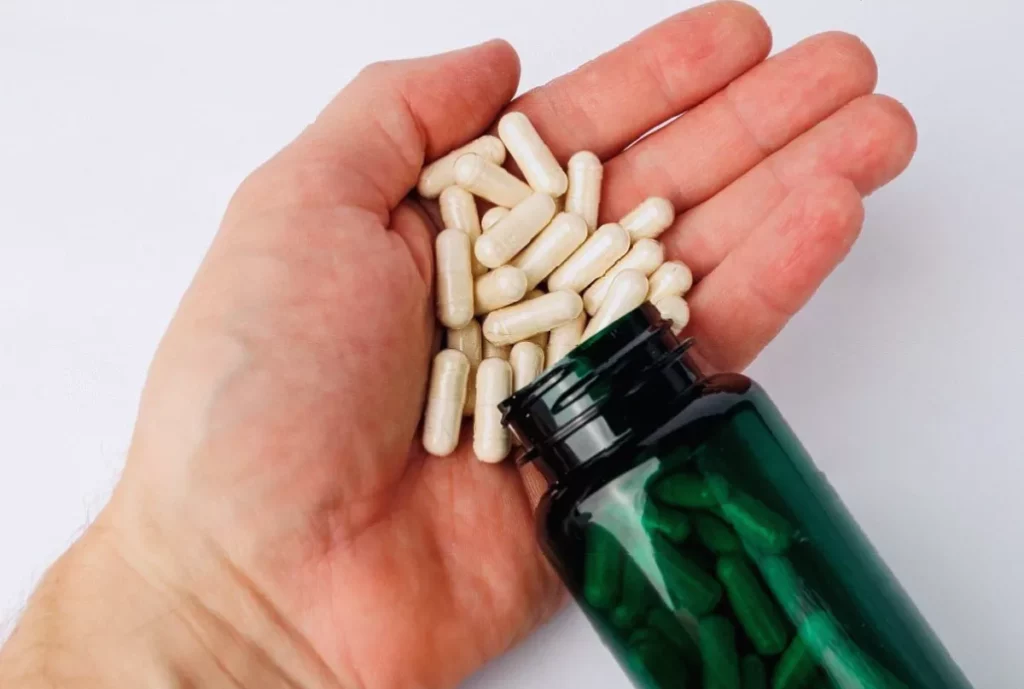
    Close-up of a hand holding a bottle of glucosamine tablets in a kitchen

    A widely used joint supplement taken by millions of older adults for arthritis pain has been linked to accelerated cognitive decline, new research suggests, raising urgent questions about the safety of a remedy that many patients buy without prescription.

    Glucosamine, sold over-the-counter in pharmacies and supermarkets across the UK, is a staple of self‑care for osteoarthritis. In the UK Biobank – one of the country’s largest health databases – roughly one in five participants report taking it regularly. Across the Atlantic, about 40 million Americans use it each year to ease joint inflammation and pain. Yet despite this popularity, official guidelines in Britain have long been cautious: the National Institute for Health and Care Excellence (NICE) does not recommend glucosamine for osteoarthritis, citing inconsistent trial results and a lack of strong evidence of meaningful benefit. GPs no longer prescribe it on the NHS, deeming it not cost‑effective. Some patients do report mild relief, particularly with glucosamine sulphate at 1500 mg daily, but the effects are considered modest.

    Study links supplement to faster decline and higher death risk

    Now a study published in Nature Metabolism by neuroscientists at the University of Florida suggests the supplement may be doing more harm than good for those already on the path to dementia. Using artificial intelligence to analyse anonymised UF Health records from 2012 to 2024, the team identified patients diagnosed with Alzheimer’s disease and related dementias, or with mild cognitive impairment (MCI) – a stage often preceding Alzheimer’s. Among these patients, about eight per cent reported using glucosamine, representing 1,896 individuals with established dementia and 2,750 with MCI.

    After adjusting for age, sex and demographics, the data showed that those with MCI who took glucosamine faced a 25 per cent greater likelihood of progressing to Alzheimer’s disease compared with non‑users. For patients already living with dementia, the same supplement was linked to a 25 per cent increase in mortality risk. Notably, this higher death rate was not seen among the MCI group, suggesting the supplement’s effects may become more dangerous as the disease advances.

    Senior author Ramon Sun, director of the Center for Advanced Spatial Biomolecule Research, said: “A lot of these people actively take an over‑the‑counter supplement that could be making their disease progression worse.” Co‑author Matt Gentry, chair of the university’s Department of Biochemistry and Molecular Biology, acknowledged the data are preliminary: “While it’s an association and not proof of causality, it does raise an important clinical question that now deserves much more attention.”

    The findings add to a complex picture. Earlier large‑scale studies, including some using UK Biobank data, had suggested that regular glucosamine use might be linked to a lower risk of dementia, including Alzheimer’s and vascular dementia. The University of Florida researchers stress that their work is observational and does not prove cause and effect; human clinical trials are needed before any definitive conclusions on safety can be drawn.

    How glucosamine may fuel the disease

    To understand what might be happening inside the brain, the team investigated a metabolic pathway that is already known to be dysregulated in Alzheimer’s. The process involves attaching sugar molecules to cellular proteins – a kind of “sugar‑tagging” that becomes overly active in the disease. Glucosamine, a naturally occurring sugar‑related compound, can cross the blood‑brain barrier. Once inside the brain, it appears to feed into this aberrant pathway, providing raw material for excessive sugar attachment.

    MRI brain scan showing signs of cognitive decline in an elderly patient

    Experiments in genetically modified mice confirmed the effect. When the animals were given glucosamine, the sugar‑tagging of proteins increased significantly and their recognition memory – the ability to remember previously encountered objects or situations – worsened. Crucially, when the scientists chemically blocked the attachment process, the mice’s memory function improved.

    Analysis of human brain tissue from the UF Neuromedicine Brain and Tissue Bank provided further evidence. Samples from Alzheimer’s patients showed markedly elevated levels of sugar attachment to proteins compared with healthy controls. The team believes this metabolic dysfunction may actively drive disease progression rather than merely accompany it.

    Senior author Sun said: “Our results suggest that altered metabolism is a significant contributor to Alzheimer’s progression and, in addition, addressing the metabolic defect could be an important complement to approaches focused on Alzheimer’s plaques and tangles.”

    Context and cautions for users

    The supplement is classified as a dietary supplement by the US Food and Drug Administration, meaning it is regulated less strictly than medicines. In the UK, Glucosamine is sold in sulphate and hydrochloride forms, and while generally considered safe, it carries some side effects: mild gastrointestinal issues such as nausea, indigestion and diarrhoea, heartburn and bloating. Those with shellfish allergies should be cautious, as many products are derived from shellfish. It may also interact with blood‑thinning medication like warfarin – increasing bleeding risk – and could affect blood sugar levels in people with diabetes, requiring careful monitoring.

    The researchers emphasise that their findings are preliminary. Gentry noted: “The electronic health record data are very provocative,” but cautioned that they show an association, not proof. The study does, however, add weight to the growing recognition that what we put into our bodies can have unintended consequences for brain health – and that for some of the most vulnerable patients, a common joint pain remedy may be doing far more harm than good. No definitive recommendation can yet be made; the team calls for clinical trials to determine whether glucosamine should be avoided by people with cognitive impairment.

    Allergies Alzheimer's Clinical Trials Dementia Diabetes NICE Stress
    Share. Facebook Twitter LinkedIn WhatsApp Telegram
    Sophie Hargreaves
    Sophie Hargreaves

    Health Correspondent
    Sophie Hargreaves covers medical research, new treatments, disease outbreaks and prevention for Health News Daily. She holds a Master's degree in Health Sciences from the University of Leeds and has spent several years translating complex medical science into clear, accessible reporting for a general audience. Sophie focuses on the latest clinical trials, NICE and MHRA approvals, vaccination programmes and emerging health threats, always with an eye on what these developments mean for people in the UK.
    · MSc Health Sciences (University of Leeds), science communication volunteer, medical research literacy
    · Clinical trials and drug approvals (NICE, MHRA), cancer screening programmes, vaccination and outbreak response, women's health (endometriosis, PCOS, menopause), weight management treatments, AI in diagnostics

    Related Posts

    Treatment & Research

    Woman, 24, had 12 Botox vials injected into face for non-cosmetic reason

    4 July 2026
    Treatment & Research

    Statins: the purpose and risks of cholesterol medication

    3 July 2026
    Treatment & Research

    Extreme fatigue from Long Covid hampers business owner’s ability to run firm

    3 July 2026
    Treatment & Research

    Five-minute habit can cut cancer risk by more than 20%

    2 July 2026
    Join Our Community & Win

    Each month we select one lucky follower to receive a prize from our partners. Follow us on our social channels for your chance to win.

    • Facebook
    Latest
    Health Policy

    Streeting demands NHS bosses appear before MPs over Nottingham maternity scandal

    4 July 2026
    Disease & Prevention

    South-east England forecast to reach 34C as week-long heatwave hits

    4 July 2026
    Treatment & Research

    Woman, 24, had 12 Botox vials injected into face for non-cosmetic reason

    4 July 2026
    NHS

    British Medical Association may lay off up to a third of employees amid financial crisis

    4 July 2026
    Wellness & Lifestyle

    Weight-loss drugs become new battleground after Brexit rows

    4 July 2026
    Wellness & Lifestyle

    Hair transplant surgeon champions specific shampoo routine for greater volume and shine

    4 July 2026
    News Categories
    • NHS
    • Health Policy
    • Mental Health
    • Wellness & Lifestyle
    • Disease & Prevention
    • Treatment & Research
    Help
    • About Us
    • Contact Us
    • Advertise With Us
    • Health Explainers
    • Our Editorial Team
    About Us
    About Us

    Health News Daily provides trusted UK health news, covering NHS updates, medical research, public health and wellbeing with clear and reliable reporting.

    Facebook
    • Cookie Policy
    • Privacy Policy
    • Complaints Policy
    • Corrections Policy
    • AI Disclosure Policy
    • Editorial Policy & Ethics
    • Accessibility Statement
    • Medical Disclaimer
    • Terms & Conditions
    • Sponsored Content Disclosure
    • Copyright Notice
    © 2026 Healthnewsdaily.co.uk. All rights reserved.

    Type above and press Enter to search. Press Esc to cancel.