

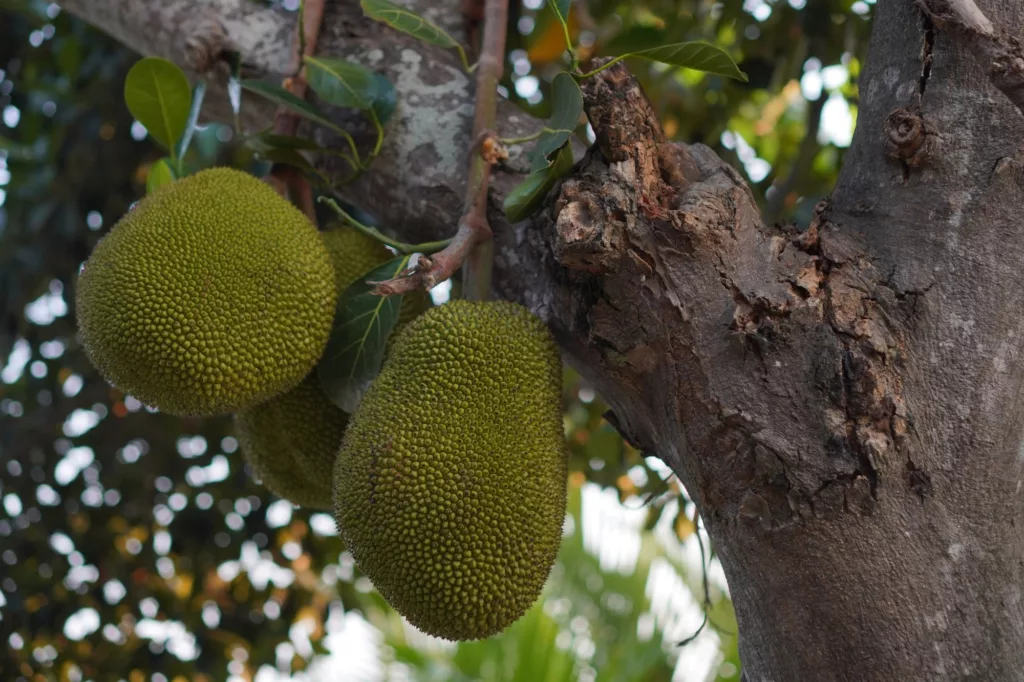
A new biomaterial combining latex from jackfruit, extract from pomegranate peel and a common cholesterol-lowering drug could regenerate gum tissue lost to severe periodontitis, according to research published by scientists at the Pontifical Catholic University of São Paulo (PUC-SP) in Brazil.
The material, described in the journal Polymer Bulletin, is designed to tackle the chronic inflammatory condition that progressively destroys the supporting structures around teeth, leading to bone deterioration and loosening of the tooth-gum connection. Current treatments focus largely on managing infection and controlling inflammation, with limited ability to restore what has already been lost. Guided tissue regeneration and bone grafting are available but outcomes remain inconsistent.
How the three ingredients work together
Professor Eliana Aparecida de Rezende Duek, who coordinated the study, said the team selected jackfruit latex for its sticky characteristics. “We began to view latex extracted from jackfruit as an interesting alternative, as it has adhesive properties,” she explained. “This led us to believe that it could remain longer at the site affected by periodontitis, promoting a more targeted release of therapeutic compounds and potentially reducing the need for systemic antibiotic use.”
Jackfruit (Artocarpus heterophyllus) is the world’s largest edible fruit, native to South or Southeast Asia but widely cultivated in tropical regions including Brazil, where it was introduced in the 17th century. The latex acts as a mucoadhesive matrix, allowing the other active ingredients to stay at the damaged tissue site for extended periods.
Pomegranate peel extract brings germ-fighting properties when applied directly to tissue. Research has shown that pomegranate extracts exhibit antibacterial, anti-inflammatory, antioxidant and astringent qualities, and studies have found that pomegranate peel mouthwash can significantly reduce plaque and gingival indices, as well as lower C-reactive protein levels in patients with gingivitis. The extract has also been explored as an adjunct to scaling and root planing procedures, showing reductions in inflammatory markers and clinical symptoms. Pomegranates thrive in arid and semi-arid climates and are cultivated in tropical and subtropical regions, including Brazil, where the ‘Wonderful’ variety is common in São Paulo.
Simvastatin, a statin typically prescribed on the NHS in doses of 10mg, 20mg, 40mg or 80mg to lower cholesterol, has been shown in previous studies to have anti-inflammatory effects and the ability to encourage bone formation. Research indicates that statins can alter the behaviour of immune cells such as macrophages, decreasing levels of pro-inflammatory cytokines like IL-6 and IL-8 while increasing anti-inflammatory cytokines like IL-10. Clinical trials using topical simvastatin gel alongside scaling and root planing have demonstrated reduced probing depths and gingival index scores, increased clinical attachment and improved intrabony defect fill compared with placebo. Topical delivery is considered more effective than oral administration due to reduced systemic side effects and better availability at the site of action.
The combination is designed to fight infection, reduce inflammation and stimulate the regrowth of damaged periodontal structures — addressing multiple aspects of the disease simultaneously.
Laboratory testing and results
The researchers tested the gel using human stem cells derived from fat tissue. Simvastatin was incorporated at three different concentrations: 0.3 per cent, 0.6 per cent and 1.2 per cent. None of these levels compromised the gel’s structural integrity, and all were deemed safe for potential use.
Crucially, every concentration triggered osteoinduction — the biological process whereby cells transform into bone-forming tissue — within a fortnight, with effects intensifying by day 21. This supports the material’s potential for bone regeneration in periodontal tissues.
“Overall, the results were very encouraging for us,” said Professor Duek. However, she stressed that considerable work remains before the treatment reaches patients. “Despite these promising results, we’re continuing to move forward with new studies to more thoroughly evaluate the efficacy and safety of the system,” she added.
The journal Polymer Bulletin, which published the study, has a reported impact factor of 4.0 in 2025.
Periodontitis is recognised not just as a dental issue but as a systemic problem linked to other health complications such as diabetes and heart disease. In the UK, dental research is supported by bodies including the National Institute for Health Research, the Royal College of Surgeons of Edinburgh, the British Society of Periodontology and Implant Dentistry, and NHS Education for Scotland, among others. Broader advances in periodontology include genetic susceptibility testing, microbiome-targeted therapies, photodynamic therapy, AI-powered diagnostics, salivary biomarker tests and microsurgery — all of which aim to improve early detection and outcomes.