


Scientists are developing a method to reduce saturated fat in sausage rolls without destroying the flaky pastry that makes them a British institution. With an estimated 10 to 15 million sausage rolls sold in the UK every week, researchers at Heriot-Watt University in Edinburgh have warned that a single example can contain more than 60 per cent of an adult’s recommended daily saturated fat intake.
The health toll of a national snack
High levels of saturated fat in the diet are linked to raised cholesterol and an increased risk of heart disease. The British Dietetic Association notes that most people in the UK consume around 20 per cent more saturated fat than official guidelines recommend. Professor Stephen Euston, a food chemist at Heriot-Watt’s School of Engineering and Physical Sciences, said that reducing the saturated fat content of these “ubiquitous snacks” could have “a very positive impact on the nation’s health and waistlines”.
Why flaky pastry is so difficult to fix
The puff pastry used in sausage rolls and other laminated baked goods – such as croissants, Danish pastries and sweet or savoury turnovers – relies on solid fat for its signature flaky structure. “Making flaky pastry is surprisingly complicated,” Professor Euston explained. “The fat is not just there for flavour; it plays a crucial structural role in the pastry. You need the fat sitting between the layers of dough so that when the pastry bakes, steam forces those layers apart and gives you that flaky texture people expect. Simply replacing the fat with a healthier oil doesn’t work, because liquid oils lack the structure needed to separate the pastry layers.”
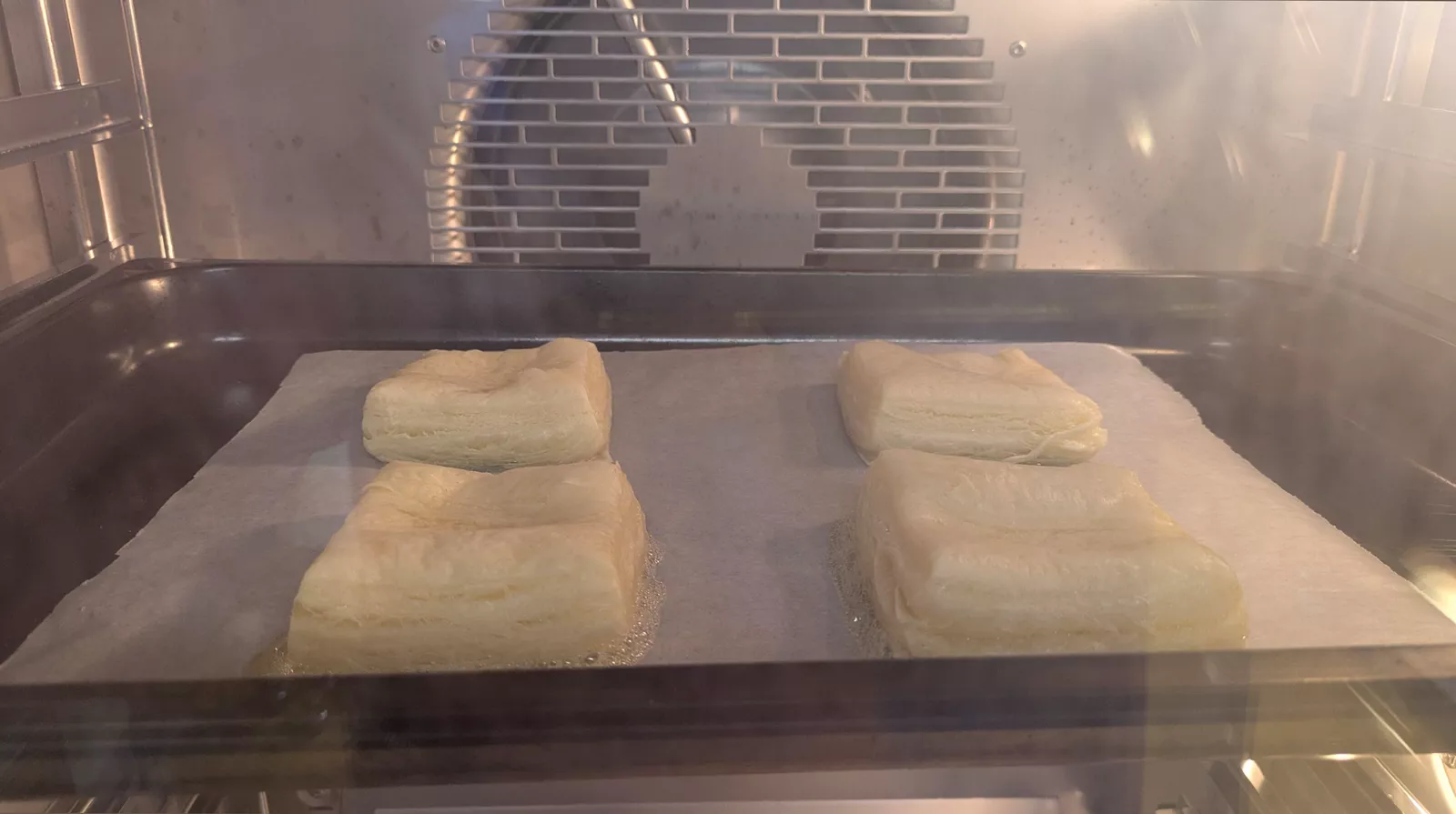
The team’s solution is a process called oleogelation, which transforms healthier liquid oils – such as sunflower or rapeseed oil – into a “solid-like fat”. Oleogelation works by using organogelators to create a network that immobilises the liquid oil, mimicking the behaviour and functionality of traditional solid fats. The aim is to deliver the same flaky texture the public expects while “significantly” cutting saturated fat.
The researchers are focusing on oils from crops that can be grown in the UK. This approach is intended to minimise the environmental impact and reduce food miles, and also addresses consumer concerns about ingredients such as palm oil, which is linked to deforestation.

Easier production for bakers
Traditional laminated pastry often requires repeated chilling during production to prevent the fat layers from melting as the dough is folded. Professor Euston said the team hopes their oleogels will “stay stable at higher temperatures, which means manufacturers may not have to chill the pastry as much. If we are lucky, they might not need to chill it at all.” That could streamline manufacturing and cut energy costs, benefiting bakers as well as consumers.
Beyond the sausage roll
If the technique proves successful, the team believes it could be applied to a wide range of popular pastries – croissants, Danish pastries, turnovers – making them healthier alternatives. The researchers are also exploring whether the same oleogelation technology could reduce saturated fat in vegan cheese alternatives.

The 10-month project is funded by the UK Research and Innovation Engineering and Physical Sciences Research Council (UKRI EPSRC) through its Impact Acceleration Awards, which are designed to turn promising research into practical solutions. The team at Heriot-Watt is collaborating with industry partners New Food Innovation, a UK-based multidisciplinary food business that supports companies from concept to commercialisation, and AB Mauri, a global leader in yeast and bakery ingredients and a division of Associated British Foods, whose global headquarters is in Peterborough.
Dr Andrew Bourne, UKRI EPSRC’s executive director for innovation and partnerships, said: “UKRI EPSRC’s Impact Acceleration Awards use public funding to turn promising research into practical solutions, and this project does exactly that. By taking innovative food science out of the lab into the kitchen and testing it with everyday consumers, it has the potential to make the nation’s favourite snacks healthier and make a genuine difference to our health and wellbeing.” The next stage will involve moving the modified pastry from the laboratory into the kitchen and putting its taste to the test with real people.