

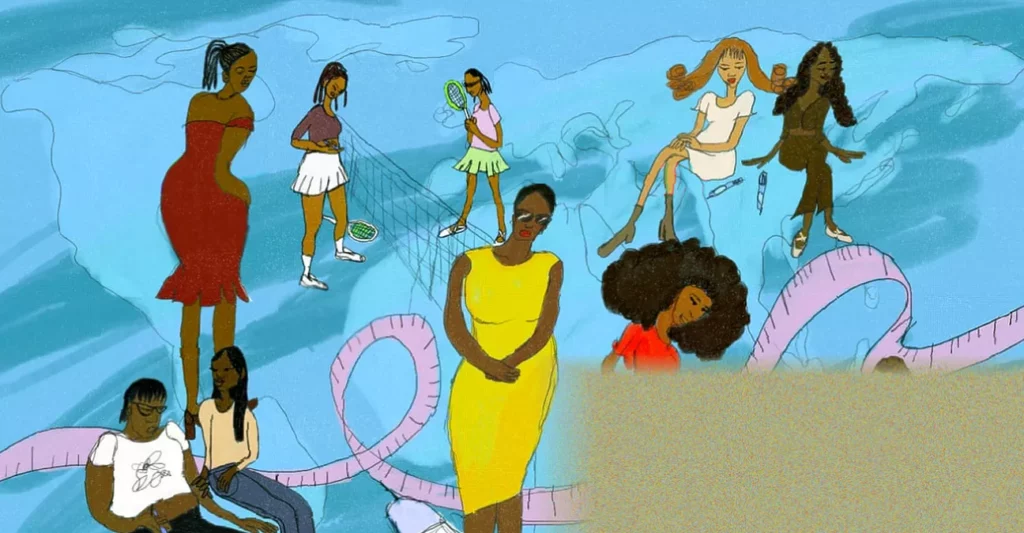
Weight-loss drugs such as Ozempic and Mounjaro are reshaping beauty standards in ways that may threaten long-standing Black beauty ideals, raising uncomfortable questions about cultural identity, class aspiration and the pressure to conform to an increasingly narrow body ideal.
The medications, known as GLP-1 agonists, mimic a natural hormone called glucagon-like peptide-1 to regulate blood sugar, slow digestion and reduce appetite. Originally developed to manage type 2 diabetes, they have become a global phenomenon for their dramatic weight-loss effects. As their use accelerates, a new aesthetic is emerging – one characterised by rapid fat loss, a gaunt facial appearance dubbed “Ozempic face”, and a cultural drift back towards extreme thinness reminiscent of the “heroin chic” of the 1990s. This shift, experts suggest, could become a new ideal, mirroring past trends where thinness was glorified, and potentially undoing years of progress in body inclusivity and the celebration of diverse shapes.
Weight-loss drugs and the shifting ideal
Uptake of GLP-1s varies across the Black diaspora, with distribution largely dependent on robust health insurance or publicly funded prescriptions. Reports indicate accelerating use in countries with growing middle classes, such as South Africa, Ghana and Kenya, where the drugs are becoming imbued with connotations of social mobility. One weight-loss drug user in Nairobi said that “big size” had previously been the fashion – but now the trend is to be “slim, tiny”. The drugs remain predominantly privately prescribed and accessible only to the affluent, creating an additional layer of desirability: losing weight is associated not just with digital status but with class elevation.
This emerging “GLP-1 look” blends features that are often coded as both Black and white. The ideal body now often combines a slight frame, small waist and slim nose with full lips, sculpted cheekbones and a larger, augmented buttocks – a hybrid aesthetic popularised by figures such as Kim Kardashian. This “Kardashian body” has been criticised as cultural appropriation, with the Kardashians accused of adopting Black embodiments for profit. At the same time, beauty trends are constantly shifting: the “slim thick” body type, once popularised within the Black community, is giving way to a return of extreme thinness amplified by GLP-1s. For Black women, this creates a painful tension between historically celebrated fuller figures and a new pressure to shrink.
Medical promise and cultural concerns
The health benefits of GLP-1s for Black communities are significant. Black populations face higher rates of diabetes due to socioeconomic factors, and these drugs offer a revolutionary tool for managing the condition. One journalist of Sudanese origin, writing about the issue, noted that diabetes is so widespread in east Africa and parts of the Caribbean that many are resigned to getting it, suffering symptoms from regular loss of consciousness to amputations. Her own grandmother died from a diabetes-related illness. “For Black communities, GLP-1s potentially pose health benefits that are nothing short of revolutionary,” she wrote.
Yet concerns about the drugs’ cosmetic use are mounting. The UK government has warned against using GLP-1s for aesthetic purposes, stressing they are serious medicines intended for medical conditions such as obesity and diabetes, not for achieving an “Instagrammable” physique. There are also reports of a rise in black market sales of unregulated and counterfeit injections, which can cause severe health complications. The high cost of the drugs exacerbates a socioeconomic divide, making them inaccessible to lower-income individuals who may need them most for medical reasons. And while the medications are intended to combat weight stigma, critics worry that the intense focus on thinness they promote could paradoxically increase pressure on individuals – particularly women – to conform to a narrow ideal, reinforcing the message that natural bodies are not good enough.
Celebrity endorsements and the normalisation of weight-loss drugs
Celebrities have played a crucial role in normalising GLP-1 use. Oprah Winfrey, who has famously struggled with her weight for decades, has been vocal about her use of the drugs, hosting a TV special that framed obesity as a disease and advocated for an end to stigma. Her platform has helped destigmatise the medications, though critics note the special largely glossed over potential side effects and high costs.
Serena Williams, long seen as an archetype of a powerful, bigger Black woman, has become a prominent spokesperson for Ro, a telehealth company offering GLP-1s. In a series of adverts, including a Super Bowl commercial, Williams is shown injecting herself, boasting she was down 31 pounds, and saying: “After kids, it was what my body needed.” The journalist who wrote about the issue admitted she found the footage hard to stomach, given the bullying and scrutiny Williams has faced over her statuesque, muscular physique. “If Williams, a sports legend and role model to so many Black women, can’t resist the pressure, what hope is there for us lesser mortals?” she wrote.
These endorsements amplify the cultural licence to take weight-loss drugs, making the “GLP-1 look” an aspirational standard that many now seek to emulate.
Black beauty ideals under threat
The cultural implications for the Black diaspora are profound. In many Black communities – such as Sudan, parts of east Africa and the Caribbean – there has historically been an appreciation for fuller, curvier bodies. In Sudan, the journalist recalled, brides would sometimes be fed a thick pudding in the run-up to a wedding, the very opposite of crash-dieting to fit into a dress. She wrote: “There was something precious and confidence-building about growing up in a Sudanese culture, where I hardly ever witnessed someone tell a girl to lose weight.”
This historical appreciation is now clashing with the global spread of a thin ideal. The influence of colonialism and Eurocentric beauty standards has long marginalised Black features, but movements such as the natural hair movement and brands like Fenty Beauty have worked to celebrate Black beauty. Yet the pressure to conform persists, and colourism – the privileging of lighter skin tones within and outside Black communities – continues to shape perceptions of value and attractiveness.
The rapid adoption of GLP-1s threatens to erase the safe refuge that many Black women have found in culturally specific beauty standards. As one commentator put it, we risk “vanishing into a monolith of bland, unfed identikit bodies – undifferentiated by culture, undiversified by social values, customised through hunger, chopped and changed through surgery”. The emerging beauty standard for the 2020s, she argued, is a hybrid of insecurity, melding thinness with surgically enhanced curves. “I fear we’re merging into a single image that, at its heart, signals to women that their natural bodies were never good enough.”
While acknowledging the very real health benefits of GLP-1s, particularly for diabetes management in communities blighted by the disease, the journalist called for a middle ground – an awareness of health without abandoning the appreciation of natural variation and the confidence that comes from culturally rooted beauty ideals.