

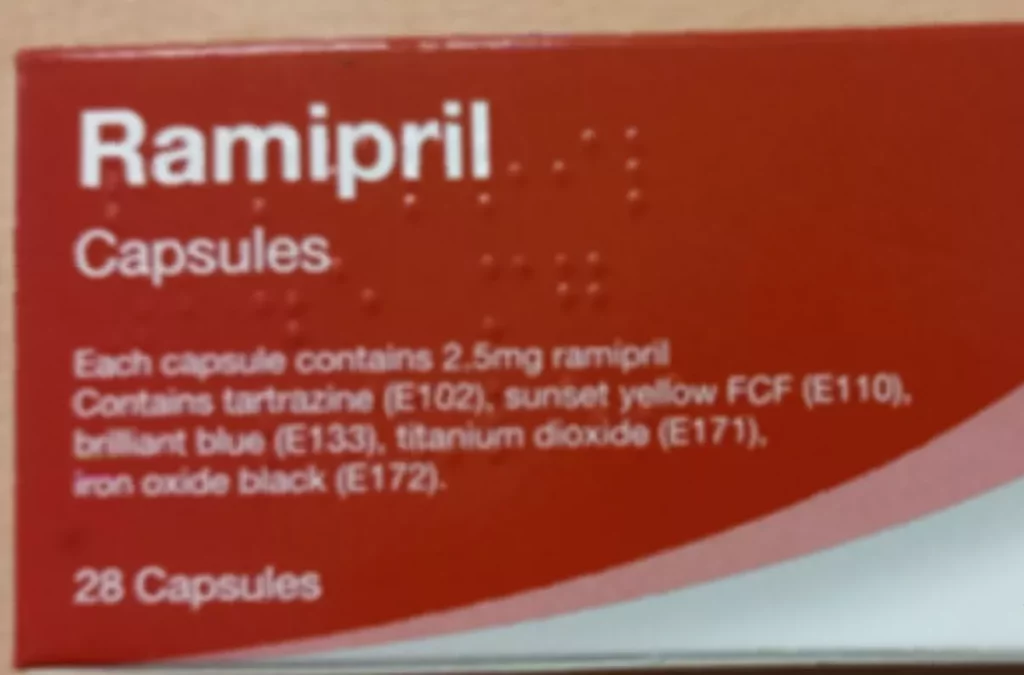
A packaging error means some packs of Crescent Pharma Limited’s Ramipril 2.5mg capsules might actually contain the higher 10mg dose, prompting a precautionary recall of the affected batch. The Medicines and Healthcare products Regulatory Agency (MHRA) has warned patients to check their medication immediately.
Class 2 recall issued
The recall covers batch GR155023 of Crescent Pharma’s Ramipril 2.5mg capsules. The problem came to light after a healthcare professional discovered two blister strips of the 10mg strength inside what appeared to be a properly sealed carton of the 2.5mg product. Investigators believe the mix‑up happened during the secondary carton packaging process at the manufacturing facility where both the 2.5mg batch (GR155023) and the 10mg batch (GR175026) were produced.
The MHRA has classified the defect as a Class 2 recall, meaning it may cause mistreatment or harm to a patient but is not life‑threatening or immediately serious. Despite that classification, the dosage discrepancy is significant: the erroneously included capsules contain four times the intended strength. Ramipril is commonly prescribed for high blood pressure, heart failure and kidney disease, and is also used to reduce the risk of death and hospitalisation after a heart attack. The usual starting dose for hypertension is 2.5mg daily, gradually adjusted upwards; for heart failure the recommended target dose is typically 10mg daily, but that is reached by a slow increase from 2.5mg.
Pharmacies and other healthcare providers have been instructed by the MHRA to stop dispensing the affected batch immediately and return remaining stock to their suppliers.
What are the risks of accidentally taking the higher dose?
Accidentally taking 10mg of Ramipril when 2.5mg was prescribed represents an unintentional overdose. The body, particularly in a patient who has been stable on a low dose or who is new to the drug, may react with a pronounced drop in blood pressure. Dr Alison Cave, the MHRA’s Chief Safety Officer, said: “Signs and symptoms may include feeling lightheaded, fainting or being fatigued, or altered kidney function and may be more serious for vulnerable patients.”
Patients who are elderly, have pre‑existing kidney problems, are dehydrated, or are taking other blood‑pressure‑lowering medications are at particular risk. An excessive dose can lead to hypotension, dizziness on standing, fainting, and fatigue. More seriously, it can impair kidney function, sometimes requiring medical intervention. The MHRA has stressed that anyone who believes they may have taken the higher‑strength capsules and is experiencing adverse effects should seek medical attention promptly. A healthcare professional should assess the potential consequences of the elevated dose to decide whether further examination or blood tests, such as checking kidney function and potassium levels, are needed.
Ramipril 10mg is a standard therapeutic dose for some patients, but only after careful titration. For someone whose body has adjusted to 2.5mg — or who has never taken the drug before — jumping to 10mg risks the side effects listed above. The MHRA’s Yellow Card scheme, which monitors medicine safety, has already recorded reports of similar incidents in the past: packaging errors are one of the most frequent causes of drug alerts in the UK, with a review covering 2001‑2011 finding that packaging defects were among the two most common problems cited.
What patients should do now
Anyone currently taking Crescent Pharma Ramipril 2.5mg capsules should locate their outer carton and check the batch number. The affected batch is GR155023. Even if the carton bears the correct batch number, patients must then compare the strength printed on the carton with the strength printed on the blister strips inside. Dr Cave advised that batch numbers and expiry dates can be found on the outer carton packaging.
If the carton contains blister strips labelled “Ramipril 10mg capsules”, patients must not take the medicine. They should contact their dispensing pharmacy immediately and bring the affected carton, any remaining capsules, and the patient information leaflet to the pharmacy or their GP surgery. “Do not to take the medicine and contact your dispensing pharmacy,” Dr Cave said.
If the carton contains correctly labelled 2.5mg blister strips — even if the batch number is GR155023 — the medication is safe to use and patients should continue their treatment as normal. No further action is required in that case.
For anyone who suspects they may have already taken one or more 10mg capsules from a mis‑packed carton and is experiencing lightheadedness, fainting, fatigue, or any other concerning symptoms, the MHRA advises seeking medical attention without delay. Suspected adverse reactions should also be reported through the MHRA’s Yellow Card scheme, which is accessible online or via the NHS app.
Crescent Pharma, a Hampshire‑based independent generic pharmaceutical company established in 2003, has faced previous recalls due to packaging errors. In March 2026 a batch of its Ramipril 5mg capsules (GR164099) was recalled after being found to contain blister strips of Amlodipine 5mg tablets. In March 2025 a recall involved Boots Paracetamol 500mg tablets where the blister foil incorrectly stated “Aspirin 300mg Dispersible Tablets”. The company says it meets regulatory requirements for quality, safety and efficacy and implements rigorous quality control testing. Medical information enquiries can be directed to [email protected] or by calling +44 1217901596.
Dr Cave added that a healthcare professional should evaluate any potential consequences of an unintentional elevated dose to establish whether further examination or testing is required, and reiterated that patients should report concerns through the Yellow Card scheme. The MHRA continues to monitor the safety of all medicines on the UK market and urges anyone affected to follow the guidance without delay.