

Close Menu
    Useful
    • About Us
    • Contact Us
    • Advertise With Us
    • Health Explainers
    • Our Editorial Team
    Facebook
    HealthNewsDaily.co.uk
    • Home
      • Explainers
    • NHS

      British Medical Association may lay off up to a third of employees amid financial crisis

      4 July 2026

      GB Mums: lenient justice, NHS maternity and child abuse sentences leave children unprotected

      3 July 2026

      Advance heatwave plans needed, not last-minute fixes, Letters say

      3 July 2026

      NHS calls for PMOS checks in women with irregular periods

      1 July 2026

      Months-long neglect of four cancer signs by third of Britons blamed on GP appointment crisis

      30 June 2026
    • Health Policy

      Hospital waiting list patients to get three weeks’ advance warning under NHS England plans

      3 July 2026

      Britons back morning-after pill sales in corner shops, poll finds

      1 July 2026

      Maternity investigator Ockenden says Amos review offers no fresh insights

      30 June 2026

      Bereaved mother warns England maternity commissioner role poses danger

      30 June 2026

      Medicare to pay for weight-loss drugs soon

      30 June 2026
    • Mental Health

      Letter draws attention to parents of adult children neither employed nor studying

      3 July 2026

      England sees one million children seeking help for anxiety and autism

      29 June 2026

      Joanne McNally says bulimia and breakdown in her twenties ultimately transformed her

      27 June 2026

      Dopamine sites become internet’s most dismal craze

      27 June 2026

      Blue Heron film review: a serious, nuanced examination of childhood trauma in 1990s Canada

      25 June 2026
    • Wellness & Lifestyle

      Weight-loss drugs become new battleground after Brexit rows

      4 July 2026

      Hair transplant surgeon champions specific shampoo routine for greater volume and shine

      4 July 2026

      20-minute technique could help England fans stay awake for Mexico World Cup tie

      3 July 2026

      Doctor warns cutting back on fat could sabotage low-cholesterol diet

      3 July 2026

      NHS to cover cost of shopping for 30-minute daily walkers

      3 July 2026
    • Disease & Prevention

      South-east England forecast to reach 34C as week-long heatwave hits

      4 July 2026

      French fatalities jumped 30% during peak week of record June heatwave

      4 July 2026

      Toddler’s tantrums mistaken for typical toddler phase before grave diagnosis

      3 July 2026

      600,000 mosquitos released over Washington DC to exterminate biting pests

      2 July 2026

      Remaining seated for 30 minutes or more raises risk of cancer death

      2 July 2026
    • Treatment & Research

      Woman, 24, had 12 Botox vials injected into face for non-cosmetic reason

      4 July 2026

      Statins: the purpose and risks of cholesterol medication

      3 July 2026

      Extreme fatigue from Long Covid hampers business owner’s ability to run firm

      3 July 2026

      Five-minute habit can cut cancer risk by more than 20%

      2 July 2026

      Over-40s with obesity show cholesterol and blood pressure levels within normal BMI range, research finds

      2 July 2026
    HealthNewsDaily.co.uk
    • NHS
    • Health Policy
    • Mental Health
    • Wellness & Lifestyle
    • Disease & Prevention
    • Treatment & Research
    Home » Treatment & Research » Oxford University and Moderna trial cancer-preventing vaccine
    Treatment & Research

    Oxford University and Moderna trial cancer-preventing vaccine

    Sophie HargreavesBy Sophie Hargreaves9 June 2026
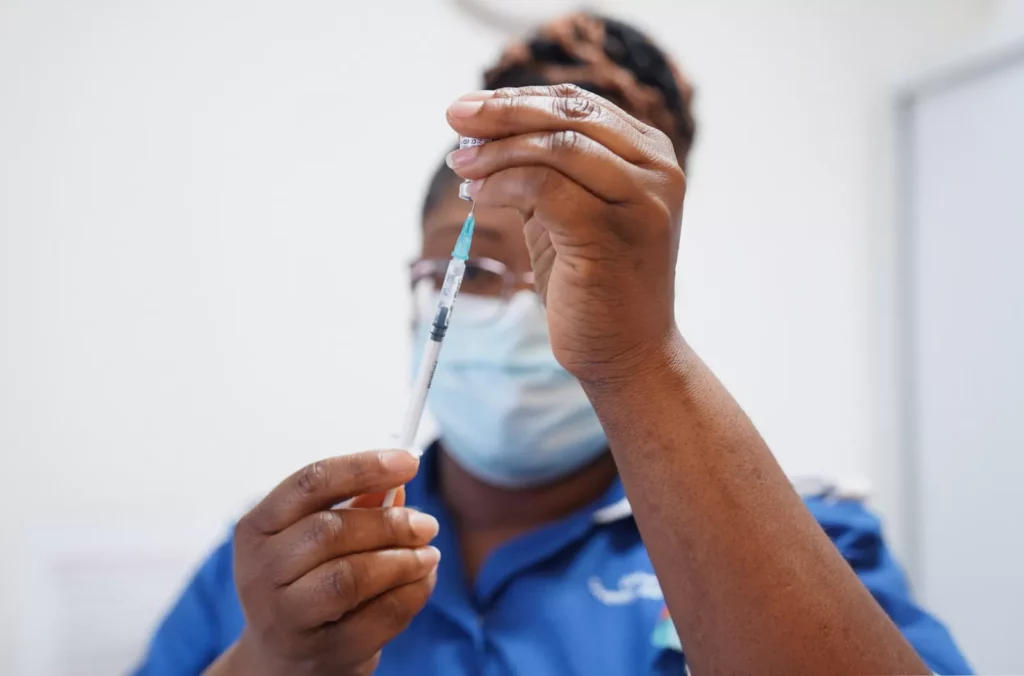
    A laboratory researcher in Oxford handling a vial of the experimental mRNA cancer vaccine

    A new cancer vaccine trial targeting bowel and ovarian cancer in at-risk individuals is set to begin this summer, with the first patients expected to receive an experimental mRNA jab designed to prevent the diseases from ever developing.

    The INTERCEPT-Lynch Trial

    The UK Medicines and Healthcare products Regulatory Agency (MHRA) has authorised a Phase 1/2 study of the investigational vaccine, designated mRNA-4194, for people with Lynch syndrome – a genetic condition that dramatically raises the risk of several cancers. The trial, named INTERCEPT-Lynch, is a collaboration between the University of Oxford and the pharmaceutical company Moderna, with backing from Cancer Research UK. It marks Moderna’s first venture into cancer prevention using its mRNA technology.

    The initial phase will assess the vaccine’s safety, characterise the immune response it generates, and determine the optimal dosage. The study is funded by Moderna and sponsored by the University of Oxford. A second, expansion phase involving multiple centres across the UK, including Oxford, is anticipated to begin in 2027.

    This trial forms part of a broader 10-year strategic partnership between Moderna and the UK Government, established in 2022 to strengthen the country’s mRNA capabilities and pandemic preparedness. Under that partnership, more than 20 clinical trials have already been delivered across 135 centres, involving over 14,500 participants. The Moderna Innovation and Technology Centre (MITC) in Harwell, Oxfordshire, opened in September 2025 as part of the same collaboration.

    What is Lynch Syndrome?

    Lynch syndrome affects approximately one in 300 people in England, equating to around 175,000 individuals. Yet fewer than 5 per cent are aware they carry the condition. It is caused by inherited mutations in genes responsible for DNA repair – specifically the mismatch repair genes MLH1, MSH2, MSH6, PMS2, and EPCAM. These mutations allow DNA errors to accumulate, making cells far more likely to become cancerous.

    The syndrome significantly elevates the lifetime risk of developing bowel cancer – by around 80 per cent – and accounts for roughly 1,100 bowel cancers in England each year. It also sharply increases the risk of womb (endometrial) cancer and ovarian cancer in women, as well as stomach, pancreatic, kidney, skin, urinary tract, and brain cancers. Currently, management options for people with Lynch syndrome are limited to regular surveillance, with low-dose aspirin and, in some cases, surgery used as preventive measures.

    How the mRNA Vaccine Works

    The INTERCEPT-Lynch trial aims to train the immune system to identify and eliminate pre-cancerous cells before they develop into full-blown tumours. Professor David Church, a Cancer Research UK senior cancer research fellow at the University of Oxford and the study’s lead investigator, described the mRNA jab as an “instruction manual” for the body.

    In people with Lynch syndrome, faulty DNA repair leads to a build-up of mutations. These mutations can make cells increasingly abnormal, but they also create distinctive molecular markers that the immune system can be taught to recognise. The vaccine delivers messenger RNA instructions that prompt the body to produce proteins found on these pre-cancerous cells. With sufficient stimulation, the immune system learns to attack and destroy the abnormal cells, halting cancer before it starts.

    Professor Church noted that, as with many vaccines, patients may require a booster jab at some stage to maintain immunity. The targets chosen for the vaccine are shared across multiple cancer types associated with Lynch syndrome, meaning it should offer broad protection if it proves effective. He added that the vaccine could be “transformative” for Lynch syndrome patients, including those who have already suffered one type of cancer – a common scenario, as women with the condition often develop womb cancer and later bowel cancer, or vice versa.

    Oxford experts believe the approach could eventually be adapted for other cancer types not linked to Lynch syndrome. Professor Church said that the proof of principle – demonstrating that the immune system can be trained to recognise cancer-associated alterations and prevent progression – “should give us insights that are generalisable”.

    Other experimental vaccines for Lynch syndrome are also under investigation. An off-the-shelf immunotherapy called Nous-209 has shown promise in early-phase trials, and a separate vaccine, Tri-Ad5, is being tested at the Dana-Farber Cancer Institute. In parallel, the UK is exploring personalised mRNA cancer vaccines, where treatments are tailored to individual tumour genetics, through initiatives such as the NHS Cancer Vaccine Launch Pad. Those trials cover bowel, melanoma, lung, and pancreatic cancers.

    David Berman, chief development officer at Moderna, said: “By applying mRNA technology earlier in the patient journey, we aim to harness the immune system when it can have the greatest impact. We are proud to bring this innovation to the UK, building on our long-standing collaboration with leading UK institutions to advance mRNA research and development.”

    Bowel Cancer Cancer Clinical Trials Immunotherapy MHRA
    Share. Facebook Twitter LinkedIn WhatsApp Telegram
    Sophie Hargreaves
    Sophie Hargreaves

    Health Correspondent
    Sophie Hargreaves covers medical research, new treatments, disease outbreaks and prevention for Health News Daily. She holds a Master's degree in Health Sciences from the University of Leeds and has spent several years translating complex medical science into clear, accessible reporting for a general audience. Sophie focuses on the latest clinical trials, NICE and MHRA approvals, vaccination programmes and emerging health threats, always with an eye on what these developments mean for people in the UK.
    · MSc Health Sciences (University of Leeds), science communication volunteer, medical research literacy
    · Clinical trials and drug approvals (NICE, MHRA), cancer screening programmes, vaccination and outbreak response, women's health (endometriosis, PCOS, menopause), weight management treatments, AI in diagnostics

    Related Posts

    Treatment & Research

    Woman, 24, had 12 Botox vials injected into face for non-cosmetic reason

    4 July 2026
    Treatment & Research

    Statins: the purpose and risks of cholesterol medication

    3 July 2026
    Treatment & Research

    Extreme fatigue from Long Covid hampers business owner’s ability to run firm

    3 July 2026
    Treatment & Research

    Five-minute habit can cut cancer risk by more than 20%

    2 July 2026
    Join Our Community & Win

    Each month we select one lucky follower to receive a prize from our partners. Follow us on our social channels for your chance to win.

    • Facebook
    Latest
    Disease & Prevention

    South-east England forecast to reach 34C as week-long heatwave hits

    4 July 2026
    Treatment & Research

    Woman, 24, had 12 Botox vials injected into face for non-cosmetic reason

    4 July 2026
    NHS

    British Medical Association may lay off up to a third of employees amid financial crisis

    4 July 2026
    Wellness & Lifestyle

    Weight-loss drugs become new battleground after Brexit rows

    4 July 2026
    Wellness & Lifestyle

    Hair transplant surgeon champions specific shampoo routine for greater volume and shine

    4 July 2026
    Disease & Prevention

    French fatalities jumped 30% during peak week of record June heatwave

    4 July 2026
    News Categories
    • NHS
    • Health Policy
    • Mental Health
    • Wellness & Lifestyle
    • Disease & Prevention
    • Treatment & Research
    Help
    • About Us
    • Contact Us
    • Advertise With Us
    • Health Explainers
    • Our Editorial Team
    About Us
    About Us

    Health News Daily provides trusted UK health news, covering NHS updates, medical research, public health and wellbeing with clear and reliable reporting.

    Facebook
    • Cookie Policy
    • Privacy Policy
    • Complaints Policy
    • Corrections Policy
    • AI Disclosure Policy
    • Editorial Policy & Ethics
    • Accessibility Statement
    • Medical Disclaimer
    • Terms & Conditions
    • Sponsored Content Disclosure
    • Copyright Notice
    © 2026 Healthnewsdaily.co.uk. All rights reserved.

    Type above and press Enter to search. Press Esc to cancel.