

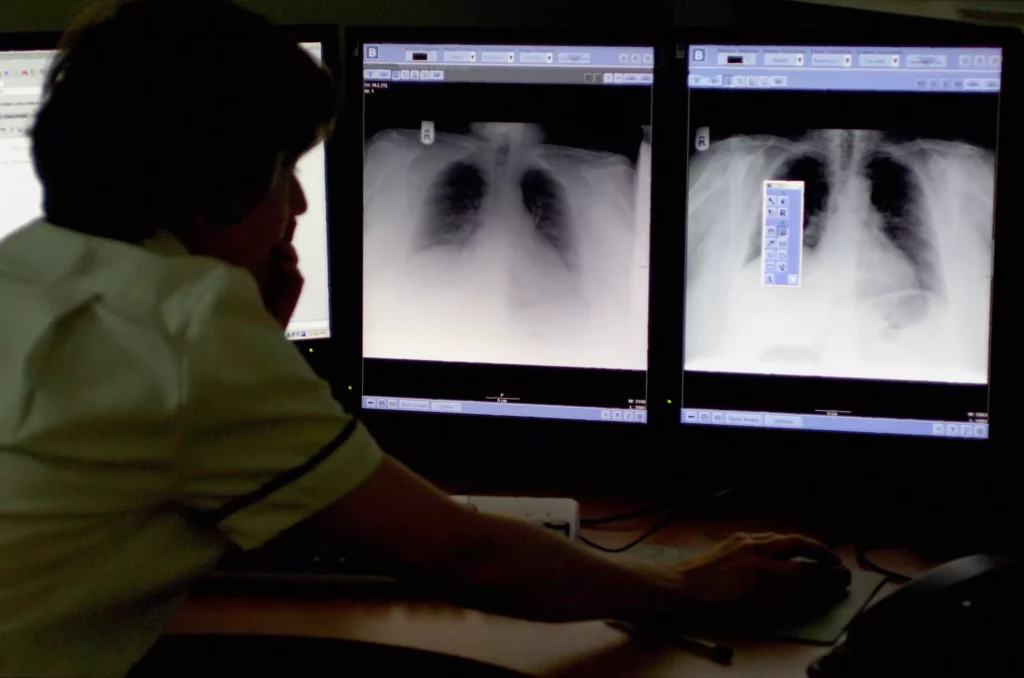
A new drug has boosted lung cancer survival by 15 per cent, offering fresh hope for patients with one of the hardest-to-treat forms of the disease. The investigational treatment, Ivonescimab, combined with chemotherapy extended the average survival of patients with advanced squamous non-small cell lung cancer to 28 months, compared with 24 months for those on a standard immunotherapy regimen – a gain that researchers described as both “statistically significant and clinically meaningful.”
The landmark findings come from the Phase III HARMONi-6 trial, which included 532 patients in China with previously untreated advanced squamous non-small cell lung cancer. The results, published in The Lancet and presented in a plenary session at the American Society of Clinical Oncology annual meeting in Chicago, mark the first time any treatment regimen has shown clear superiority over an established PD-1 inhibitor in this setting. Patients receiving Ivonescimab plus chemotherapy had a 34 per cent lower risk of death compared with those given tislelizumab plus chemotherapy, with a p-value of 0.0017 meeting pre-specified statistical significance.
How Ivonescimab helps the immune system fight cancer
Ivonescimab is a bispecific antibody that attacks the tumour on two fronts simultaneously, an approach researchers are calling “immunotherapy 2.0.” Its primary mechanism is to disable the PD-1 immune checkpoint receptor on T cells – effectively flicking the “off” switch that tumours use to evade detection. By blocking this signal, the drug uncloaks cancer cells and allows the body’s own immune system to recognise and attack the disease.
But Ivonescimab goes further. It also targets Vascular Endothelial Growth Factor A (VEGF-A), a protein that tumours rely on to build new blood vessels – a process known as angiogenesis. By inhibiting VEGF-A, the drug starves the tumour of its blood supply, normalises the chaotic network of blood vessels inside the tumour, and makes it easier for immune cells to infiltrate the cancer’s microenvironment. This dual-action strategy is enabled by the drug’s unique tetravalent structure, which allows it to bind cooperatively to both PD-1 and VEGF-A at the same time.
The trial data show that this combined attack is more effective than a single-agent PD-1 inhibitor. In a previous head-to-head study, HARMONi-2, Ivonescimab as a monotherapy also demonstrated a significant improvement in progression-free survival compared with pembrolizumab – a median of 11.1 months versus 5.8 months, reducing the risk of disease progression or death by 49 per cent. In the HARMONi-6 trial, progression-free survival was again significantly improved for the Ivonescimab group.
Limitations and next steps
Despite the encouraging results, the treatment is not without drawbacks. Side effects were more common among patients receiving Ivonescimab: 69.2 per cent experienced grade 3 or higher treatment-related adverse events, compared with 58.9 per cent in the control group. These included proteinuria, haemorrhage, and hypertension – effects associated with VEGF inhibition. However, the bispecific nature of the drug may mitigate some of the bleeding restrictions seen with separate VEGF inhibitors, and rates of patients stopping treatment because of side effects were identical across both groups at 5 per cent, suggesting the side-effect profile is manageable overall.
Ivonescimab is not yet licensed in the UK or Europe. It received marketing authorisation in China in May 2024 and has been granted Fast Track designation by the US Food and Drug Administration. Summit Therapeutics is involved in its development and regulatory submissions in licensed territories, and global Phase III trials are under way, including in the United States. The drug is also being studied in other cancer types such as breast, liver, gastric and other subtypes of non-small cell lung cancer.
Lung cancer remains the most common cause of cancer death in the UK, with around 50,200 new cases and 32,800 deaths each year – the equivalent of 90 deaths every day. Non-small cell lung cancer accounts for 85 to 90 per cent of all diagnoses, and squamous non-small cell lung cancer makes up roughly 30 per cent of those cases. Overall, only about 10 per cent of patients survive for ten years or more, with survival heavily dependent on stage: nearly 65 per cent of stage 1 patients live at least five years, compared with less than 20 per cent of stage 4 patients. The HARMONi-6 trial population reflected a challenging group, with approximately 63 per cent having centrally located squamous tumours, 39 per cent having PD-L1 expression below 1 per cent, and 33.8 per cent presenting with multi-site metastases, liver metastases, or brain metastases.
Reacting to the findings, Dr Dani Skirrow, research information manager at Cancer Research UK, described the results as “a promising step forward for people with advanced lung cancer” but cautioned that “it’s still early days. We need more time to understand how long people benefit for, and whether the results hold true across a wider range of patients.” Dr David Spigel, chief scientific officer at the Sarah Cannon Research Institute and an ASCO expert in lung cancer, called the study “certainly very encouraging” and said it “provides a vital new path forward for patients with these difficult-to-treat cancers who have limited treatment options.”