

Close Menu
    Useful
    • About Us
    • Contact Us
    • Advertise With Us
    • Health Explainers
    • Our Editorial Team
    Facebook
    HealthNewsDaily.co.uk
    • Home
      • Explainers
    • NHS

      British Medical Association may lay off up to a third of employees amid financial crisis

      4 July 2026

      GB Mums: lenient justice, NHS maternity and child abuse sentences leave children unprotected

      3 July 2026

      Advance heatwave plans needed, not last-minute fixes, Letters say

      3 July 2026

      NHS calls for PMOS checks in women with irregular periods

      1 July 2026

      Months-long neglect of four cancer signs by third of Britons blamed on GP appointment crisis

      30 June 2026
    • Health Policy

      Hospital waiting list patients to get three weeks’ advance warning under NHS England plans

      3 July 2026

      Britons back morning-after pill sales in corner shops, poll finds

      1 July 2026

      Maternity investigator Ockenden says Amos review offers no fresh insights

      30 June 2026

      Bereaved mother warns England maternity commissioner role poses danger

      30 June 2026

      Medicare to pay for weight-loss drugs soon

      30 June 2026
    • Mental Health

      Letter draws attention to parents of adult children neither employed nor studying

      3 July 2026

      England sees one million children seeking help for anxiety and autism

      29 June 2026

      Joanne McNally says bulimia and breakdown in her twenties ultimately transformed her

      27 June 2026

      Dopamine sites become internet’s most dismal craze

      27 June 2026

      Blue Heron film review: a serious, nuanced examination of childhood trauma in 1990s Canada

      25 June 2026
    • Wellness & Lifestyle

      Weight-loss drugs become new battleground after Brexit rows

      4 July 2026

      Hair transplant surgeon champions specific shampoo routine for greater volume and shine

      4 July 2026

      20-minute technique could help England fans stay awake for Mexico World Cup tie

      3 July 2026

      Doctor warns cutting back on fat could sabotage low-cholesterol diet

      3 July 2026

      NHS to cover cost of shopping for 30-minute daily walkers

      3 July 2026
    • Disease & Prevention

      South-east England forecast to reach 34C as week-long heatwave hits

      4 July 2026

      French fatalities jumped 30% during peak week of record June heatwave

      4 July 2026

      Toddler’s tantrums mistaken for typical toddler phase before grave diagnosis

      3 July 2026

      600,000 mosquitos released over Washington DC to exterminate biting pests

      2 July 2026

      Remaining seated for 30 minutes or more raises risk of cancer death

      2 July 2026
    • Treatment & Research

      Woman, 24, had 12 Botox vials injected into face for non-cosmetic reason

      4 July 2026

      Statins: the purpose and risks of cholesterol medication

      3 July 2026

      Extreme fatigue from Long Covid hampers business owner’s ability to run firm

      3 July 2026

      Five-minute habit can cut cancer risk by more than 20%

      2 July 2026

      Over-40s with obesity show cholesterol and blood pressure levels within normal BMI range, research finds

      2 July 2026
    HealthNewsDaily.co.uk
    • NHS
    • Health Policy
    • Mental Health
    • Wellness & Lifestyle
    • Disease & Prevention
    • Treatment & Research
    Home » Treatment & Research » Hospitals’ tech lag drives doctors to use AI in secret, survey suggests
    Treatment & Research

    Hospitals’ tech lag drives doctors to use AI in secret, survey suggests

    Sophie HargreavesBy Sophie Hargreaves9 June 2026
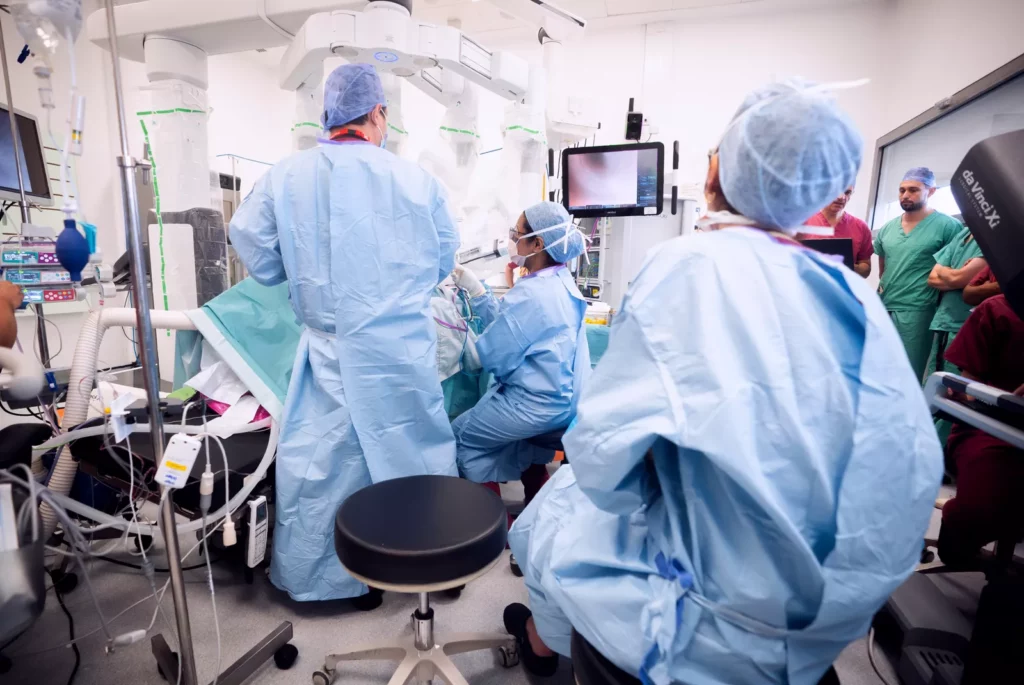
    Hospital staff using unauthorised artificial intelligence on personal devices for clinical tasks

    Artificial intelligence is saving clinicians an average of 132 hours each year — the equivalent of more than three full working weeks — yet a chronic lack of training is preventing the technology from realising its full potential within the health service, according to a major global survey and separate UK research.

    Time savings and capacity gains

    The Philips Future Health Index 2026, which polled more than 2,000 healthcare professionals and 20,000 patients across 10 countries, found that nearly half (46%) of clinicians reported annual time savings averaging 132 hours. Half of those surveyed said the technology had increased their capacity to see patients, allowing them to treat an average of eight more people per week.

    In the UK, a separate study estimated that AI-powered administrative support could save NHS staff an average of 43 minutes per day — amounting to five weeks per year. A full rollout of such tools across the health service could free up as many as 400,000 hours per month, according to a pilot of Microsoft 365 Copilot across 90 NHS organisations. NHS England is now making the AI assistant available to more than 500,000 staff to help draft documents and analyse data more efficiently.

    The administrative benefits of AI are already apparent: clinicians describe the technology as a “buddy” for discussing ideas, transcribing clinical notes and scheduling appointments. But its capabilities extend well beyond back-office tasks.

    Clinical applications and diagnostic support

    AI is being deployed to flag dangerous drug combinations, suggest diagnoses based on symptoms and assist in analysing X‑rays and medical scans. Clinicians have praised the technology for enhancing precision, aiding research and enabling detailed case analysis. The Philips Future Health Index has noted that planned investments in AI over the next three years show the biggest increase in critical decision support, with cardiology and radiology leaders showing particular interest.

    In the NHS, AI is already used to help diagnose COVID‑19 from chest imaging and for secondary care dermatology referrals. A £21 million programme launched by NHS England in 2023 aimed to introduce AI for the diagnosis of chest conditions across 66 hospital trusts. Despite these advances, the technology’s deeper integration into clinical workflows remains patchy and inconsistent.

    The training deficit undermining adoption

    While nearly two-thirds (65%) of clinicians reported increasing their use of AI tools provided at work, a stark paradox has emerged: almost eight in ten (79%) healthcare professionals believe training for AI-enabled tools is limited or inconsistent at their organisation. The Philips survey found that 70% of clinicians described training as unavailable, limited or inconsistent — a figure that aligns closely with the broader global finding.

    A 2026 survey of UK doctors conducted by the Royal College of Physicians (RCP) reinforced this picture: 79% said they needed training in clinical AI tools, yet 66% had no access to such support. The RCP survey also revealed that 68% of physicians believe the NHS lacks the digital infrastructure to introduce AI effectively, with 70% citing the inability to integrate AI tools with systems such as the Electronic Patient Record as the leading barrier.

    The failure to provide adequate training and approved tools is driving clinicians to work around the system. The Philips index found that 64% of clinicians resort to personal AI tools when workplace options fall short. More than half (56%) of doctors are turning to personal AI systems because workplace offerings do not meet their needs, and a separate 2026 survey of UK physicians found that 69% use personal access to ChatGPT and Microsoft Copilot for clinical questions.

    Shez Partovi, chief innovation officer at Philips, said: “The organisations aren’t moving fast enough to provide the tools and the training.” The report itself recommends that “expanding structured, role-specific training will help clinicians develop the digital skills and clinical judgment needed to work effectively with AI.”

    Implementation of AI in NHS hospitals has proved more complex than anticipated. A UCL-led study published in The Lancet eClinicalMedicine in September 2025 identified key challenges including engaging clinical staff with high workloads, integrating new technology with aging IT systems, a general lack of understanding and scepticism among staff. Contracting alone took between four and ten months longer than anticipated, and by June 2025 a third of hospital trusts were not yet using AI diagnostic tools in clinical practice.

    The RCP survey found that 70% of physicians support AI implementation in the NHS, but many remain sceptical about the health system’s digital infrastructure. Concerns over data privacy, bias, transparency and accountability persist. The UK is developing a regulatory framework for AI in healthcare, with the MHRA extending existing software regulations to encompass “AI as a Medical Device”. A National Commission into the Regulation of AI in Healthcare has been established to provide recommendations to the MHRA in 2026, with key themes including transparency, explainability, bias mitigation and cybersecurity.

    Human oversight remains essential

    Despite the promise of AI, the overwhelming consensus among clinicians is that it must remain under human control. The Philips survey found that 90% of professionals emphasised the need to maintain human involvement as AI advances, and 86% insisted that all AI outputs require human oversight.

    The RCP survey underlined the grounds for caution: 73% of physicians are concerned about the risk of error, 54% about liability risks, and 52% about the potential for de‑skilling clinicians. As AI becomes more embedded in clinical workflows, the requirement for rigorous training and robust human oversight is seen not as an optional extra but as a fundamental prerequisite for safe and effective care.

    AI in Healthcare Hospitals MHRA NHS England
    Share. Facebook Twitter LinkedIn WhatsApp Telegram
    Sophie Hargreaves
    Sophie Hargreaves

    Health Correspondent
    Sophie Hargreaves covers medical research, new treatments, disease outbreaks and prevention for Health News Daily. She holds a Master's degree in Health Sciences from the University of Leeds and has spent several years translating complex medical science into clear, accessible reporting for a general audience. Sophie focuses on the latest clinical trials, NICE and MHRA approvals, vaccination programmes and emerging health threats, always with an eye on what these developments mean for people in the UK.
    · MSc Health Sciences (University of Leeds), science communication volunteer, medical research literacy
    · Clinical trials and drug approvals (NICE, MHRA), cancer screening programmes, vaccination and outbreak response, women's health (endometriosis, PCOS, menopause), weight management treatments, AI in diagnostics

    Related Posts

    Treatment & Research

    Woman, 24, had 12 Botox vials injected into face for non-cosmetic reason

    4 July 2026
    Treatment & Research

    Statins: the purpose and risks of cholesterol medication

    3 July 2026
    Treatment & Research

    Extreme fatigue from Long Covid hampers business owner’s ability to run firm

    3 July 2026
    Treatment & Research

    Five-minute habit can cut cancer risk by more than 20%

    2 July 2026
    Join Our Community & Win

    Each month we select one lucky follower to receive a prize from our partners. Follow us on our social channels for your chance to win.

    • Facebook
    Latest
    Disease & Prevention

    South-east England forecast to reach 34C as week-long heatwave hits

    4 July 2026
    Treatment & Research

    Woman, 24, had 12 Botox vials injected into face for non-cosmetic reason

    4 July 2026
    NHS

    British Medical Association may lay off up to a third of employees amid financial crisis

    4 July 2026
    Wellness & Lifestyle

    Weight-loss drugs become new battleground after Brexit rows

    4 July 2026
    Wellness & Lifestyle

    Hair transplant surgeon champions specific shampoo routine for greater volume and shine

    4 July 2026
    Disease & Prevention

    French fatalities jumped 30% during peak week of record June heatwave

    4 July 2026
    News Categories
    • NHS
    • Health Policy
    • Mental Health
    • Wellness & Lifestyle
    • Disease & Prevention
    • Treatment & Research
    Help
    • About Us
    • Contact Us
    • Advertise With Us
    • Health Explainers
    • Our Editorial Team
    About Us
    About Us

    Health News Daily provides trusted UK health news, covering NHS updates, medical research, public health and wellbeing with clear and reliable reporting.

    Facebook
    • Cookie Policy
    • Privacy Policy
    • Complaints Policy
    • Corrections Policy
    • AI Disclosure Policy
    • Editorial Policy & Ethics
    • Accessibility Statement
    • Medical Disclaimer
    • Terms & Conditions
    • Sponsored Content Disclosure
    • Copyright Notice
    © 2026 Healthnewsdaily.co.uk. All rights reserved.

    Type above and press Enter to search. Press Esc to cancel.