

Close Menu
    Useful
    • About Us
    • Contact Us
    • Advertise With Us
    • Health Explainers
    • Our Editorial Team
    Facebook
    HealthNewsDaily.co.uk
    • Home
      • Explainers
    • NHS

      British Medical Association may lay off up to a third of employees amid financial crisis

      4 July 2026

      GB Mums: lenient justice, NHS maternity and child abuse sentences leave children unprotected

      3 July 2026

      Advance heatwave plans needed, not last-minute fixes, Letters say

      3 July 2026

      NHS calls for PMOS checks in women with irregular periods

      1 July 2026

      Months-long neglect of four cancer signs by third of Britons blamed on GP appointment crisis

      30 June 2026
    • Health Policy

      Hospital waiting list patients to get three weeks’ advance warning under NHS England plans

      3 July 2026

      Britons back morning-after pill sales in corner shops, poll finds

      1 July 2026

      Maternity investigator Ockenden says Amos review offers no fresh insights

      30 June 2026

      Bereaved mother warns England maternity commissioner role poses danger

      30 June 2026

      Medicare to pay for weight-loss drugs soon

      30 June 2026
    • Mental Health

      Letter draws attention to parents of adult children neither employed nor studying

      3 July 2026

      England sees one million children seeking help for anxiety and autism

      29 June 2026

      Joanne McNally says bulimia and breakdown in her twenties ultimately transformed her

      27 June 2026

      Dopamine sites become internet’s most dismal craze

      27 June 2026

      Blue Heron film review: a serious, nuanced examination of childhood trauma in 1990s Canada

      25 June 2026
    • Wellness & Lifestyle

      Weight-loss drugs become new battleground after Brexit rows

      4 July 2026

      Hair transplant surgeon champions specific shampoo routine for greater volume and shine

      4 July 2026

      20-minute technique could help England fans stay awake for Mexico World Cup tie

      3 July 2026

      Doctor warns cutting back on fat could sabotage low-cholesterol diet

      3 July 2026

      NHS to cover cost of shopping for 30-minute daily walkers

      3 July 2026
    • Disease & Prevention

      South-east England forecast to reach 34C as week-long heatwave hits

      4 July 2026

      French fatalities jumped 30% during peak week of record June heatwave

      4 July 2026

      Toddler’s tantrums mistaken for typical toddler phase before grave diagnosis

      3 July 2026

      600,000 mosquitos released over Washington DC to exterminate biting pests

      2 July 2026

      Remaining seated for 30 minutes or more raises risk of cancer death

      2 July 2026
    • Treatment & Research

      Woman, 24, had 12 Botox vials injected into face for non-cosmetic reason

      4 July 2026

      Statins: the purpose and risks of cholesterol medication

      3 July 2026

      Extreme fatigue from Long Covid hampers business owner’s ability to run firm

      3 July 2026

      Five-minute habit can cut cancer risk by more than 20%

      2 July 2026

      Over-40s with obesity show cholesterol and blood pressure levels within normal BMI range, research finds

      2 July 2026
    HealthNewsDaily.co.uk
    • NHS
    • Health Policy
    • Mental Health
    • Wellness & Lifestyle
    • Disease & Prevention
    • Treatment & Research
    Home » Treatment & Research » Glioblastoma could be tackled by cell therapy, researchers say
    Treatment & Research

    Glioblastoma could be tackled by cell therapy, researchers say

    Sophie HargreavesBy Sophie Hargreaves1 July 2026
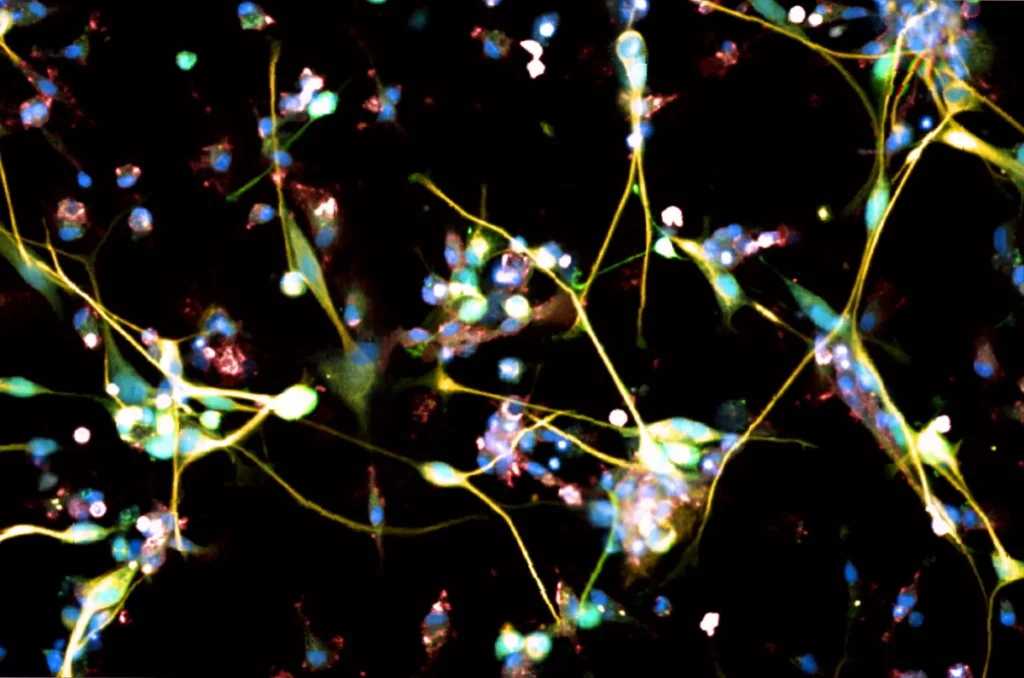
    Laboratory researcher examining glioblastoma cell models under a microscope

    A new form of immunotherapy that targets not only glioblastoma cells but also the immune cells the tumour hijacks to protect itself has shown promising results in laboratory models, offering a potential breakthrough for the most aggressive and deadliest form of brain cancer. Researchers at King’s College London and McMaster University in Canada have engineered CAR-T cells to recognise a protein called GPNMB, which is found on the surface of both glioblastoma cells and the tumour-supporting macrophages that normally help defend the body against infection.

    Glioblastoma, a grade 4 tumour that grows and spreads rapidly, has a median survival time of just 12 to 18 months. Around 3,200 people are diagnosed with the disease every year in the UK, and only about 4% of those diagnosed will survive for five years or more. In England, the five-year survival rate for all brain cancers stands at 12.9%, compared with an average of 56% across all cancers. Its invasive nature makes surgical removal difficult, and existing treatments have limited effectiveness.

    The novel approach addresses what lead author Professor Sheila Singh, professor of neuro-oncology and neurosurgery at King’s College London and McMaster University, describes as a “connected tumour-immune ecosystem.” “Glioblastoma is not made up of cancer cells alone,” she said. “A large portion of the tumour consists of immune cells called macrophages. These cells normally help defend the body against infection, but glioblastoma can recruit and reprogramme them to help the tumour grow, suppress immune attacks, and resist treatment.”

    By engineering CAR-T cells — a type of immunotherapy that retrains a patient’s own T cells to recognise and attack cancer — to target GPNMB, the team was able to strike on two fronts at once. “Instead of treating glioblastoma as only a mass of cancer cells, we need to think of it as a connected tumour-immune ecosystem,” Professor Singh added. “Our approach targets both the tumour and the environment that allows it to thrive. By going beyond the cancer cells alone, we are also targeting immune cells that help shield the tumour from treatment.”

    GPNMB, a transmembrane glycoprotein, is overexpressed in glioblastomas and is associated with tumour progression and poor clinical outcomes. It promotes an immunosuppressive tumour microenvironment by increasing M2-polarization in macrophages and microglia, and reducing the activation and proliferation of T cells. Previous studies have shown that eliminating GPNMB in glioblastoma cell lines decreases proliferation and prolongs survival in mouse models, and that higher levels of GPNMB in patient biopsy samples correlate with increased survival risk, marking it as a potential prognostic indicator.

    In the latest preclinical work, using glioblastoma models that replicate human biology — including those derived directly from patient tumours — the engineered CAR-T cells eliminated tumours and suggested the possibility of long-term disease-free survival. “Our work suggests we may also need to dismantle the immune support system that helps glioblastoma survive,” said study co-lead author Shan Grewal of McMaster University.

    CAR-T therapy has already shown dramatic results in other cancers, particularly blood cancers such as leukaemia and lymphoma, and several CAR-T treatments are now routinely available on the NHS for specific conditions. However, translating that success to solid tumours like glioblastoma poses additional challenges, including limited T-cell trafficking into the tumour and the highly immunosuppressive tumour microenvironment. Researchers are also exploring “off-the-shelf” CAR-T cells made from healthy donors, which could be faster, stronger, and more affordable than patient-specific therapies. Another parallel line of investigation by Professor Singh’s group has identified uPAR as a promising target in recurrent glioblastoma, with uPAR-targeting CAR-T cells also showing success in laboratory and animal models by killing tumour cells and reducing tumour growth.

    The work was published in the journal Nature, with related findings in Science Translational Medicine and Nature Medicine. Despite the encouraging preclinical results, the research remains at an early stage, and further studies are needed before clinical trials can begin. A Phase I trial known as CARGO is already under way in the UK, investigating CAR-T cells that target a different protein, EGFRvIII, in patients with relapsed or recurrent glioblastoma.

    Call for investment and NHS readiness

    Dr Karen Noble, director of research and policy at Brain Tumour Research, highlighted the urgency of turning laboratory breakthroughs into accessible treatments. “New treatment options that can tackle the complexity of this deadly cancer are vital. These results are really promising – particularly as CAR-T has been used successfully in other cancer areas and so hopefully this innovation can be translated rapidly for patients,” she said. “Importantly, breakthroughs in the laboratory will only change the story for the brain tumour community once they are turned into treatments in clinics across the UK and research like this highlights the need for more investment to enable discoveries and accelerate the path to patients. That’s why we are calling on government to build a more attractive financial and regulatory environment in the UK for the life science industry, to ensure that more clinical trials can get under way and more patients can access these.”

    Yasmin Sheikh, head of policy and public affairs at Anthony Nolan, stressed the transformative potential of CAR-T therapy and the infrastructure needed to deliver it. “At Anthony Nolan, we’ve seen first-hand how transformative CAR T-cell therapy can be for people with blood cancer. This research is an exciting step forward and adds to growing evidence that CAR T-cell therapy could also offer new hope for people living with other forms of cancer, including brain cancer,” she said. “While these findings are highly encouraging for the future, we also need to be thinking about how innovative treatments like this one can be delivered in practice. The NHS must ensure that it has the workforce and infrastructure in place so that patients can benefit from new therapies without delay.”

    Cancer Clinical Trials Immunotherapy New Treatment
    Share. Facebook Twitter LinkedIn WhatsApp Telegram
    Sophie Hargreaves
    Sophie Hargreaves

    Health Correspondent
    Sophie Hargreaves covers medical research, new treatments, disease outbreaks and prevention for Health News Daily. She holds a Master's degree in Health Sciences from the University of Leeds and has spent several years translating complex medical science into clear, accessible reporting for a general audience. Sophie focuses on the latest clinical trials, NICE and MHRA approvals, vaccination programmes and emerging health threats, always with an eye on what these developments mean for people in the UK.
    · MSc Health Sciences (University of Leeds), science communication volunteer, medical research literacy
    · Clinical trials and drug approvals (NICE, MHRA), cancer screening programmes, vaccination and outbreak response, women's health (endometriosis, PCOS, menopause), weight management treatments, AI in diagnostics

    Related Posts

    Treatment & Research

    Woman, 24, had 12 Botox vials injected into face for non-cosmetic reason

    4 July 2026
    Treatment & Research

    Statins: the purpose and risks of cholesterol medication

    3 July 2026
    Treatment & Research

    Extreme fatigue from Long Covid hampers business owner’s ability to run firm

    3 July 2026
    Treatment & Research

    Five-minute habit can cut cancer risk by more than 20%

    2 July 2026
    Join Our Community & Win

    Each month we select one lucky follower to receive a prize from our partners. Follow us on our social channels for your chance to win.

    • Facebook
    Latest
    Disease & Prevention

    South-east England forecast to reach 34C as week-long heatwave hits

    4 July 2026
    Treatment & Research

    Woman, 24, had 12 Botox vials injected into face for non-cosmetic reason

    4 July 2026
    NHS

    British Medical Association may lay off up to a third of employees amid financial crisis

    4 July 2026
    Wellness & Lifestyle

    Weight-loss drugs become new battleground after Brexit rows

    4 July 2026
    Wellness & Lifestyle

    Hair transplant surgeon champions specific shampoo routine for greater volume and shine

    4 July 2026
    Disease & Prevention

    French fatalities jumped 30% during peak week of record June heatwave

    4 July 2026
    News Categories
    • NHS
    • Health Policy
    • Mental Health
    • Wellness & Lifestyle
    • Disease & Prevention
    • Treatment & Research
    Help
    • About Us
    • Contact Us
    • Advertise With Us
    • Health Explainers
    • Our Editorial Team
    About Us
    About Us

    Health News Daily provides trusted UK health news, covering NHS updates, medical research, public health and wellbeing with clear and reliable reporting.

    Facebook
    • Cookie Policy
    • Privacy Policy
    • Complaints Policy
    • Corrections Policy
    • AI Disclosure Policy
    • Editorial Policy & Ethics
    • Accessibility Statement
    • Medical Disclaimer
    • Terms & Conditions
    • Sponsored Content Disclosure
    • Copyright Notice
    © 2026 Healthnewsdaily.co.uk. All rights reserved.

    Type above and press Enter to search. Press Esc to cancel.