

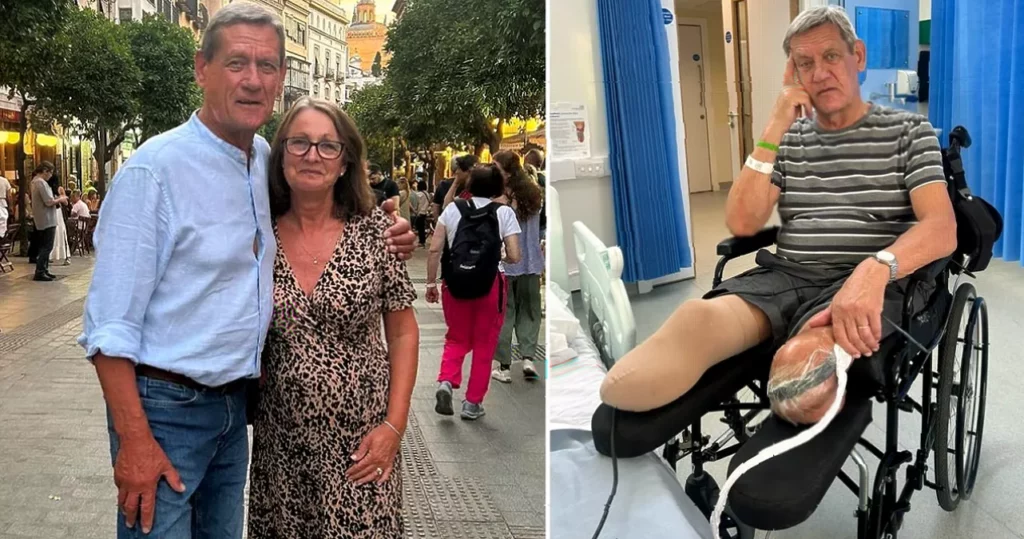
A man’s misdiagnosed leg pain, repeatedly blamed on a decades-old back injury, ultimately cost him both legs after doctors failed for four years to check the blood flow in his feet.
Carl Olsen, now 80, first noticed he was dragging his right foot in 2020. His feet felt cold, his calves ached, and at night he would wake his wife, Fiona, by dropping his foot off the bed and rubbing it on the carpet in a desperate attempt to ease the stabbing pain in his toes. He put the symptoms down to a spinal injury from a farming accident in 1976, which had caused back trouble over the years.
By January 2021 the pain had become unbearable, and Mr Olsen saw a GP. The doctor appeared to agree that his back was the likely cause, prescribing painkillers and referring him to an orthopaedic specialist. Over the next four years he underwent around 30 appointments and tests – multiple MRIs (one of which he paid for himself), spinal injections, and a range of orthopaedic procedures. He was put on so much morphine that he barely knew what day it was. But none of it helped, because every clinician was investigating his spine rather than his feet.
‘GPs don’t do feet any more’
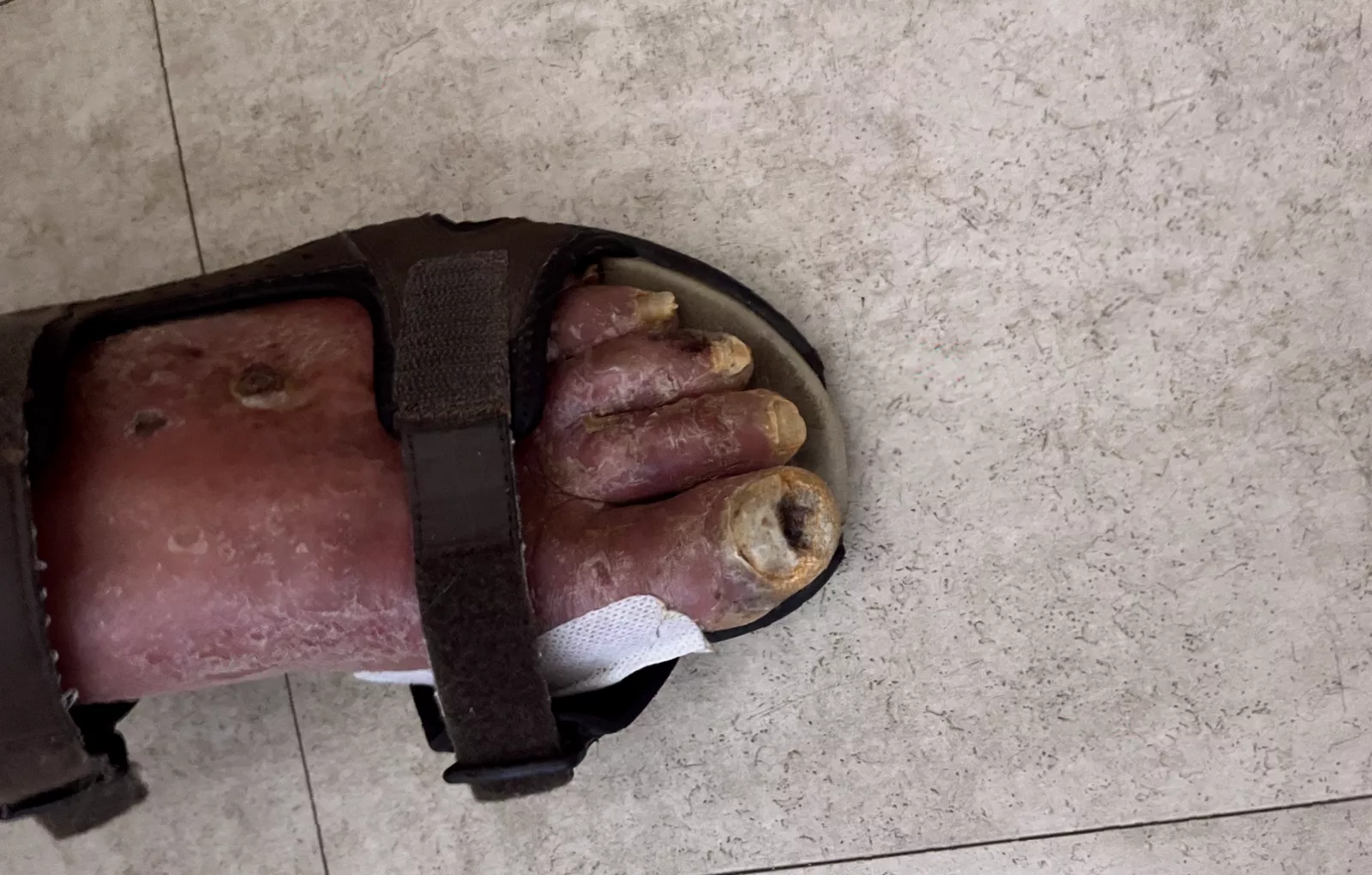
His condition worsened. He limped heavily, his feet swelled and turned inward as he could not bear weight on his toes, his skin became discoloured and his toenails thickened. One doctor suggested foam insoles. Another, when his toe split open and fluid poured from the skin, simply told him: “GPs don’t do feet any more.” Even when a surgeon watched him walk in, hunched over in agony, and suggested it might be a foot problem rather than spinal, they still could not identify the cause. Mr Olsen was told to walk more to improve his circulation, so he pushed through the pain – until one day he collapsed in the street and a passer-by had to pick him up.
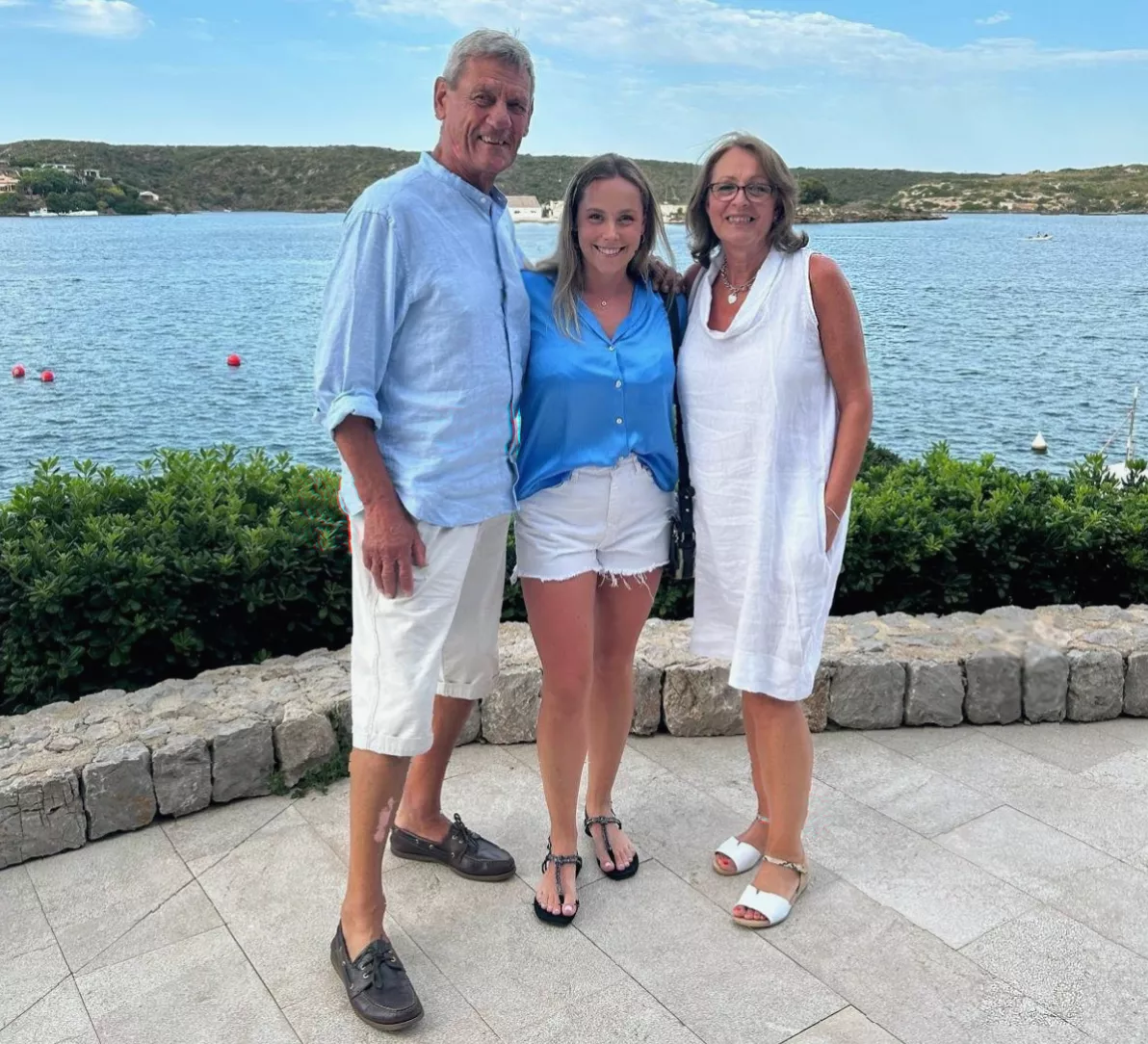
He visited multiple orthopaedic surgeons and had more injections, yet in all those appointments nobody ever checked the blood supply to his feet. The critical test – a simple, non-invasive Doppler ultrasound scan that measures blood flow in arteries – was never performed.
A podiatrist’s discovery
It was October 2024 when a podiatrist finally examined his ulcerated right foot. She took out a handheld Doppler scanner, and within moments she delivered the news: “Mr Olsen, you haven’t got any blood going to your feet.”
Peripheral artery disease (PAD) is a condition in which narrowed or blocked arteries, usually due to a build‑up of fatty deposits called atherosclerosis, restrict blood flow to the legs. Across the UK, approximately one in five men and one in eight women aged 50–75 are estimated to have PAD, according to NHS data, and the risk increases with age. Smoking is the most significant modifiable risk factor; smokers with PAD are twice as likely to need a limb amputation. Many people have no early symptoms, but when they do occur they can include painful cramping during walking, cold feet, slow-healing ulcers, hair loss on the legs, and brittle toenails – all symptoms Mr Olsen had been reporting for years.
Because his condition had gone undiagnosed for so long, he had developed critical limb ischaemia (CLI) – a severe complication in which the blood supply is so poor that tissue begins to die. CLI carries a high mortality rate: around a quarter of patients die within a year, and about one‑third require a major lower‑limb amputation. In Mr Olsen’s case, the delay meant his arteries had become “like concrete”.
Amputation after failed procedures
The podiatrist immediately fast-tracked him to Leicester’s Glenfield Hospital, a leading centre for vascular surgery that houses a dedicated Vascular Limb Salvage clinic. There, in November 2024, he was finally diagnosed with PAD. Surgeons attempted angioplasty – a procedure to unblock the arteries using a balloon – but the vessels were too hard. A bypass operation, using a vein from his leg to reroute blood around the blockages, also failed. His foot would not heal and the pain was unbearable.
After long discussions with his medical team, in April 2025 Mr Olsen made the decision to have his right leg amputated below the knee. “I knew it wasn’t my only option,” he said, “but I had no quality of life at all and couldn’t see how I could tolerate the pain.” He was warned that his other leg was “not far behind”.
Although the wound from the first amputation began to heal, the strain of bearing weight on his remaining leg caused his left foot to deteriorate rapidly. It became badly ulcerated and eventually split open. Further angioplasty and another bypass were attempted but both failed, and in July 2025 he chose to have his left leg amputated at the knee. Over 11,500 major lower‑limb amputations are performed annually in the UK, the majority due to PAD or diabetes, according to NHS England figures.
Recovery and the cost of delay
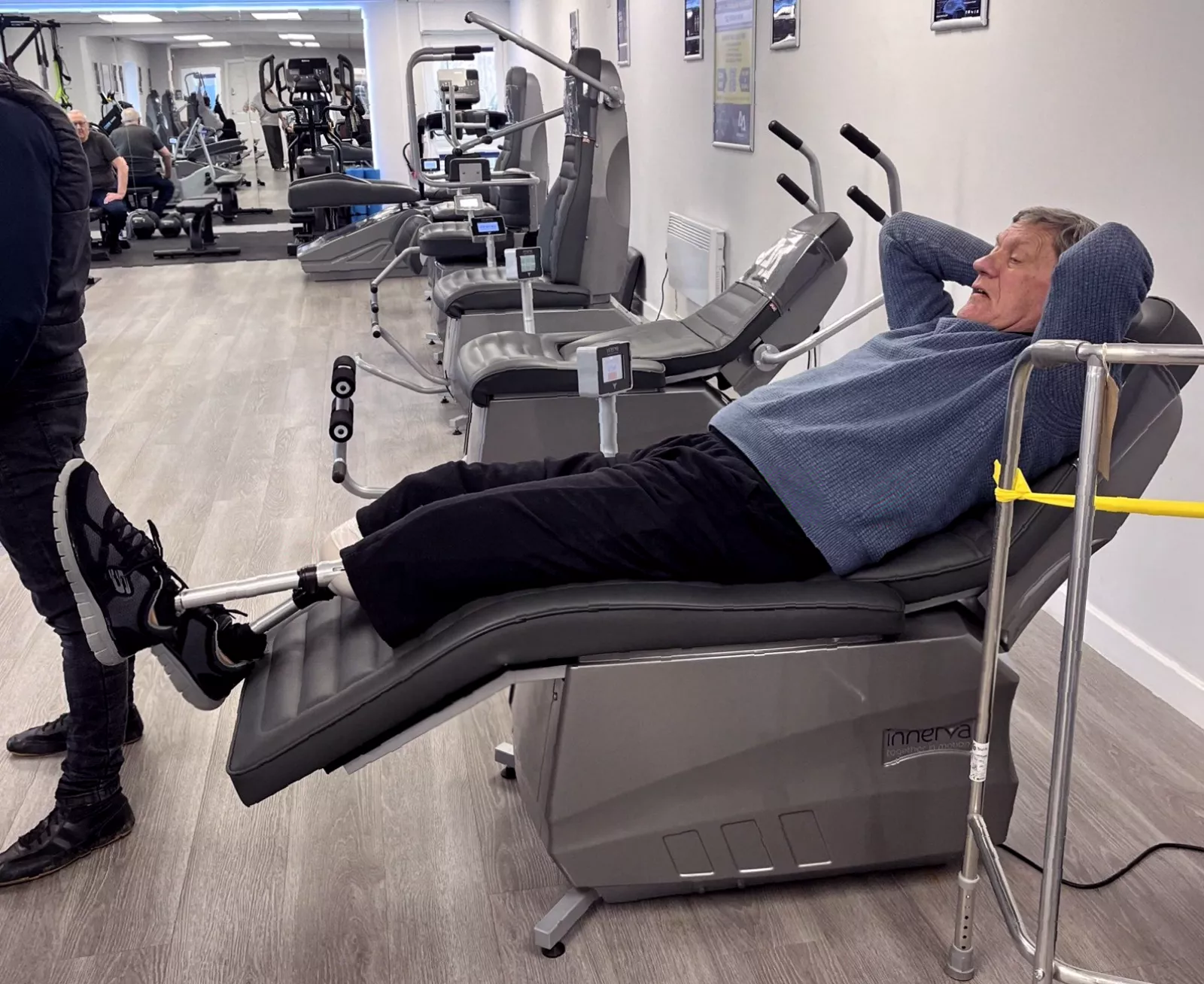
His wife Fiona found a rehabilitation unit at St Thomas’ Hospital in London, where Mr Olsen spent nine weeks. There, maggots were used to clean his wounds – a recognised method for reducing infection in complex cases. “I was prepared to do whatever they asked of me,” he said. Because both legs had been amputated, he was not able to walk out of the unit, but he began tentative work with prostheses after returning home.
Physically, he has made progress. He mostly uses a wheelchair but is building up his thigh strength to manage prosthetic limbs and a walking frame. A few months ago, on Easter Sunday, he walked unaided for the first time – a few steps in church to take communion. “It was a very emotional moment,” he recalled. Mentally, the toll remains heavy. He lies awake at 3am asking himself how he ended up like this, and feels guilty for turning Fiona into his carer. “She’s fought hard for me,” he said. “I hate being a burden. But she reminds me we still have each other and our daughter, Emma.”
Mr Olsen, who previously enjoyed staying fit by using a rowing machine in his garage every morning, now hopes his story will spare others the same fate. “I’m 80. I’m still here and mentally sharp. I have a wife and daughter I love. I’d like five more good years at least – and I’ll continue sharing our story so that others might be spared my fate.”