

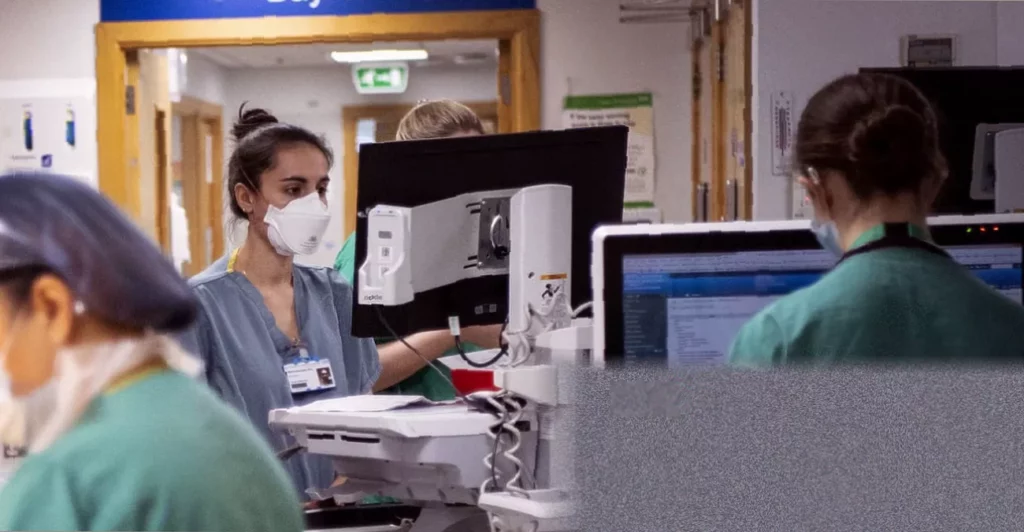
Over 1,300 deaths a month in England are now linked to long waits in accident and emergency departments, according to analysis by the Royal College of Emergency Medicine (RCEM). The figure, which equates to roughly 15,860 excess deaths in 2025 alone, represents a tenfold increase from a decade earlier, when 1,657 such deaths were recorded in 2015.
The RCEM data shows that while 2025’s total was slightly lower than the 16,644 seen in 2024, the numbers remain alarmingly high. The risk of death climbs steadily the longer a patient waits: those who spend eight to 12 hours in A&E before admission face a one-in-72 chance of an excess death, and patients who wait 12 hours are more than twice as likely to die within 30 days compared with those seen within two hours. In 2025, nearly 500,000 patients spent over 24 hours in A&E, and 13,386 endured waits of 72 hours or more. The situation has worsened into 2026: in January, 66,847 patients spent a full day in Type 1 (major) A&E departments, including 9,379 who waited more than 48 hours.
A physician’s frontline account
Dr Carole Gavin, a consultant emergency physician in Manchester with more than 30 years’ experience, said the advances in emergency medicine over her career — including acute interventions for stroke and heart attacks that were once untreatable — had been “life changing”. Yet she described a system in England in 2026 that is unable to provide even the most basic, humane emergency care. “I am amazed on a daily basis by the resilience of the patients and staff in the face of this disaster, but fail to comprehend why this national crisis is allowed to continue,” she said.
Dr Gavin’s experience, she said, will be familiar to every A&E worker in the UK. Patients are dying in corridors with no privacy or dignity due to lack of space and hospital beds, while many more will die later as a consequence of their prolonged emergency department stay — a point backed by the RCEM’s own mortality analysis.
The gap between reported improvements and seriously ill patients
Despite the grim statistics, the government points to a different measure of A&E performance. The proportion of patients seen within four hours reached 77.1% in March 2026, the best performance since July 2021, and an interim “floor” target of 78% was set. In April 2026 the figure was 76.9%. But Dr Gavin warned that these headline figures obscure the reality for the most unwell patients. “The government appears to be prepared to accept these deaths,” she wrote. “When we repeatedly try to raise the alarm we are told NHS performance is improving as there are fewer patients waiting in A&E for more than four hours. However those are the well patients who will go home, while the seriously ill patients wait for up to 48 hours for admission to a bed – something that would have been unimaginable a few years ago.”
The official four-hour constitutional target is 95% of all patients seen within four hours. Current performance across all A&E departments sits at around 74%, and for Type 1 (major) departments — where the most critically ill are treated — it is closer to 60%. Meanwhile, “trolley waits” of more than 12 hours after a decision to admit remain a persistent crisis. In early 2026, over 54,000 patients waited more than 12 hours for a bed, and May 2026 data showed over 50,000 patients endured such waits — a 17% increase compared with May 2025.
Bed shortages are a critical driver. General and acute bed occupancy averaged 93.1% in 2025, well above the recommended safe level, and rose to 94.7% in January 2026. The UK has fewer hospital beds per capita than comparable OECD nations. “Exit block” — where patients who are medically fit for discharge cannot leave due to a lack of social care provision — leaves an average of 12,906 people per day stuck in hospital, blocking patient flow and preventing admissions from A&E. In December 2025, one in four patients admitted as emergencies waited more than four hours between admission and being found a bed, and one in ten waited over 12 hours. Over 100,000 instances of patients aged over 65 waiting more than 24 hours in A&E after a decision to admit were recorded in 2024/25 alone.
Staffing shortages add to the pressure. A March 2026 RCEM survey found that around 60% of clinical leads described their departments as moderately understaffed, while over one-fifth reported severe understaffing. The use of enhanced and advanced clinical roles — such as nurse practitioners and physician associates — has expanded, but is constrained by inconsistent definitions and variable standards.
Calls for government action
The RCEM has repeatedly called for a “meaningful plan” to address the crisis, pointing to under-resourced hospitals, lack of patient flow and chronic bed shortages as core causes. The government has invested nearly £450 million in urgent and emergency care for 2025–2026, funding new same-day emergency care units, urgent treatment centres and mental health crisis assessment centres. A proposed “single patient record” system, due to be debated in the NHS Modernisation Bill, aims to join up fragmented health data and could prevent up to 20,000 A&E visits annually. The Liberal Democrats have put forward an alternative plan that includes 6,000 extra hospital beds and a law to end 12-hour waits, funded by reallocating money from pharmaceutical companies, alongside a GP guarantee of an appointment within seven days or 24 hours if urgent.
Dr Gavin is clear on what is at stake. “Of course the solutions will not be easy and will require significant investment; however if the government fails to act it will bear the responsibility and shame for yet more avoidable deaths that I and my colleagues will continue to witness on a daily basis while our protests fall on deaf ears,” she said.