

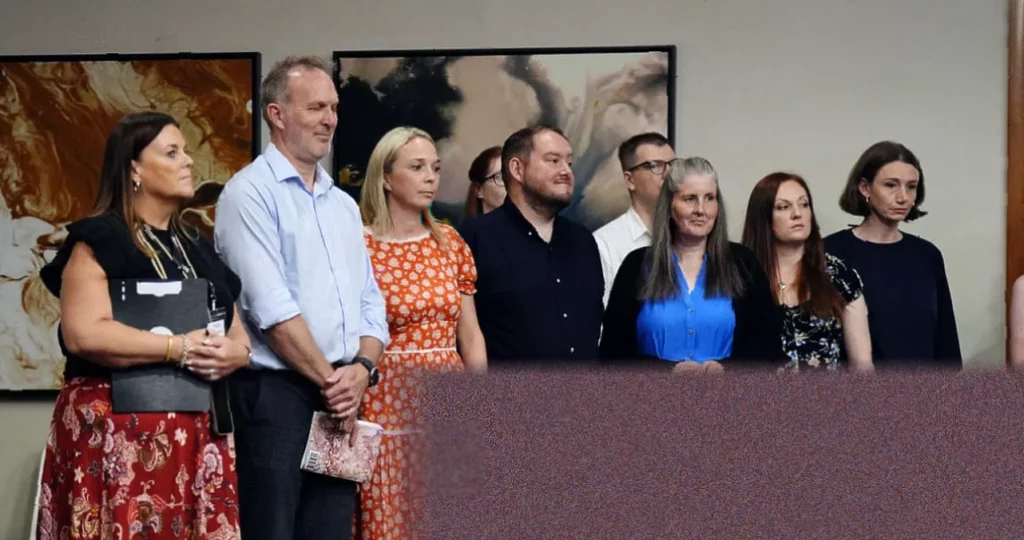
More than 500 mothers and babies were harmed or died as a result of inadequate care at Nottingham University Hospitals NHS Trust (NUH), according to the largest maternity inquiry in NHS history. The damning report, led by senior midwife Donna Ockenden, found that 444 women and 76 newborn infants suffered “potentially avoidable” outcomes because they received substandard treatment over a 13-year period.
The scale of the failures
The three-year investigation examined approximately 2,500 cases of stillbirths, neonatal deaths, maternal deaths, and babies or mothers who suffered brain damage and other injuries while under the care of NUH between 1 April 2012 and 31 May 2025. The 401-page document covers care at two hospitals — Queen’s Medical Centre and Nottingham City Hospital — and describes a “toxic” and “cruel” environment where “dangerously poor” care was routine.
Ockenden and her team investigated the deaths of 27 mothers between 2006 and 2024 and “identified failures in care that may have or substantially impacted on the outcome in six deaths”. The review also examined cases in which babies died as a result of being starved of oxygen during birth, picking up a hospital-acquired infection, or because midwives and doctors did not manage the mother’s labour properly or provided poor postnatal care.
More than 2,500 families came forward to share their experiences, and approximately 850 current and former staff of the trust gave evidence. “Let that number sit with you for a moment – 2,500 families,” Ockenden told a press conference in Nottingham. “Their experiences occurred over more than a decade. And yet the themes that run through those experiences – a failure to listen, a failure to investigate, a failure to learn – are hauntingly consistent. From 2012 to 2025, year after year, baby after baby, mother after mother, family after family.”
Failure to listen: a consistent pattern
Staff’s failure to listen to women and to act promptly on concerns they raised was one of the “common failures” involved in maternal deaths, the inquiry found, alongside delays in women having scans. The report details a pattern in which mothers’ repeated warnings were dismissed, sometimes with cruelty. In one case, Sarah Andrews, whose daughter Wynter died in 2019 at Queen’s Medical Centre from hypoxic ischaemic encephalopathy after oxygen was cut off to her brain, described being told to stay at home for six days while in labour. When she eventually underwent an emergency caesarean section, the smell of infection filled the room. “All the warning signs of infection were there,” she said. Later, a member of staff told her: “If we listen to every mother’s concerns, we’d be overrun.” A coroner later ruled it “a clear and obvious case of neglect”.
The inquiry found that such dismissive attitudes were widespread. Inappropriate and derogatory language was used by some staff, including the acronym “FOH” — likely indicating a desire for patients to go home — written on a whiteboard next to the names of heavily pregnant women. The report also documents racism directed at mothers, including staff mimicking accents, refusing to arrange interpreters, and giving preferential treatment to white patients over local women of Asian origin. One Roma woman reported having a sheet thrown at her when she asked for her bed to be changed. Women from the most deprived backgrounds consistently described very negative experiences.
Other families told similar stories of being ignored. Harriet Hawkins was stillborn in April 2016 after her mother had been in labour for six days; an external review found 13 failures and concluded the death was almost certainly preventable. Quinn Lias Parker died at one day old in 2021 after his mother’s repeated requests for a caesarean section were turned down; she told the inquiry she felt “something wasn’t right” as her son was “slowly dying but no one’s doing anything”. Jenny Ardley survived a near-fatal childbirth in 2010 only after catastrophic bleeding and emergency surgery.
Wider systemic failures and previous warnings
The report paints a picture of a service in which understaffing was routine, lessons from patient safety incidents were not learned, and bullying by “intimidating cliques” of staff was rife. Some staff members were too frightened to speak to the review team. Poor record-keeping was also identified, along with repeated failures to investigate baby deaths adequately, with some deaths not referred to the coroner.
These failings were not without prior warnings. The Care Quality Commission (CQC) rated NUH maternity services as ‘Requires Improvement’ for safety as early as 2016. In 2020, the rating dropped to ‘Inadequate’, prompting a warning notice. Although some improvement was noted in 2021, a CQC report as recently as May 2025 still rated maternity services as ‘Requires Improvement’, identifying breaches of health and safety regulations, leadership issues, and staffing concerns.
NUH has faced prosecution by the CQC for safety breaches. In January 2023, the trust pleaded guilty to failings in the care of Sarah Andrews and her daughter Wynter and was fined £800,000. In February 2025, the trust was ordered to pay more than £1.6 million after admitting to six charges related to the deaths of three babies and harm to their mothers.
The scandal in Nottingham is part of a national pattern. A CQC review found that 48% of maternity services across England were rated as inadequate or requiring improvement between 2022 and 2024. The Health Services Safety Investigations Body (HSSIB) has warned that maternity and neonatal systems are too complex, national collaboration is inconsistent, and lessons are not being learned across the country. Chronic problems with recruitment and retention of the maternity workforce are a key factor, with staff leaving the profession under pressure, while maternity negligence payments in the UK have reached £1.1 billion per year.
Calls for systemic change
Paula Sussex, the Parliamentary and Health Service Ombudsman, said the report “adds to an overwhelming body of evidence that maternity services are failing women and families in ways that are repeated and preventable”. She added: “For years, reviews have highlighted the same issues – failures in communication, not listening, delays in diagnosis, and poor postnatal care. Yet too often these warnings and any lessons have not translated into lasting improvement, resulting in repeated harm. Listening to women and families is one of the most effective ways to prevent harm and improve care. We owe it to those affected not just to recognise these failures, but to ensure they lead to meaningful and lasting change.”
Labour MP Michelle Welsh, whose own baby survived birth by what she called “pure luck” and who now serves as the government’s first maternity adviser, told the BBC: “When it comes to luck, as to whether your baby survives or not, then that is a true indication of a system that is truly, truly failing.” She called for “huge systematic change”, adding: “Funding alone is not going to solve this crisis. The government has to be bold in the policies that it makes, because tinkering around the edges will not solve this crisis.”
The Ockenden report outlines a set of “Immediate and Essential Actions” for NUH and national maternity services. These include improving how the health service listens to women and families, developing national workforce planning tools, mandatory training, better risk identification, improved incident investigation, increased accountability, and creating psychologically safe working environments. The Secretary of State for Health and Social Care, James Murray, has said that lessons from Nottingham will form part of a national plan to improve maternal and neonatal care. The review team, led by Donna Ockenden, will continue to oversee NUH’s improvement programme for the next two years.
Nottinghamshire Police remains active in its investigation, Operation Perth, which is examining care provided to at least 200 families. The force is still considering whether to charge the trust with corporate manslaughter. In June 2025, two men were arrested in connection with operating practices in the trust’s mortuary service. Separately, the General Medical Council is reviewing 62 maternity cases at Nottingham hospitals.