

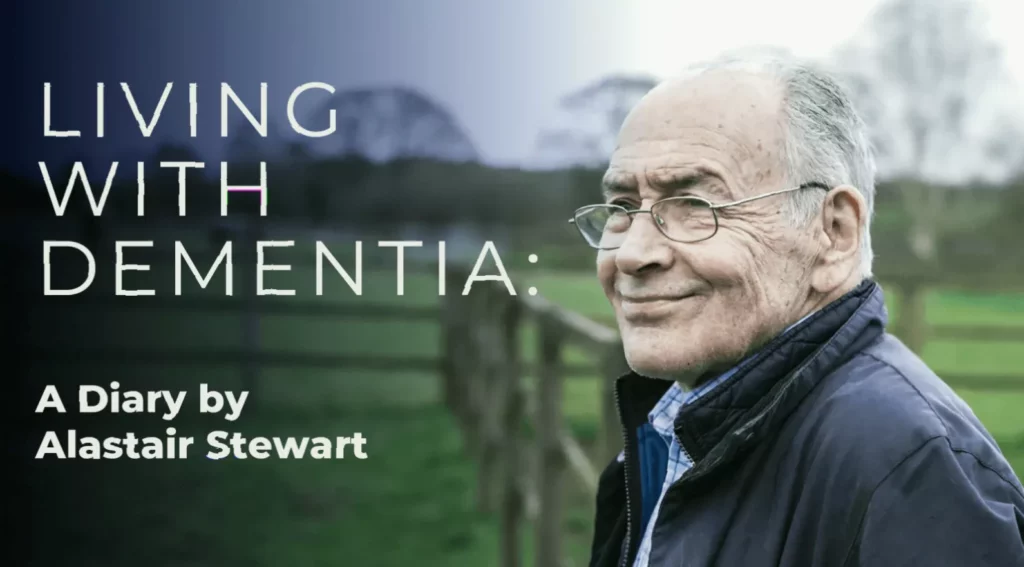
For Alastair Stewart, the veteran broadcaster who disclosed his early-onset vascular dementia diagnosis in September 2023, one unexpected benefit emerged from the condition: he finally quit smoking. The link is direct – smoking is a major cause of high blood pressure, which in turn drives the mini-strokes often responsible for vascular dementia. The decision has saved him a “fortune” and, as his wife Sally puts it, made life “much more pleasant for non-smokers”. He still relies on nicotine pouches and gum to manage cravings.
A Silver Lining
Stewart, 71, first noticed something was wrong six to nine months before his diagnosis. The early signs were not memory lapses but practical difficulties: doing up shoelaces, straightening his tie, remembering programme call times. His wife Sally was the first to spot the changes, including his inability to read an analogue clock. Colleagues at GB News, where he later worked, noticed he would arrive very early or appear dishevelled – and, he says, they were “brilliant and very supportive”. The diagnosis followed a brain scan that detected a series of “minor strokes”. Stewart has described the condition as “demeaning and soul destroying”, particularly the toll it has taken on his wife, who after nearly 50 years of marriage has become his primary carer. He no longer drives and avoids travelling to London unless accompanied, preferring remote appearances via Zoom or Teams. He has revisited his will and arranged powers of attorney with Sally. He has also become a public spokesman for Alzheimer’s Research UK, urging others to seek a diagnosis and to make lifestyle changes – stopping smoking, increasing exercise, keeping the brain active with puzzles – because “if you’ve got dementia, remember, you’ve pretty much always got friends willing to help you.”
The Digital Maze
Navigating the modern online world, however, presents a daily struggle. Stewart recounted how he needed to buy nicotine pouches online. Two major suppliers were competing for his business; the winner was the one that offered a call-back service if he needed help. He did need help – they called back, and a real person sorted everything out quickly. “So few online companies now let you speak to another human being,” he wrote. “Good customer service isn’t just the right thing to do – it makes good business sense.” Online banking remains a hurdle: his bank, he says, seems to have “developed an aversion to answering the telephone”. When it came time to renew his wife’s car insurance and their home and contents insurance, the experience was worse. Comparison websites, he said, are “an alien landscape for those of us with dementia”. Human insurance brokers are far easier to deal with, but they are “becoming increasingly rare”. The broader trend – Britain’s “obsession with apps and algorithms” – is, in his view, making life hell for people who struggle with digital interfaces, particularly those with cognitive impairments.
Healthcare at a Human Level
The same digital-first approach is now embedded in the NHS. Stewart had two face-to-face medical appointments this week. The first was at Andover Memorial Hospital, a former community “cottage” hospital where, he said, “the old ethos of kindness and patient-centred care has survived”. It remains his favourite of the many hospitals he and Sally have used. The second was at the Royal Hampshire County Hospital in Winchester, for a pre-assessment. Before attending, he received an email instructing him to complete an online pre-assessment form using the NHS App. “For someone with dementia, it simply isn’t fit for purpose,” he wrote. He attempted it but quickly realised the assessment process had been outsourced to a private IT company – “hardly reassuring”. What was reassuring was the staff nurse who greeted them. She calmly took him through every question, including his long list of medications. Sally noted that it would surely save time and money if all that information could simply be pulled from a central NHS record. The nurse replied that the data was there – “but the questionnaire still had to be completed”. She smiled and admitted that, in her experience, doing it face to face was “better and more reliable”. Stewart and his wife agreed wholeheartedly. “She was knowledgeable, patient and incredibly reassuring – a wonderful example of the NHS at its best.” The vulnerability of people with dementia to extreme heat has also affected his routine: his therapeutic dog walks are temporarily on hold because the high temperatures make them unsafe.
Political Shifts
On the political front, Stewart turned his attention to Westminster and the Labour leadership contest. Sir Keir Starmer confirmed he would stand down after Andy Burnham’s victory in the Makerfield by-election. Stewart enjoyed GB News’s coverage with Christopher Hope and Katherine Forster, describing the BBC’s coverage as “rather shouty” and expressing doubt that ITV News even ran a special programme. He recalled significant by-elections from his long career – Corby, Glasgow Hillhead, and his favourite, Langbaurgh in 1991, where his “dear friend, the wonderfully funny and delightfully naughty Mo Mowlam” ran Labour’s successful campaign. Prime Minister’s Questions, he noted, was “brutal”. Kemi Badenoch, in exchanges with the Education Secretary, asked what Labour had gained from what she called the “political assassination” of Starmer, and quipped: “A pair of eyelashes and a black T-shirt.” Starmer’s departure speech from the Downing Street lectern was, Stewart felt, “dignified and, at times, quite touching”. Wes Streeting announced he would not stand; Rachel Reeves said she would back Andy Burnham, despite rumours that Burnham would replace her as Chancellor. The sudden enthusiasm from Labour’s backbench MPs for Burnham, Stewart observed, “reminded me of people rushing to join the winning side”. David Lammy is also said to be considering a leadership bid. “It would be laughable if it weren’t quite so tragic – and, perhaps, rather delusional,” Stewart wrote.