

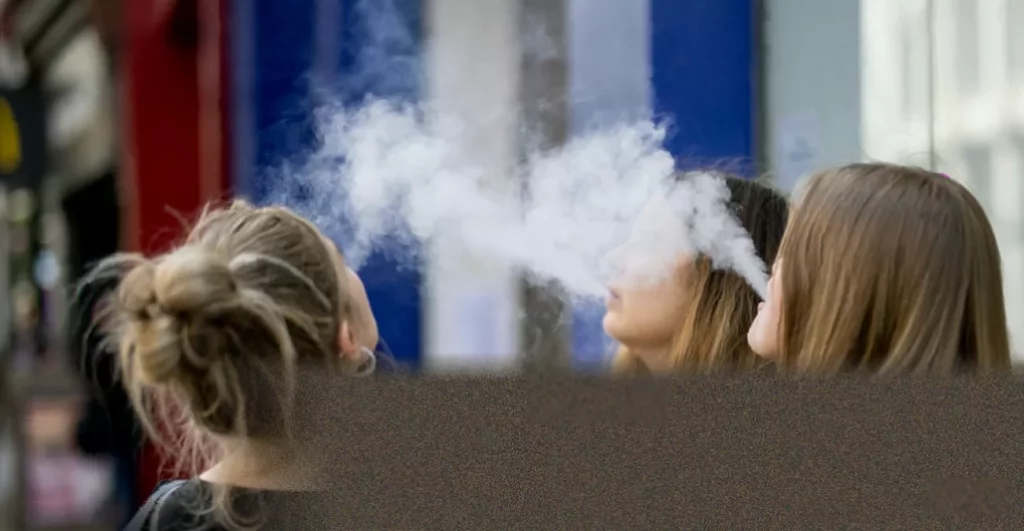
The Pacific island nation of Palau has formally asked the United Nations to classify nicotine as a controlled substance, triggering a review by the World Health Organization’s Expert Committee on Drug Dependence that could lead to a global vote on banning the chemical by 2028.
President Surangel Whipps Jr. has submitted a request to bring nicotine under the 1971 Convention on Psychotropic Substances, arguing that modern tobacco-free products such as vapes and nicotine pouches do not effectively help people quit smoking but instead sustain dependency and increase cumulative exposure, particularly among adolescents. “We may be a small nation, but the scale of a problem has never determined who acts on it,” Whipps Jr. said. Palau ranked second out of 100 countries in the 2025 Tobacco Industry Interference Index, indicating minimal industry influence on its public health policy, and its initiative is designed to complement existing tobacco control efforts under the WHO Framework Convention on Tobacco Control, which primarily targets tobacco products rather than nicotine as a molecule in all its forms.
The WHO’s Expert Committee on Drug Dependence, a scientific advisory body composed of independent experts, meets annually to review the public health impact of psychoactive substances. Palau’s request triggers the first such assessment of nicotine since the 1990s, when the committee last reviewed the chemical. At that time, nicotine gum and patches were newly available, and the committee determined that therapeutic products delivered low doses and did not cause significant disturbances. The current review will assess nicotine’s dependence potential, abuse likelihood, and associated public health and social problems. The committee’s recommendations will pass to the Commission on Narcotic Drugs, with a UN vote on a potential worldwide ban likely to take place in 2028.
The case for and against a global ban
Palau’s submission builds on the argument that addiction and dependence themselves constitute harm, even in the absence of other major health consequences. Smoking remains the leading cause of preventable death worldwide, and as the then head of the WHO, Gro Harlem Brundtland, put it in 2000, “a cigarette is the only consumer product which when used as directed kills its consumer.” Many countries, including the UK, have taken strong measures to restrict and even ban cigarettes and other tobacco products. Over the past two decades, however, tobacco-free nicotine products such as vapes and nicotine pouches, which use a synthetic version of the addictive ingredient, have exploded in popularity, and regulation has been slow to catch up.
A WHO report found that children are, on average, nine times more likely than adults to vape. Some e-cigarettes contain harmful ingredients like heavy metals, and nicotine is proven to be harmful to adolescent brain development. The UK did not have vape-specific legislation until 2016; the previous law covered tobacco only. Palau’s experts argue that modern nicotine products facilitate “dual-use,” where individuals consume multiple types of nicotine products, sustaining dependency rather than aiding cessation. There is obvious frustration with the way the market for nicotine products sprang up rapidly in a regulatory grey area and targeted children specifically.
However, a worldwide ban on nicotine would carry significant risks. Jonathan Caulkins, a professor of drug policy at Carnegie Mellon University, has cautioned that it would “create an opportunity for an illegal supply along with all of the crime, violence and corruption that goes with illegal markets.” There are still 1.2 billion smokers worldwide, and people who switch to vaping are twice as likely to quit smoking, according to a recent Cochrane review. The review, updated in November 2022 and including 78 studies with over 22,000 participants, found high-certainty evidence that nicotine e-cigarettes are more effective than traditional nicotine replacement therapies in helping people quit smoking for at least six months. Nicotine e-cigarettes also likely lead to higher quit rates than e-cigarettes without nicotine, though with less data supporting this.
Nicotine versus the delivery method: the health question at the heart of the debate
The most consequential question for regulators is whether the harm attributed to nicotine use comes from the chemical itself or from the way it is delivered. The evidence is sharply contested. A recent report from the Royal College of Physicians in the UK found that “current evidence suggests nicotine itself confers little risk to health.” The college’s 2016 report, “Nicotine without smoke: tobacco harm reduction,” suggested that the hazard from long-term vapour inhalation from e-cigarettes is unlikely to exceed 5 per cent of the harm from smoking tobacco. Synthetic nicotine, freed of the carcinogens found in tobacco, presents a particularly complex case, seeming to offer addiction without other obvious harm. Yet experts emphasise that “nicotine is nicotine,” and the long-term health effects of synthetic products are still under investigation. Concerns exist that synthetic nicotine products, particularly those that were unregulated by the US Food and Drug Administration until recently, may contain unknown harmful chemicals.
Palau’s submission to the WHO directly contradicts the Royal College of Physicians’ position, including data linking nicotine to cardiovascular disease and other health conditions. The World Heart Foundation, in a January 2024 policy brief, stated that nicotine itself is “far from innocuous” and is associated with an increased risk of cardiovascular disease. The science on pure nicotine use remains limited, and while nicotine is not considered a carcinogen, its effects on the cardiovascular system and its proven harm to adolescent brain development are well documented. Nicotine can disrupt the formation of brain circuits crucial for learning, mood, attention, and impulse control, leading to long-term cognitive impairments, increased impulsivity, and a heightened vulnerability to addiction to other substances later in life. Some research suggests that adolescent nicotine exposure may even prime the brain for future substance abuse through epigenetic changes.
The fundamental question is whether addiction and dependence themselves, in the absence of other major health consequences, constitute a harm that justifies a global ban. Smoking taught us that it is often better to stamp out highly addictive habits if consequences may become obvious later, and banning nicotine would cut the regulatory problem off at the source. But there is also reason for caution: e-cigarettes, while generally considered safer than smoking, are not risk-free, and their long-term health effects are still being studied. The Royal College of Physicians’ position that nicotine itself confers little risk is contested by those who argue that nicotine has adverse physiological effects beyond addiction.
A middle ground: regulating rather than banning
There is a clear middle ground between a total worldwide ban and the regulatory free-for-all that has characterised the rise of nicotine products. The UK has enacted significant new legislation with the Tobacco and Vapes Act 2026, which received Royal Assent on April 29, 2026. The act aims to create the UK’s first “smokefree generation” by making it illegal to sell tobacco products to anyone born on or after January 1, 2009. It also grants ministers broad powers to regulate vaping products, including restricting flavours, packaging, and advertising, and expanding smoke-free and vape-free areas. A ban on disposable vapes took effect on June 1, 2025, and a new Vaping Products Duty will be implemented from October 1, 2026, adding £2.20 per 10ml to e-liquid sales. The act also includes provisions for a minimum age of 18 for all consumer nicotine products, including pouches and zero-nicotine vapes, effective from October 29, 2026.
The Canadian province of Quebec has gone further in some respects, fully banning flavoured vapes with exceptions for tobacco flavour, effective October 31, 2023, and limiting nicotine concentration in vaping products to 20 milligrams per millilitre. Quebec also restricts the sale of nicotine pouches to pharmacies, though reports indicate that these restrictions are not always respected, with sales occurring in tobacco stores and online. Such measures offer a model for proactive regulation that restricts child-friendly flavours, limits advertising and displays, and confines the sale of the most addictive products to controlled environments, while still allowing suffering smokers and consenting adults limited access to products that can help them quit. The UK should go further in this direction, applying restrictions to all forms of nicotine to head off novel products that flout existing regulation. Addictive substances are by definition difficult for individuals to control, which is why countries may need to manage them — but the shape of that management, between a blanket ban and targeted regulation, will determine whether the response to the nicotine age is a lesson learned or an opportunity missed.