

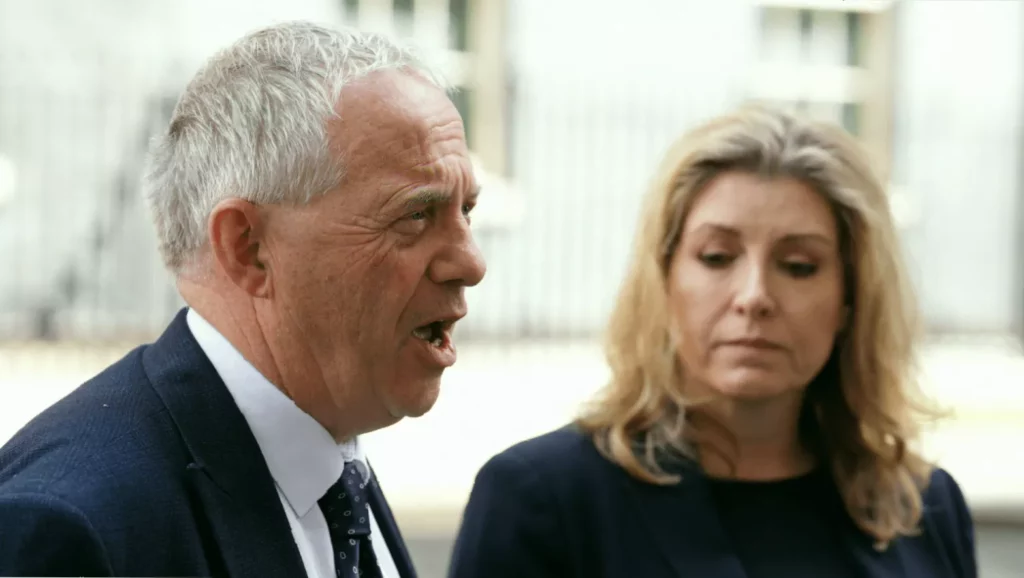
Jewish staff face routine ostracism in the NHS, a new report reveals, prompting the government to accept all 36 recommendations from an independent review that includes a proposed ban on staff wearing political badges on their uniforms.
Lord John Mann, the government’s independent adviser on antisemitism, published the review after examining how the NHS and its regulatory bodies identify, report, and respond to antisemitism and other forms of racism. Commissioned in October 2025, the review found that racism, including antisemitism, is widespread and, in some cases, normalised across the health service.
Central to the report is evidence of what Lord Mann describes as “routine ostracism” of Jewish staff. Speaking to the BBC, he said: “People are leaving and have left the NHS because of that. There are people who are very quietly whispering it to me that they’ve made life changes, career changes, because of the ostracisation they’ve had for being Jewish.” Jewish patients have also reported delaying or avoiding treatment due to fears of discrimination, the review found.
Report findings: routine ostracism and wider racism
The review documented that the presence of political symbols on uniforms can create fear and undermine trust, deterring some patients from seeking care. Lord Mann made clear that his recommendation to ban political identifiers such as badges reading “I support Palestine” or “I support Israel” would not extend to religious symbols like a crucifix or the Star of David. The distinction, he said, is between political expression and religious observance.
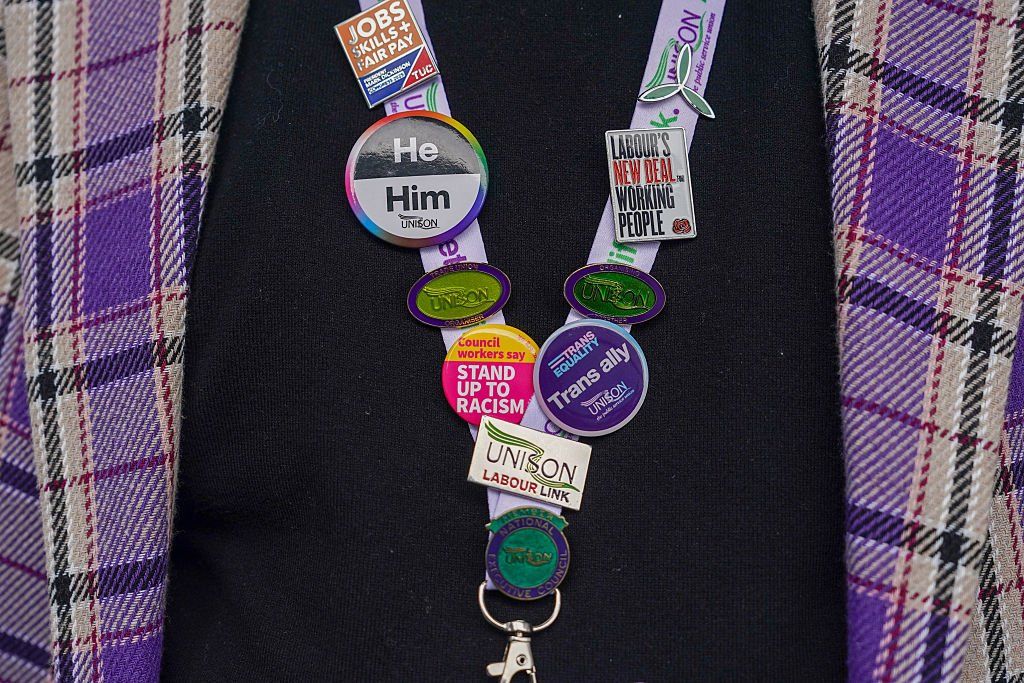
Beyond the badge ban, the review includes 35 other recommendations aimed at strengthening leadership and accountability, improving data collection and transparency, and refining policies and processes to tackle racism across the NHS. Among them is mandatory anti-racism training, covering antisemitism, for all NHS trust chairs and chief executives. The review also recommends that staff should not wear official uniforms or use NHS branding when taking part in political demonstrations.
A Jewish campaign group, Campaign Against Antisemitism, has warned that the NHS faces an “extremism problem”. A spokesperson for the group said: “Jewish patients should not have to worry about whether they will receive proper medical treatment (or worse, if they will be intentionally harmed) because they fear a doctor or nurse may deem them an acceptable target. It is only right that NHS staff leave their political opinions at home, not flaunt them at the bedside. They should not be wearing foreign flags or any other political symbols while at work. The NHS has a responsibility to ensure that all of its patients feel safe. And yes, that includes Jews.”
The findings come as some NHS trusts already prohibit staff from wearing symbols that could be perceived as political, citing a need to create a safe and inclusive environment for patients.
However, the proposed ban is not without controversy. Legal challenges are already under way: three staff members at Barts Health NHS Trust in London have initiated legal action against their employer’s dress code policy, arguing that it unlawfully discriminates against them based on their pro-Palestinian beliefs. Some doctors’ leaders have also expressed concern about a “blanket ban” on symbols, questioning who would define what counts as “political”.
Public opinion: divided over political badge ban
Polling by YouGov, based on a survey of 7,545 adults, reveals that public opinion is split. Overall, 45 per cent of respondents said they would support a ban on NHS staff wearing political badges, while 40 per cent opposed it. Among those, 27 per cent said they would “strongly support” a ban, and 22 per cent said they would “strongly oppose” it. A further 18 per cent said they somewhat supported or opposed the policy, with 14 per cent saying they did not know.
Support for a ban varies significantly by region. Wales shows the strongest backing, with 51 per cent in favour (30 per cent strongly, 21 per cent somewhat) and 39 per cent against. London is also relatively supportive, with 46 per cent backing a ban and 38 per cent opposing it. In the North of England, 46 per cent support the ban compared to 39 per cent against. In the Midlands, 45 per cent support while 41 per cent oppose. Scotland is the only region where opposition exceeds support, with 46 per cent against a ban.
Age also plays a clear role. Among 18–24-year-olds, support is almost evenly balanced — 38 per cent in favour and 37 per cent against — with a quarter of respondents unsure. Support increases with age, reaching 49 per cent among both 50–64-year-olds and those aged 65 and over. However, older respondents also hold the strongest views: the 65+ group has the highest levels of both strong support (34 per cent) and strong opposition (28 per cent).
By voting intention, the most likely to oppose a ban were Green Party voters, with 54 per cent saying they would not support it compared to 35 per cent in favour. The most in favour were Conservative and Reform voters, who tied at 53 per cent support. Among Labour voters, 46 per cent support a ban versus 39 per cent against; for Liberal Democrat voters, the figures are 48 per cent in favour and 41 per cent against.
Government action: full acceptance of recommendations
Health Secretary James Murray has confirmed that the government will accept all of Lord Mann’s recommendations in full. He told the BBC: “I know that Jewish people, and everyone experiencing discrimination, need action not words. Together with NHS England, we will waste no time in setting these recommendations in motion to build a health service that lives up to its values.” New national guidance on uniform policy and the use of NHS-issued equipment will now be published.
The government will also ask all NHS trusts to adopt the UK Government’s definition of anti-Muslim hostility, as part of a broader push to tackle all forms of racism within the health service.
A spokesperson for the Jewish Medical Association welcomed the move, saying antisemitism must be “taken seriously” and adding: “We would support the banning of political symbols including flags and symbols of any country. We wouldn’t want it to be discriminatory in any way.”