


West London NHS Trust is allowing biological males who hold a Gender Recognition Certificate (GRC) to be admitted to female-only wards and toilets, a policy that critics say directly flouts a landmark Supreme Court ruling on the definition of sex under the Equality Act.
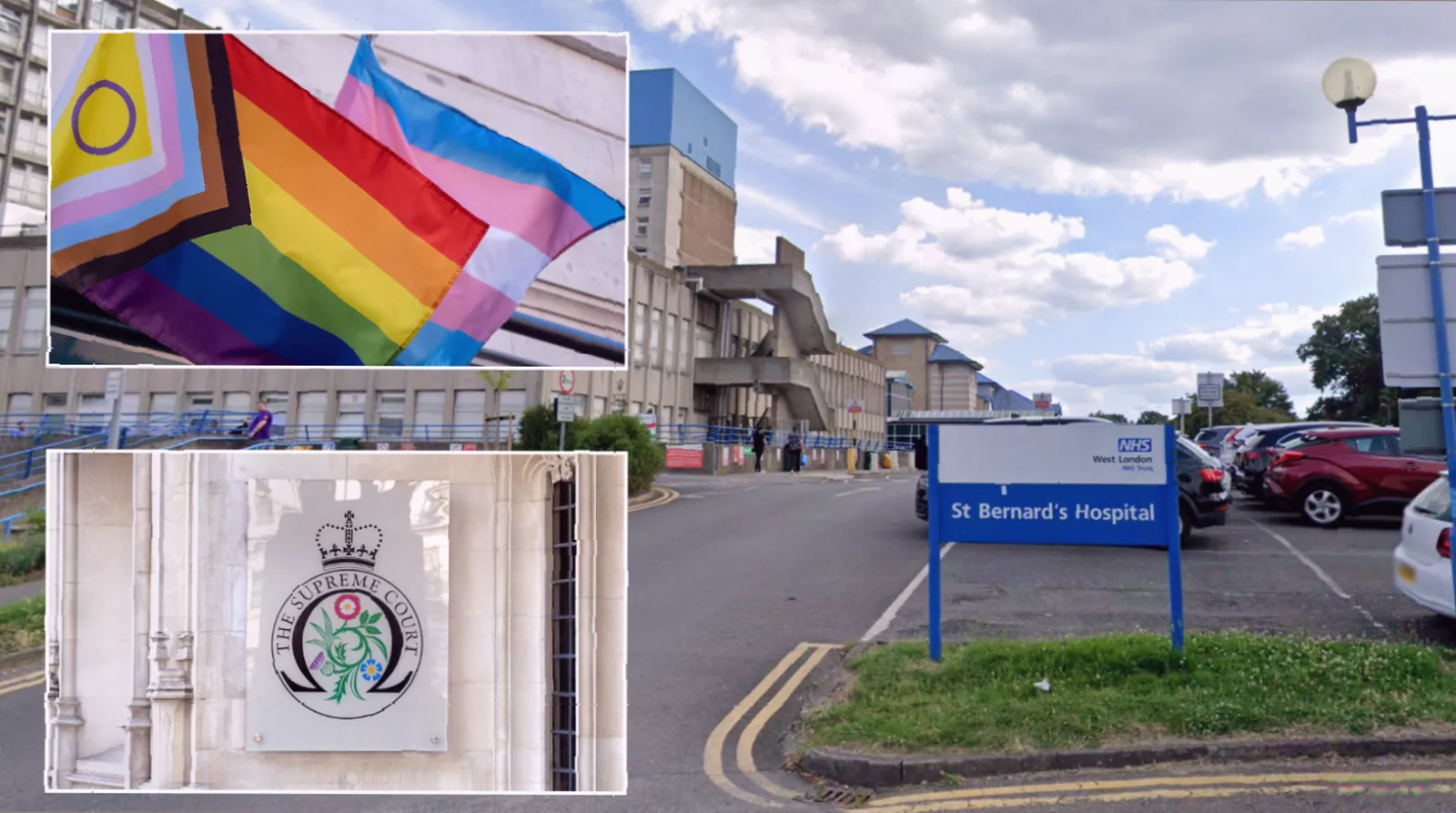
The trust, which provides NHS services across Ealing, Hounslow and Hammersmith and Fulham — including women-only mental health units at St Bernard’s Hospital — has directed patients that single-sex facilities may be used according to their “legal gender”. Under this approach, a person born male who identifies as transgender and has obtained a GRC is granted entry to women-only spaces.
The policy was revised in April. The trust has described it as a temporary measure while it awaits national guidance from NHS England.
Alleged contradiction of Supreme Court ruling
The controversy turns on the Supreme Court’s unanimous judgment in For Women Scotland Ltd v The Scottish Ministers, handed down on 16 April 2025. The court ruled that the terms “sex”, “man” and “woman” in the Equality Act 2010 refer to biological sex — that is, sex recorded at birth. It made clear that obtaining a GRC under the Gender Recognition Act 2004 does not alter a person’s legal sex for the purposes of the Equality Act. Consequently, a trans woman with a GRC is not legally considered a woman under the Act, and single-sex spaces cannot include trans women in female facilities.
The Equality and Human Rights Commission (EHRC) has confirmed this interpretation. In a draft Code of Practice for services, public functions and associations laid before Parliament on 21 May 2026, the commission states that if a service provider admits trans women to a service intended for women, it may cease to qualify legally as a single-sex service under the Equality Act.
Despite this, West London NHS Trust’s updated transgender policy permits individuals who are biologically male to use female-only wards and toilets if they hold a GRC, on the basis of what it terms “legal gender”.
Shadow equalities minister Claire Coutinho described the approach as “astonishing” and branded it unlawful. “Biological males must not be allowed into single-sex female spaces, but more than a year on from the Supreme Court ruling, the Government has completely failed to get a grip on public services that are still flouting the law,” she said. She emphasised that hospital patients, particularly women and girls, are often in vulnerable situations and deserve assurance that their safety and privacy will be safeguarded. Coutinho called on the Health Secretary to demand the immediate withdrawal of the policy and to publish national guidance that is now more than twelve months overdue.
Fiona McAnena, director of campaigns at the gender-critical advocacy group Sex Matters — which intervened in the For Women Scotland case — accused the trust of attempting to sidestep legislation governing single-sex spaces. “The term ‘legal gender’ has no basis in law or medicine and it’s extraordinary that NHS bosses at West London think that they can test the law by writing rules using bogus terminology,” she said. McAnena warned that patients or staff members could have grounds to mount a legal challenge against the trust, and cautioned that if the policy remains in place, other NHS trusts throughout the country might adopt similar approaches. “The sooner NHS England brings out a revised policy that complies with equality law and protects sex-based rights, the better,” she added.
One individual who helped uncover the policy documents described them as filled with convoluted language intended to mislead people into believing they were receiving genuine single-sex provision. Women’s rights campaigners have expressed concern that the trust’s stance could establish a harmful precedent, weakening efforts to maintain protected spaces based on biological sex.
Related legal and regulatory developments
The West London policy is not the first time an NHS trust has faced criticism over transgender access to single-sex facilities. County Durham and Darlington NHS Foundation Trust paid £187,000 in damages to seven nurses after allowing a biological male trans woman to use female changing rooms. The trust subsequently withdrew its transitioning in the workplace policy.
Separately, an employment tribunal ruled that NHS England’s policies permitting trans people to use single-sex toilets and changing facilities corresponding with their gender identity amounted to indirect sex discrimination against female staff. The tribunal suggested that alternative measures, such as gender-neutral facilities, would have been more appropriate.
NHS England is currently updating its guidance on “Delivering same sex accommodation” — now retitled “Privacy, dignity and safety in hospital accommodation” — to align with the EHRC’s Code. The previous 2019 guidance, which advised accommodating trans people according to their presentation, name and pronouns regardless of GRC status, is now being challenged in light of the Supreme Court ruling.
Proposals are also underway to update the NHS Constitution for England to explicitly reflect biological sex and strengthen protections for single-sex care, including accommodating requests for same-sex intimate care and respecting single-sex wards.
Trust’s defence
West London NHS Trust has stood by its policy. A spokesman said: “Our policy is a temporary version while we await national NHS guidance. It reflects the Supreme Court ruling, and we have used legal advice to help make sure we balance the rights of each protected individual or group while maintaining our ability to provide safe and effective care.”
The trust revised its transgender policy in April and indicated it would update the guidance again once NHS England provides further direction.