

Millions of middle-aged Britons are silently struggling with care responsibilities, a landmark report has revealed, painting a stark picture of a national emergency where adult children are propping up the care system at the cost of their own health, finances and relationships.
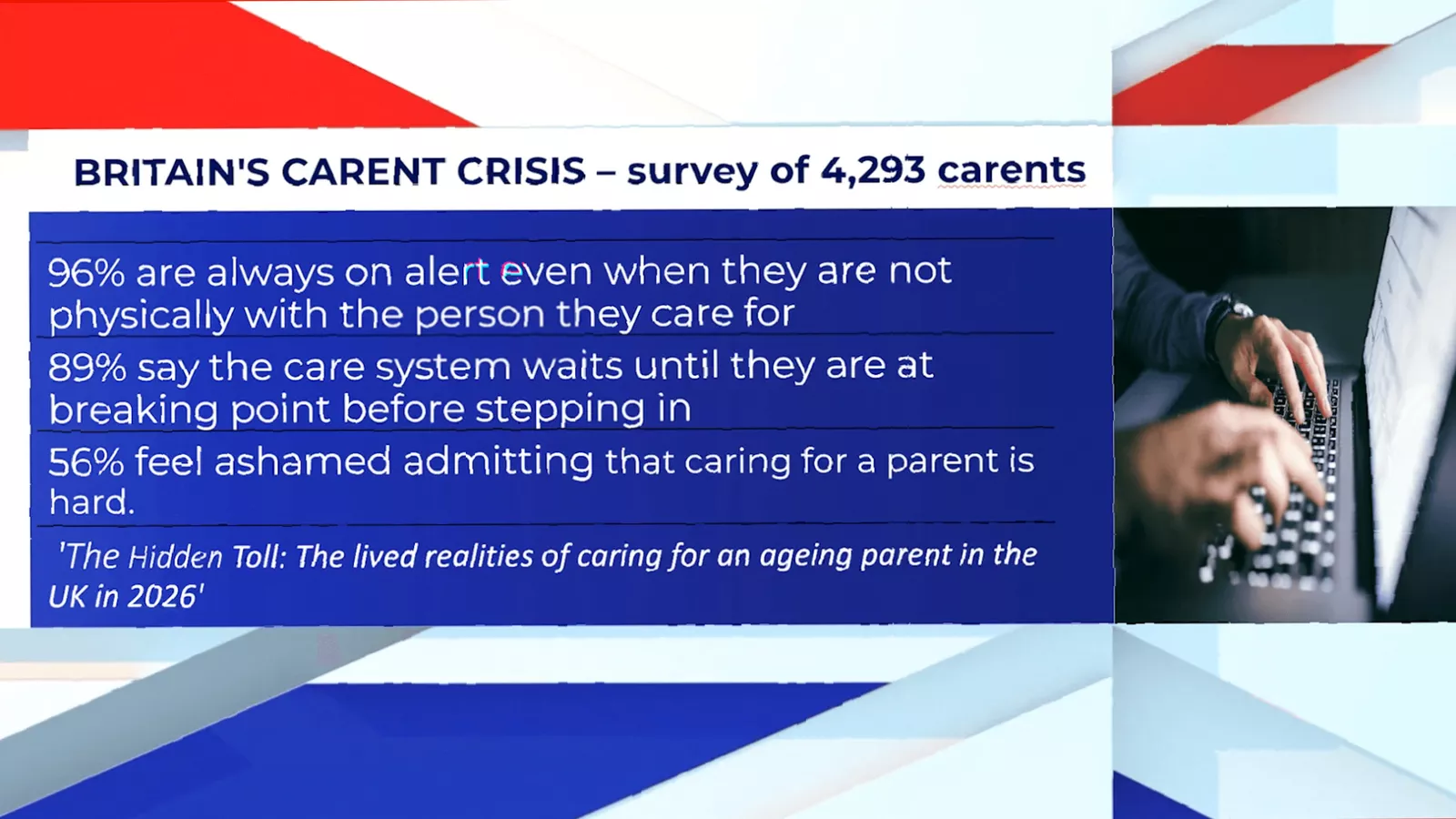
The findings, released by the organisation Carents for Carers Week (8–14 June), are based on a survey of 4,293 adults looking after ageing parents and relatives. They show that 96 per cent are “always on alert” even when away from the person they care for, living in a permanent state of anxiety and waiting for the call that signals a crisis. Nearly nine in ten (89 per cent) say the care system only steps in once they have already reached breaking point, while 62 per cent feel guilty asking for help and 56 per cent feel ashamed to admit that caring for a parent is difficult.
The scale of the issue extends far beyond the survey. Census 2021 recorded 5.8 million unpaid carers in the UK, of whom 1.7 million provide 50 or more hours of care every week. Women bear the heaviest load, making up 59 per cent of unpaid carers, though men are more likely to take on the role after the age of 80. A rapidly growing group is the “sandwich generation” – adults juggling care for both children and ageing parents. Between 2021 and 2023 an estimated 1.4 million people fell into this category, with women accounting for about 61 per cent of them. The economic value of all unpaid care provided across the UK is now put at £184.3 billion a year, highlighting the extent to which families are filling gaps left by formal services.
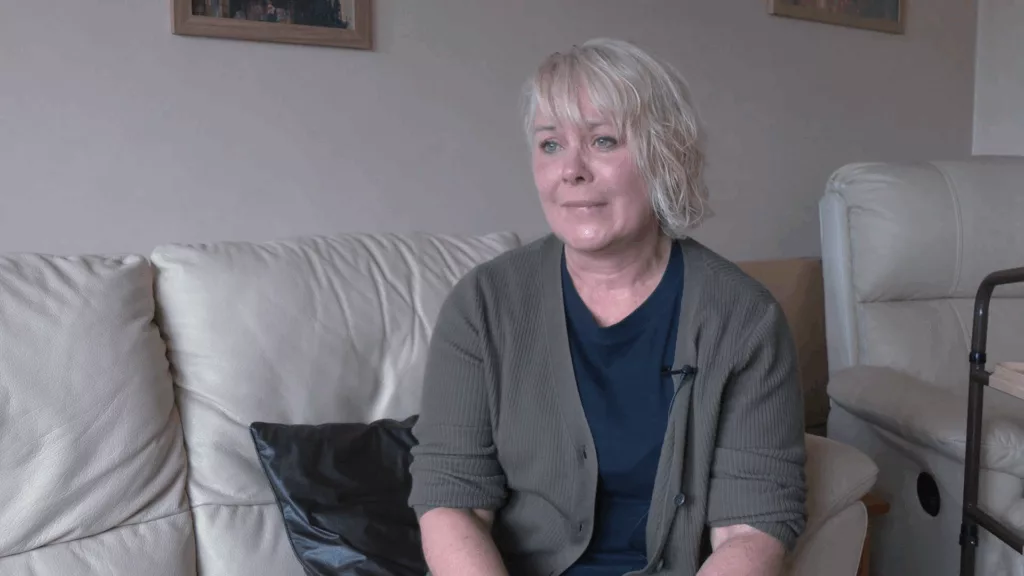
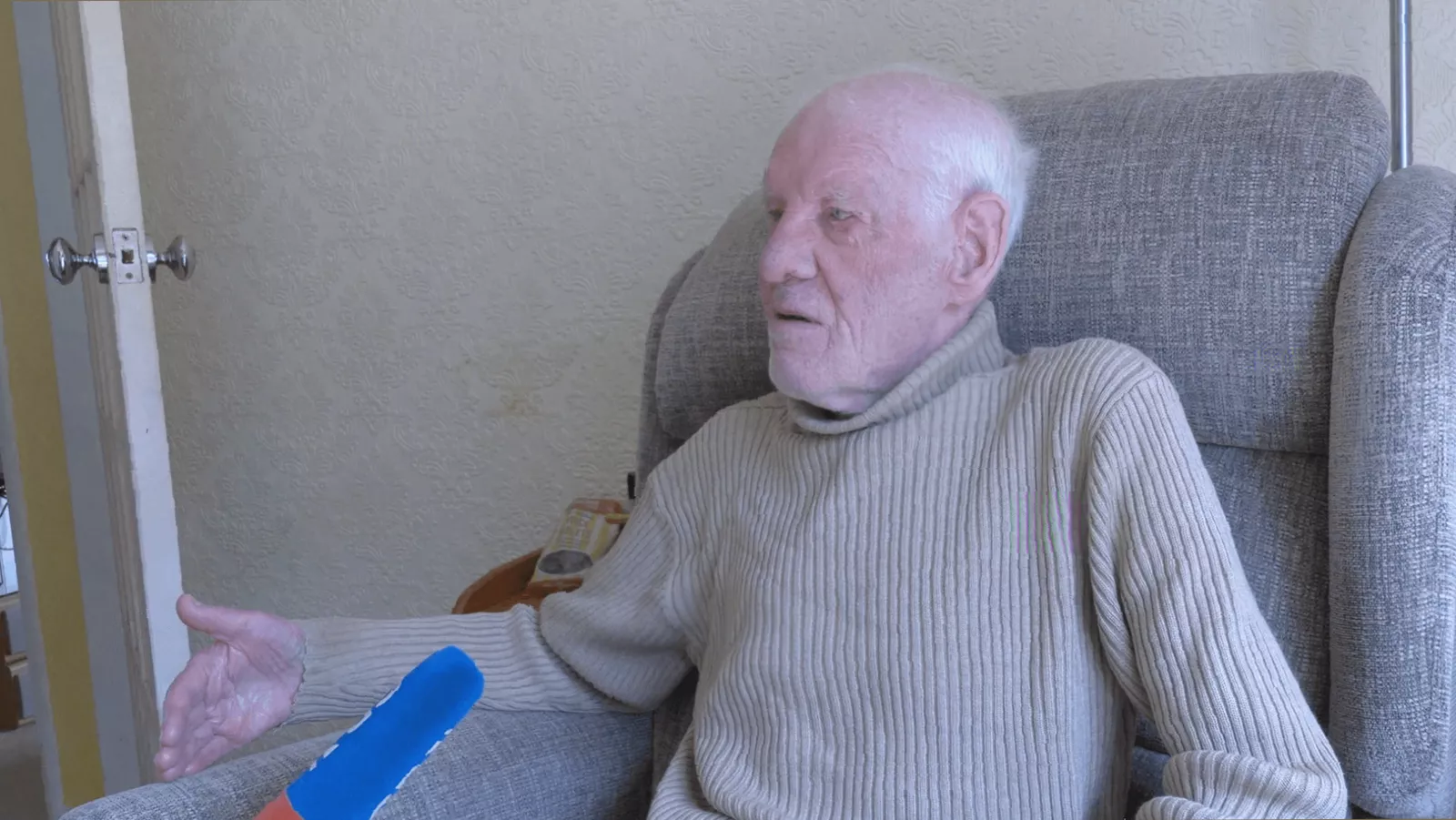
Behind the statistics lies the brutal reality of individuals like Gemma Lennon, 54, who cares for her father Richard Hopkins near Wakefield in West Yorkshire. The 85-year-old has chronic obstructive pulmonary disease and a heart condition that have left him struggling to walk. For the past six years, Gemma and her sister Jane Lamont have managed every aspect of his daily life – cooking, cleaning, cutting his hair and shaving him – while also holding down jobs and raising their own families. Three months ago, Gemma was diagnosed with high blood pressure, which she attributes directly to the stress of caring. A professional carer now visits twice a week for just 45 minutes each time.
“Me and my sister basically take care of everything,” she said. “It’s difficult and it’s a lot of weight to carry. Recently, I was diagnosed with high blood pressure with the stress of it all. I do worry a lot about dad – I’ll come and visit him, and I’ll come home emotionally exhausted.” Gemma works from her father’s house in another room because “he just likes to know that someone is there”. She described watching his personality slowly drift away as he becomes more immobile, adding: “We can’t tell if he’s just exhausted or low, which would make sense because he’s sat on his own all day. It’s no way to finish a life.”
The emotional and physical toll on “carents” – a term coined by the organisation for adults caring for ageing relatives – demands far greater attention. Research shows that prolonged caregiving hours, especially more than 20 per week, are linked to long-term physical and mental health decline. Nearly one in four sandwich caregivers report symptoms of mental ill-health. The financial strain is equally severe: 1.2 million unpaid carers live in poverty, 400,000 of them in deep poverty. Almost half have cut back on essentials, and a third have taken out loans or used credit card overdrafts. For the sandwich generation, the squeeze is compounded by mortgage payments, children’s education costs and the need to support elderly relatives simultaneously.
Work and career prospects are often derailed. Across the UK, 2.6 million people have given up work to care – the equivalent of 600 people every day. A separate Carents study found that 71 per cent of respondents had reduced their hours, changed roles or left employment altogether because of caregiving responsibilities. Yet only 21 per cent of employers offer flexible hours, paid leave or help at home. The resulting loss of identity is felt acutely: 65 per cent of sandwich carers report a sense of lost self.
Gemma described the constant guilt and worry: “It’s like going back to having a toddler. Before I leave for the night, I’ll cook him dinner and then go home and do it all over again and clean and cook for my 16-year-old son.” Her father, Richard, acknowledged his dependence. “For the last six years they’ve been helping me out because since then I’ve really started to struggle with walking – I get so out of breath with my COPD that I tend not to leave my chair in this room,” he said. “I wouldn’t be able to have what life I have without the two of them, and I’m just pleased they live so close. I don’t want to be a burden to them, but it’s very important to me to stay at home and not go into a care home.”
The challenges are especially acute for those caring for a parent with dementia. A Carents report found that 96 per cent of dementia carers are always on alert and 89 per cent say support only arrives once things have already broken down. Dementia is the leading cause of death in England and Wales, and the number of people living with the condition is projected to double to around 1.4 million by 2040, placing immense additional strain on families. The Care Act 2014 mandates investigations into potential abuse and sets minimum care standards, but navigating legal responsibilities remains complex, and many carers report feeling “pushed from pillar to post” when seeking information and support.
Calls for change as pressure mounts
Dr Jackie Gray, founder of Carents and a retired NHS GP, is leading calls for a fundamental shift in how the UK treats family care. She argues that “carenthood” should be recognised as a distinct life stage with proactive support, better mental health provision, stronger workplace protections, proper research and a cultural shift away from treating elder care as an endless private duty. “Frontline health and care services are struggling to cope with the pressures, which means carents are filling the gaps already, but will increasingly fill more and more gaps,” she said. “There’s a massive taboo about talking about elder care and the amount of care that families are doing and the impact that it’s having on the individuals that are doing it. They want to do their very best for the people they love, particularly in their final years, and yet the system isn’t supporting them, and their friends and family aren’t supporting them, because there’s an overwhelming attitude of ‘it’s something you keep to yourself, it’s what you do, and if you do speak out, you’re obviously not a very good son or daughter, or a risky employee not worthy of promotion’.”
Carents, which began as an information website in 2020 and now supports over 35,000 individuals with more than 55,000 email subscribers, has been selected for the IMPACT programme, a collaboration aimed at improving adult social care services. The organisation’s report – titled The Hidden Toll: The lived realities of caring for an ageing parent in the UK in 2026 – is being released during Carers Week, whose theme this year is “Building Carer Friendly Communities”. The campaign emphasises recognition, understanding and support within local communities and workplaces.
The main financial benefit available, Carer’s Allowance, stands at £81.90 per week but requires the carer to provide at least 35 hours of care and the person they look after to be on certain benefits. Other support includes Carer’s Credit and Universal Credit, and the Carer’s Leave Act 2023 introduced a statutory right to unpaid leave, though campaigners say more genuine flexibility is needed from employers. The UK government’s policy for older adults remains fragmented, with no single department holding overall responsibility, and recent reforms – including a 2021 plan and White Paper for adult social care in England – aim for person-centred care, integration of housing and technology, and workforce upskilling. A Healthwatch report on the state of health and social care in 2026 highlights persistent issues with access to timely care and inequalities in provision.
Looking ahead, the number of adults aged over 85 is projected to double over the next 15 years, and dementia cases are expected to rise sharply, increasing the pressure on carents and the wider system. Gemma Lennon, who receives support from the Carents community but wants more to be done, spoke of her fears for the next generation. “I have a 16-year-old and I don’t want him to go through what I’m going through now. We need to see change where there’s support for the parents, but for the people who also need the caring. It needs to be invested in, really does. It’s at crisis point now. I know my story is like so many others, and it’s not fair. I want to speak up because I can’t bear the thought that my son will have to do this for me and my husband – the next generation shouldn’t have to go through what we’re all going through now. There needs to be more investment in care, opportunities for older people to stay at home and recognition of the carents that look after them.”