

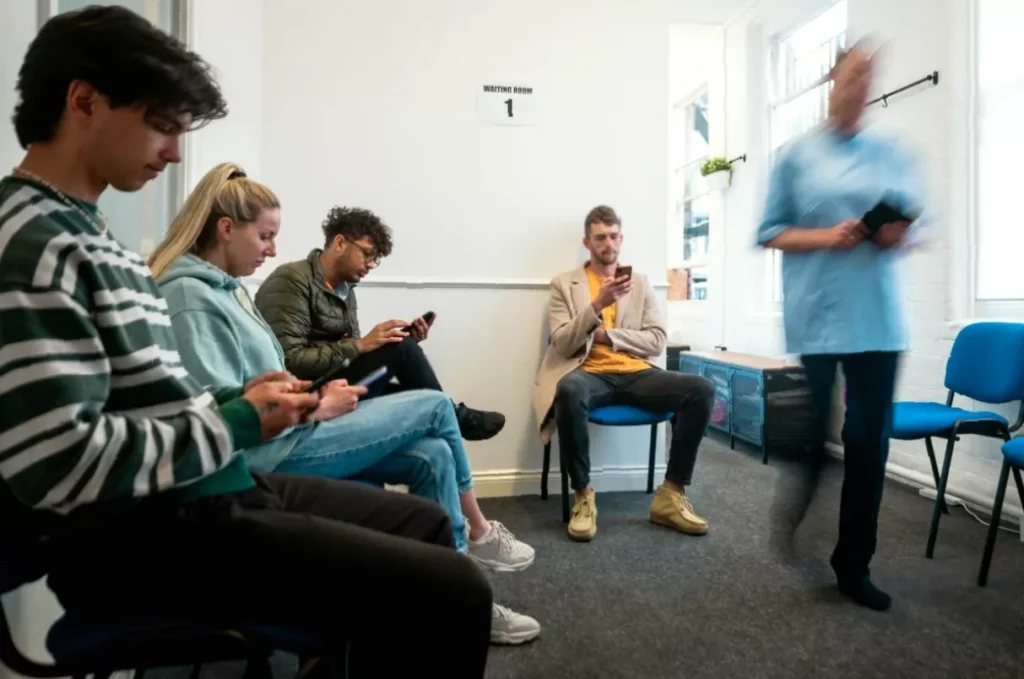
Family doctors in England could be asked to vote on introducing a means-tested subscription charging system for patients, the British Medical Association has confirmed, in a move that would represent a fundamental break from the NHS’s founding principle of free care at the point of use.
The BMA’s GP committee has announced it will ballot members on establishing a “means-tested, subscription-based service” as an alternative to current NHS arrangements. The proposal has been likened to the existing NHS dental charging model, where patients pay fixed fees per course of treatment, with three bands ranging from £27.90 for examinations and X-rays up to £332.10 for crowns, dentures and bridges. Urgent dental care costs £27.90.
The committee described the proposed model as a potential “plan B” that would give practices greater autonomy to deliver private services. Earlier this month, representatives at the UK Local Medical Committees conference backed developing a strategy for work beyond NHS structures.
The Department of Health and Social Care has issued a stark warning against the plans. “Moving towards a model of private, means-tested or subscription-based GP services is not in the interests of patients or the NHS,” a spokesman said. “A two-tier health system would only serve to deepen the health inequalities that already exist.” The department insisted it remains committed to the core principle that treatment is free when patients need it. “The founding principle of the health service that care is free at the point of use must be protected, and we will do so. We want to work with GPs to build a sustainable future for primary care as the front door of the NHS,” the spokesman added.
Why doctors are exploring an alternative model
Dr Katie Bramall, who chairs the BMA’s GP committee, attributed the move to years of political and systemic failures. “This exploration of an alternative model is a consequence of long-term political and systemic failure to protect NHS general practice and has left the profession deeply frustrated, with no other choice but to explore alternatives,” she told Pulse magazine.
She described family doctors as battling mounting workloads while managing patients with increasingly complicated health requirements, making the delivery of safe care progressively more difficult. “Under current contractual arrangements, GPs are prevented from meeting patient demand for some services. These obstacles limit our ability to deliver the care patients ask for or deserve, restricting clinical flexibility,” she said.
The pressures on general practice are severe. As of February 2026, GP practices in England were responsible for approximately 63.8 million patients, an increase of about 6.9 million since September 2015. Over the same period, the number of fully qualified full-time equivalent GPs has fallen by 458, to 28,906 in March 2026. The average number of patients per full-time equivalent GP has risen to 2,214, a 14.2% increase since September 2015.
GPs are struggling with workload more than any other doctor group: 44% reported difficulties in August 2025, and nearly half (47%) said they feel unable to cope with their workload at least once a week. The average hours per session has risen to 6.2 hours, a 49.2% increase compared to the BMA’s definition of full-time working. A 2024 survey found that 63% of GPs do not feel they have enough time during appointments to build the patient relationships needed for effective care. GPs are also far more likely than other doctors to identify workload pressure as a significant barrier to providing good patient care — 32% compared to 16% for all doctors.
Confidence in the future of general practice within the NHS has plummeted to what Dr Bramall described as “unprecedented depths.” The BMA’s GP Committee for England voted overwhelmingly against the government’s imposed contract changes for 2026-27, with 98.9% of nearly 17,000 GPs rejecting them. Key points of contention include requirements for unlimited same-day access and the removal of caps on online consultation requests.

Dr Bramall indicated that the subscription ballot could be abandoned if ministers agreed to urgently address concerns about GP contracts, wellbeing and livelihoods.
Broader pressures on the NHS
The potential shift in GP services comes against a backdrop of significant strain across the health service. Patient satisfaction with access to general practice has sharply declined: the proportion of patients finding it easy to get through to their GP practice by phone fell from 81% in 2012 to 50% in 2023. Although the number of GP appointments has risen, waiting times remain a major source of dissatisfaction, and around 40% of appointments are now conducted by phone.
Primary care consistently receives a smaller share of NHS funding compared to acute services. In 2024-25, £14.5 billion was spent on primary care — 8% of total expenditure — compared to £74.7 billion on acute services, which accounted for 42%. While primary care spending has grown since 2015, it has not kept pace with the overall NHS budget. Research suggests that for every pound invested in primary and community care, there is a yield of approximately £14 in economic value.
Concerns about a “two-tier” health system are already widespread. The proportion of people opting for private healthcare has risen significantly, with 39% citing long NHS waiting times as a reason in 2025, up from 34% in 2023. The UK has seen the fastest growth in spending on private insurance and out-of-pocket healthcare among G7 nations, deepening existing health inequalities as those with financial means can access care faster.
GP partners currently operate as self-employed practitioners, with average pre-tax earnings of £159,000 during 2023-24. However, for salaried GPs, income fell slightly in real terms compared to the previous year, despite a 4.3% cash increase.
Meanwhile, resident doctors — previously known as junior doctors — have announced industrial action next month, with a four-day strike beginning at 7am on June 15, following the collapse of pay negotiations. BMA representatives turned down an offer that would have pushed some doctors’ earnings into six figures. The union has cautioned that additional strikes could follow in July if discussions fail to yield results. The BMA is demanding “pay restoration,” arguing doctors’ salaries have fallen by 26% in real terms since 2008. The government, under new Health Secretary James Murray, has described the BMA’s pay demands as “unrealistic, unaffordable, and unsustainable.”
In 2024, the BMA encouraged GPs to undertake widespread disruption over an imposed contract, with doctors permitted to select from various protest measures, including limiting daily appointment numbers.
Alternative models of primary care beyond the subscription system are already being explored or implemented in the UK, including multidisciplinary team-based models that use a wider range of professionals, segmented models tailored to specific population groups, community-centred models, and larger-scale collaborations such as super-partnerships, multi-practices, federations and networks. The “Roundhouse” model, which involves a specific skill-mix and building design to manage patient flow and support non-doctor clinicians, is also being trialled.