

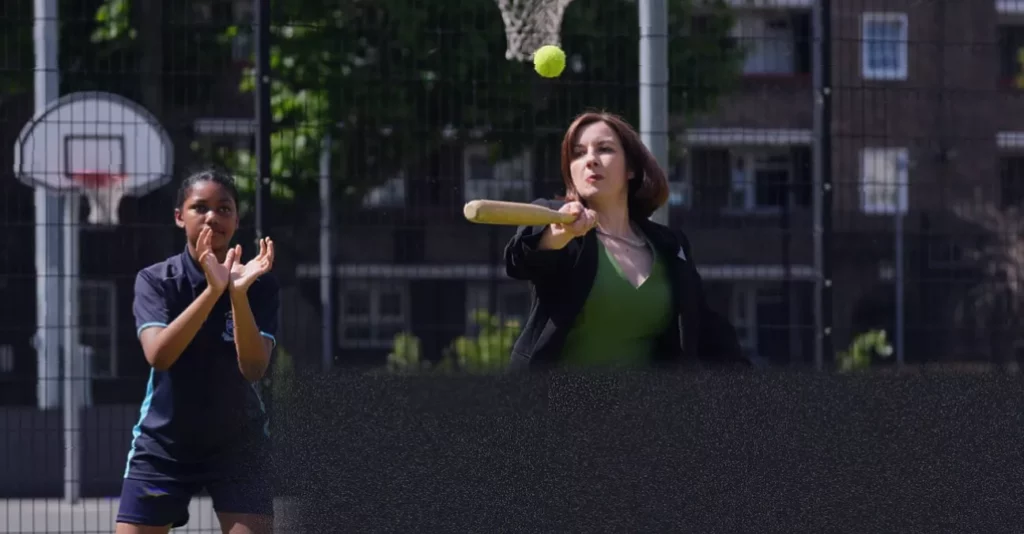
The government has scrapped the annual £320 million PE and sport premium for primary schools in England, replacing it with a new network that will cover secondary schools as well but will provide roughly 22 per cent less annual funding. The decision was announced days before the closure of a separate consultation on restricting children’s social media use, a juxtaposition that has drawn criticism from school leaders and child health experts.
The new “PE and School Sport Partnerships Network” will receive £580 million over three years — equivalent to roughly £193 million per year — and is scheduled to be fully operational from spring 2027. The Department for Education (DfE) argued that the existing premium, originally established to cement the legacy of the 2012 Olympic Games, was “not delivering the step change that we would like to see” and that less than half of young people meet recommended daily activity levels despite significant investment since 2013. The new model, it said, would move away from a “one-size-fits-all” approach and instead tailor support to local needs, with outside clubs, coaches and sporting bodies playing a bigger role. Bodies including Sport England have voiced support, unsurprisingly given their own role is set to expand.
Primary school leaders, however, are unhappy — particularly about the speed of the change. The Association of School and College Leaders (ASCL) described the new initiative as “extremely complex and lacks clarity”, warning it could be a “funding cut dressed up as an initiative”. The NAHT school leaders’ union called the move “deeply concerning”. Education Secretary Bridget Phillipson defended the approach, saying it would ensure “every child – across both primary and secondary – more physically active regardless of their circumstances, background, ability or where they go to school”. The government has also allocated nearly £200 million in capital funding for improving school sports facilities and a one-off £100 million transition payment for primary schools.
Obesity, screen time and the missing link
The reduction in dedicated primary-school sports funding comes at a time when childhood obesity is regarded by experts as one of the biggest public health challenges facing the country. By the end of primary school, one in five children are living with obesity, and fewer than half of young people manage the recommended 60 minutes of daily physical activity. The Academy of Medical Royal Colleges has warned that unfettered exposure to tech and devices is having a significant impact on children’s health, ranking it alongside smoking and seatbelt use as a public health concern.
Meanwhile, the government is consulting on measures to restrict children’s social media use — a consultation that closes on 26 May 2026. Options under consideration include a complete ban on under-16s using social media, following similar legislation in Australia; tighter regulation of personalised algorithms; and limits on “addictive” features such as infinite scroll and autoplay that are designed to keep people online longer. Other possibilities include screen time limits, overnight curfews for app access, age-gating features like livestreaming and location sharing, and placing guidance on mobile phone use in schools on a statutory footing. New guidance recommending that children under two should not use screens at all, except for joint activities with adults, was unexpectedly strong.
The mental health toll is becoming harder to ignore. Concerns about young people’s anxiety and other mental health conditions have never been more acute. An upcoming report from Alan Milburn on the 1 million 16- to 24-year-olds who are neither in education, employment nor training (NEET) is expected to demand a reset and to criticise the amount of time young people spend alone in their rooms. The proportion of young NEET people with a mental health condition has nearly doubled since 2012. The Children’s Wellbeing and Schools Act 2026 already includes provisions requiring the government to implement age or functionality restrictions for children under 16, while the Online Safety Act 2023 is in force, with Ofcom enforcing regulations on services accessed by children.
The contradiction is stark: the government is cutting funding for physical activity in primary schools at the very moment it is trying to prise children away from screens. It is, as critics have noted, a textbook own goal.
Ministerial responsibility — and a departmental row
Bridget Phillipson, whose brief already includes special educational needs reform and overseeing equality law, has acknowledged the challenge but insisted the new partnerships network will work. Yet there are questions about who in government is ultimately responsible for school sport. The sports minister, Steph Peacock, sits in the Department for Culture, Media and Sport (DCMS), a department more used to promoting the role of civil society groups such as sports charities than being involved in schools. Earlier this year, the Department of Health and Social Care (DHSC) clashed with Ms Phillipson’s team over proposals to cut its £60 million annual contribution to PE funding. That cut was reversed after protests from athletes including Mo Farah, the Olympic gold medallist and National School Sport Champion. The DfE had also proposed an additional £60 million cut, which it said would come from efficiencies within the new partnership model.
Last year’s curriculum review recommended only modest changes to PE teaching, avoiding upheaval but highlighting the need to ensure sport is inclusive. It noted that the number of activities covered can mean pupils gain mastery in none — hockey one week, basketball the next — and stressed the role of PE in promoting wellbeing alongside competition.
Athletics, netball and dance are not for everyone. But the benefits of physical activity are. Ministers should stop squabbling and get a grip on school sports. Cutting funding amid mounting efforts to get children away from screens is a government own goal.