

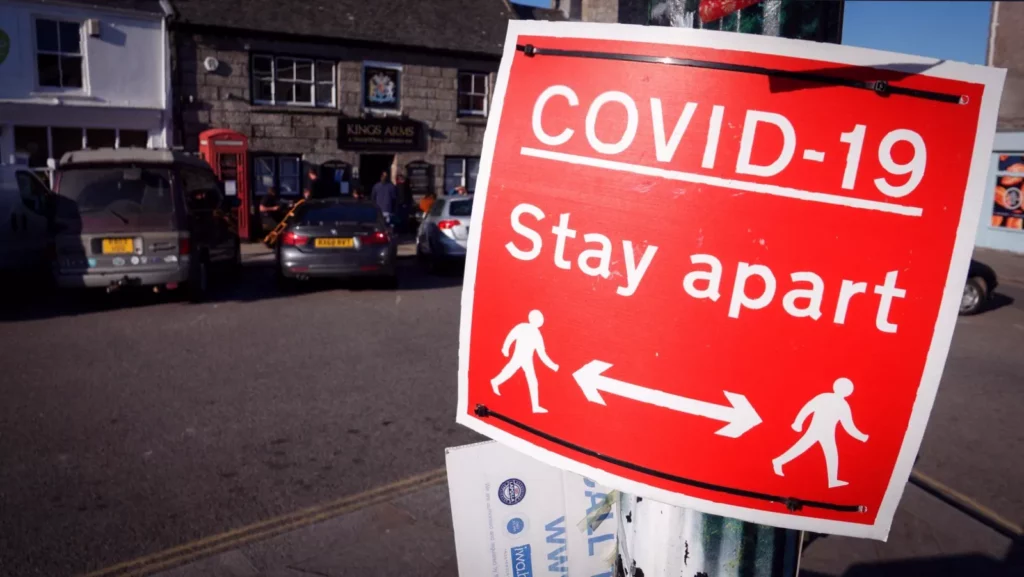
Critics of the Covid-19 Inquiry’s latest report have condemned its conclusion that the Government’s counter-disinformation unit operated lawfully and proportionately during the pandemic, branding the finding “chilling” and an “assault on freedom of expression”. [cite: Original Article] Campaigners whose social media activity was secretly tracked by the unit said the inquiry had effectively endorsed state-backed surveillance and given licence for similar monitoring in future crises.
Molly Kingsley, co-founder of the children’s campaign group UsForThem, whose own posts were flagged by the unit, told The Telegraph the inquiry’s handling “very much referenced in a way that endorses its activities”. [cite: Original Article] She disputed the inquiry’s characterisation of the unit’s work as lawful and proportionate, stating: “For those of us who saw the kind of things that were monitored, that statement is manifestly incorrect.” [cite: Original Article] She warned: “By sewing these lies into the history books we are risking our own Orwellian repeat of history. We are giving licence to the same thing happening again.” [cite: Original Article]
Professor Carl Heneghan, an Oxford epidemiologist who was also monitored by the Government, said the inquiry had failed to address what he called the “chilling” deployment of covert surveillance. [cite: Original Article] “As a democracy, we should be really addressing this fundamental issue of free speech,” he said. “What is the legal basis for surveillance of individuals by a government? If it is legal, then the second question is, is it ethical and moral? How do we, as a society, benefit from that approach?” [cite: Original Article]
How the counter-disinformation unit operated
The Counter-Disinformation Unit (CDU) was established in 2019, initially within the Department for Digital, Culture, Media and Sport, to understand disinformation narratives and attempts to manipulate the information environment. Its stated purpose was to ensure the Government was aware of the scope and reach of harmful misinformation and could take appropriate action — including rebutting claims on social media, running awareness campaigns, and working with social media companies to promote authoritative sources. The unit was rebranded as the National Security and Online Information Team in November 2023.
During the pandemic, the CDU was deployed to keep tabs on high-profile voices who challenged official Covid policies. Among those whose social media activity was logged were Professor Heneghan, Molly Kingsley, fellow researcher Alexandre de Figueiredo, and Conservative MP David Davis. Green Party MP Caroline Lucas also called for an inquiry after discovering she had been flagged by the unit for criticising ministers and government policy. [cite: Research Briefing]
Kingsley’s monitoring included a December 2020 tweet in which she described school closures as “unforgivable”, and a February 2022 article arguing children’s lives remained unjustifiably restricted. [cite: Original Article] “You don’t expect, as a normal citizen, to be monitored. And you certainly don’t expect it for standing up for kids,” she added. [cite: Original Article] Professor Heneghan’s articles for The Telegraph and The Spectator — including pieces that challenged the scientific rationale behind the rule of six and questioned data used to justify the second lockdown — were logged by government units. Technology companies removed some of his social media posts concerning face masks and coronavirus mortality statistics following disinformation concerns. [cite: Original Article]
The civil liberties group Big Brother Watch reported that secretive Whitehall units, including the CDU, monitored the speech of MPs, academics, journalists and the public under the guise of combating disinformation, and accused the unit of flagging content for removal even when it did not contain factual inaccuracies but merely criticised government policy. [cite: Research Briefing]
Inquiry’s findings on legality and necessity
The Covid-19 Inquiry concluded that the CDU operated in a manner that was “lawful, necessary and proportionate” during the health crisis. [cite: Original Article] The report emphasised that the unit “did not access private data and only flagged up information that had already been posted on public platforms”. [cite: Original Article] It acknowledged that some vaccine-injured individuals and bereaved families “felt stigmatised and ignored when their content was labelled as misinformation”. [cite: Original Article] The Information Commissioner’s Office confirmed it found no evidence of data misuse by the unit. [cite: Original Article] However, the ICO also stated it would be speaking with the Cabinet Office and DSIT to learn more about how people’s information is being used in anti-disinformation work, following revelations about the monitoring and flagging of critical posts. [cite: Research Briefing]
A Government spokesman maintained that the CDU “played an important role during the pandemic helping identify false information that could pose a dangerous risk to UK public health”. [cite: Original Article] The spokesman stressed that decisions to label or act upon online content “was only ever taken by the social media platforms, not the government”. [cite: Original Article] Minister Jonathan Berry defended the unit, stating it looks for large-scale attempts to pollute the information environment, generally from foreign states, and categorically denied it targets individuals for political disagreement. [cite: Research Briefing]
Critics, however, accused the inquiry of adopting a “myopic” and “one-sided” approach that appeared to justify government censorship rather than scrutinise it. Professor Heneghan described a trend during the pandemic that he terms the “silencing of science”, where supposedly science-led policies were made using inadequate or no evidence, and argued the inquiry is perpetuating this by dismissing dissenting scientific views. [cite: Research Briefing] David Davis called for the unit to be shut down and a government investigation initiated, while Michelle Donelan reportedly made attempts to have it disbanded due to concerns about its implications for free speech. [cite: Research Briefing]
US investigations reach different conclusions
The UK inquiry’s approach stands in stark contrast to official investigations across the Atlantic, which reached markedly different conclusions about government involvement in online content moderation during the pandemic. [cite: Original Article] A 2024 report from the House of Representatives judiciary committee examined how White House officials “coerced Big Tech” into censoring American citizens, concluding that the effects of this “pressure campaign” were “devastating”. [cite: Original Article] The committee found that “by suppressing free speech and intentionally distorting public debate in the modern town square, ideas and policies were no longer fairly tested and debated on their merits.” [cite: Original Article]
A separate House report from the select subcommittee on the coronavirus pandemic determined that the Joe Biden administration “employed undemocratic and likely unconstitutional methods to fight what it deemed to be misinformation”. [cite: Original Article] Meta CEO Mark Zuckerberg stated that senior Biden administration officials pressured Facebook to “censor” some COVID-19 content during the pandemic, including humour and satire, expressing regret for not being more outspoken about it and vowing to push back against similar demands in future. [cite: Research Briefing] Lawsuits, such as Missouri v. Biden, have been filed by Republican attorneys general accusing the Biden administration of working with tech companies to restrict what Americans can say on social media, potentially violating the First Amendment. [cite: Research Briefing] While US investigations condemned government involvement in content moderation, the British inquiry concluded there was “in principle, nothing unlawful or inappropriate” about monitoring vaccine-related material online. [cite: Original Article]