

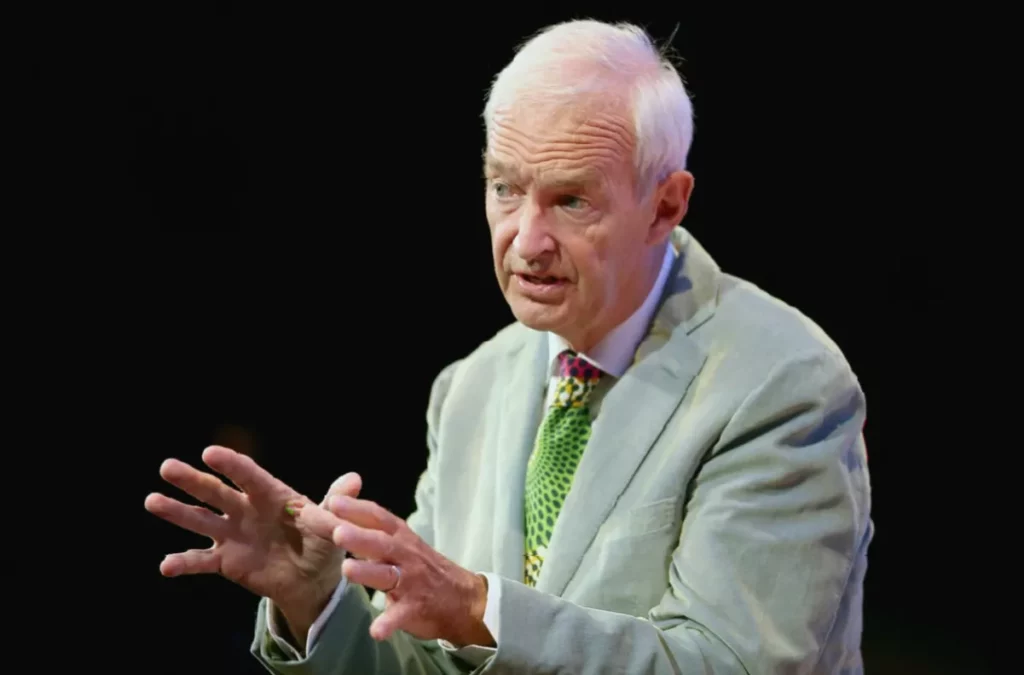
Veteran broadcaster Jon Snow’s decision to publicly disclose his Alzheimer’s diagnosis has triggered a sharp spike in traffic to the Alzheimer’s Society website, with thousands of visitors seeking information on dementia symptoms, support and ways to get involved. The former Channel 4 News presenter revealed he was diagnosed with the disease in 2023, and his openness appears to have already produced a measurable public health impact.
Public reaction and a surge in awareness
The Alzheimer’s Society confirmed that Snow’s disclosure drove a substantial increase in visits to its online resources, particularly the charity’s dementia symptoms checklist. Michelle Dyson, chief executive of the Alzheimer’s Society, described Snow’s decision to speak out as “a real act of courage” and said it would help “spark a national conversation about dementia”. The surge in site visits echoes a broader pattern observed following high-profile celebrity diagnoses – such as those of Rita Hayworth, Glen Campbell, Bruce Willis and Ronald Reagan – where public figures talking openly about the condition have historically broken down stigma, encouraged more people to seek help and boosted advocacy and research funding.
Jon Snow, 78, said of the public response: “As a journalist, you never expect to become the story, but it’s heartening to know that sharing my experience has contributed to a surge in visits to Alzheimer’s Society’s website, with people seeking information, support and ways to get involved in the fight against dementia.” He added that he had been “truly bowled over” by the “outpouring” of support from fans, colleagues and public figures, including long-time colleague Kirsty Lang, singer Annie Lennox and Prime Minister Sir Keir Starmer, who called Snow “a true giant in journalism”.
Snow’s own experience with the condition is deeply personal. His mother, Joan, lived with Alzheimer’s for more than a decade before her death, and he initially wanted to keep his own diagnosis private because of the stigma still surrounding dementia. He has described the condition as one that “pops up” at moments but is not “an all-day, every-day condition”, adding that he sometimes doubts the diagnosis because he “doesn’t feel disabled in any way”. Snow is married to Dr Precious Lunga, an epidemiologist and neuroscientist, and has two daughters from a previous relationship and a son born by surrogacy in 2021.
The journalist’s story will be featured in a forthcoming Channel 4 documentary titled Jon Snow: A Last Big Story, scheduled to air on June 20, 2026. The programme will follow him as he undertakes an investigation into a mining disaster in Zambia, and Snow has said of his decision to go public: “If I don’t speak out, who will?”
The fight against dementia: advocacy and reform
Beyond the immediate spike in website traffic, Snow is lending his voice to a campaign urging the government to overhaul the treatment, support and care available to people living with dementia and their families. He has highlighted a critical gap in the system: the length of time it takes to receive a diagnosis. “Too many people are experiencing delays in diagnosis – on average 3.5 years – meaning they’re left in limbo without the help they need,” Snow said. “An early diagnosis can open the door to treatment, support, care and the chance to take part in research that could change the future.”
Snow’s affiliation with dementia research is longstanding. He has supported Alzheimer’s Research UK for many years, championing their virtual reality project “A Walk Through Dementia” in 2016, recording radio adverts for their Mighty Quiz in 2017, and promoting their Cycling Down Dementia challenge in 2018. The impact of sharing his personal experience now extends beyond any single charity, connecting the public directly to information and to a broader movement pressing for faster diagnoses and better care.
The veteran journalist, who began his career at LBC Radio in 1973 before joining ITN in 1976, became the longest-serving presenter of Channel 4 News – a role he held from 1989 until his retirement in December 2021. He reported from the fall of the Berlin Wall, the release of Nelson Mandela and conflicts across the Middle East. Now, confronted with a different kind of story – his own – he is using that platform to challenge the stigma that once made him hesitate and to push for the structural changes he believes the dementia community urgently needs.