

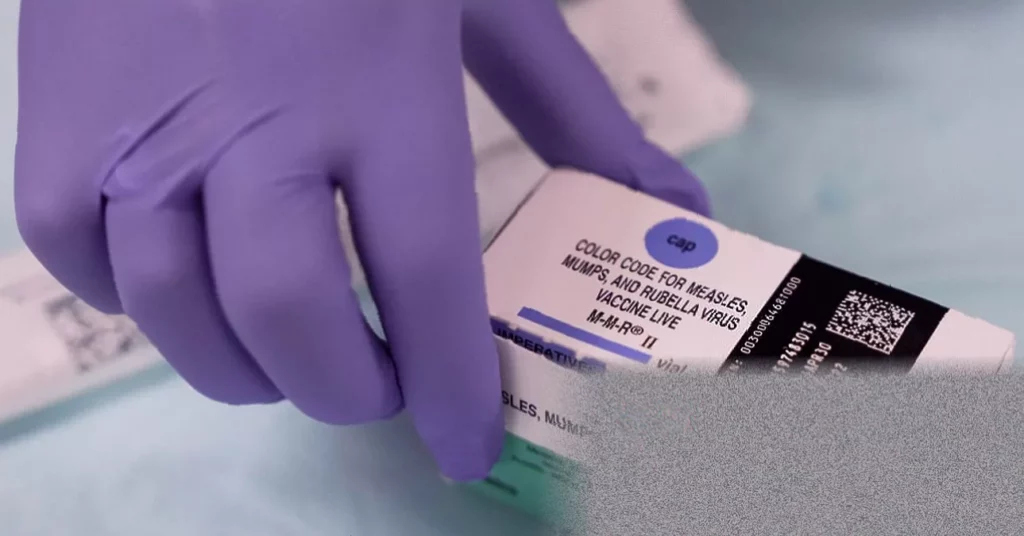
The number of measles cases recorded in the United States so far this year is closing in on the total for the whole of 2025, with 2,030 confirmed infections reported by 4 June — compared with 2,228 for the entirety of last year. The trajectory puts 2026 on course to become the worst year for the disease since it was declared eliminated in the country in 2000, as states grapple with the loss of federal public health funding and the corrosive effects of entrenched vaccine misinformation.
The true scale of the outbreak is likely far larger than confirmed figures suggest. Experts believe the actual number of cases is approximately three times higher than reported. So far in 2026, cases have been recorded in 38 states and Washington D.C., with the virus spreading predominantly in unvaccinated and under-vaccinated communities. According to data from the US Centres for Disease Control and Prevention (CDC), 92% of reported cases this year have been among individuals who were unvaccinated or whose vaccination status was unknown — a pattern that mirrors 2025, when 93% of cases fell into the same category.
Last year, the US reported 2,144 confirmed measles cases across 45 jurisdictions, together with three confirmed deaths. That was already the highest annual total since elimination in 2000. The 2025 figure represented a dramatic escalation from 2024, when 285 cases were reported across 31 states and Washington D.C. — itself a 17-fold increase in the first quarter compared with the average for 2020–2023.
The current outbreak is not evenly distributed. While cases in Utah, which recorded 486 infections as of 5 June, appear to be winding down, transmission is picking up in Virginia and Pennsylvania. Andrew Pavia, an infectious disease expert at the University of Utah, said the state’s outbreak had revealed a new dynamic. “What makes Utah different than South Carolina and Texas is that it spread throughout the entire state and became much more widely distributed,” Pavia said, speaking in his personal capacity.
Pavia identified two deciding factors in whether cases were contained: “It hit hardest in communities that had relatively low vaccination rates and relatively limited public health departments.” The Utah cluster began in a community with weak ties to public health infrastructure, making it difficult to track cases before it spread elsewhere. With immunisation rates having declined in some areas for 15 to 20 years, Pavia noted that there are now “young adults who are susceptible, who grew up in otherwise typical middle-class settings.”
Controlling measles demands robust public health measures — aggressive contact tracing, isolation for the sick, and quarantine for those exposed. These tasks have become increasingly politicised since the COVID-19 pandemic. Utah operates a decentralised public health system, meaning the bulk of the response fell to local departments. “Some of these small health departments are very stressed for personnel, funds and training, particularly after the massive cuts that the administration made to pass through money that went to state and local health departments — I think it was $11bn they took away,” Pavia said.
Those funding cuts form part of a wider squeeze on public health infrastructure. In March 2025, reports indicate that $11 billion in CDC funding and approximately $1 billion from the Substance Abuse and Mental Health Services Administration were clawed back, reducing capacity for disease surveillance, laboratory testing, emergency preparedness and immunisation programmes. The impact has been felt acutely in states where local health departments are already overstretched.
Pavia also pointed to a political dimension that hampered Utah’s response. The state’s governor, Spencer Cox, “has not uttered the word ‘measles’ since 2024”, Pavia said, and the health department was required to clear all announcements through political leadership, making its messaging “less visible and less vocal” than in other states. He contrasted this with South Carolina, where the governor and the director of the health department gave regular updates and “spoke with one voice about the need for containment.”
Misinformation’s toll on the ground
The outbreak in South Carolina, though officially contained, climbed to nearly 1,000 documented cases — a figure that experts believe reflects an actual tally of 2,000 to 3,000. At least one young boy was hospitalised with measles encephalitis, a severe brain-swelling complication. The state saw a 162% jump in vaccinations in Spartanburg County as a direct response to the outbreak. But for Annie Andrews, a pediatrician in South Carolina, watching the crisis unfold was “incredibly frustrating”. “None of this had to happen,” she said. “This was entirely preventable, and this is a direct result of decades’ worth of vaccine misinformation and disinformation.”
The spread of that misinformation has accelerated in the internet and social media era, creating what public health experts describe as an “infodemic” — an overwhelming volume of false or misleading content that sows confusion and distrust. The COVID-19 pandemic underscored the dangers of this environment, and the current measles resurgence shows how vulnerable the US remains. Robert F. Kennedy Jr, the Secretary of the US Department of Health and Human Services (HHS) and a longstanding vaccine sceptic, has framed measles vaccination as a personal choice. He has also promoted vitamin A and nutrition as treatments for the disease, drawing sharp criticism from health experts who stress that while vitamin A can be a supportive therapy, it is not a substitute for vaccination.
Data from early 2025 shows the consequence of such messaging: US poison control centres reported a 38.7% increase in exposures to vitamin A, while internet searches for the unproven treatment surged, according to a new analysis. Kennedy’s influence, Andrews argued, has been direct and damaging. “RFK Jr has been one of the figures leading that spread of disinformation,” she said.
Misinformation emanating from top health leaders has made it harder for local officials to mount an effective response. “When you have the situation we have now with the secretary of HHS, who is a longstanding vaccine critic, who did not do anything proactively nationally to help change the attitudes towards measles — you’re dependent on local officials standing up, and that’s been variable,” Pavia said.
The consequences are most acute for the most vulnerable. Babies under one year of age are not usually vaccinated against measles — they cannot receive the shot before six months — making them particularly dependent on herd immunity. In Texas, a baby born to a measles-positive mother had to be hospitalised with acute measles meningoencephalitis, according to a CDC Morbidity and Mortality Weekly Report. High vaccination coverage protects not only those who are immunised but also those who cannot be vaccinated or who do not respond to the vaccine. The MMR vaccination rate among kindergartners in the 2024–2025 school year was approximately 92.5%, below the 95% threshold needed to maintain herd immunity.
Pavia recalled a time when every parent feared measles when it swept through a community. “Everyone knew a child who had a bad outcome from measles, and they didn’t take measles for granted,” he said. “That’s no longer true.” Now, he and his colleagues hear the same refrain from patients with even uncomplicated symptoms — intense light sensitivity, painful diarrhoea, high fevers: “This was worse than anybody told me it was going to be.” Parents say they have never seen their children so ill.
Against this backdrop, Andrews has taken on roles she never anticipated. A pediatrician who has wanted to practise medicine since the age of four, she now spends a significant portion of her time as a social media influencer, explaining why vaccination is critical and debunking common health misconceptions. “Pediatricians and other physicians created a vacuum in social media spaces that allowed RFK Jr and other anti-science, anti-vaccine influencers to fill that void,” she said. “That’s where real people are, that’s where our patients are getting their information, and because we didn’t engage there, the disinformation took over, and it’s going to take us so long to claw back at that, to regain the trust.”
She is now running for the US Senate in South Carolina. If elected, she would be the first woman physician in the Senate and the first pediatrician senator. “There’s never been a more urgent need for scientifically literate, data-driven lawmakers to be in the rooms where these conversations are happening,” she said. But she warned that rebuilding trust will take decades. “It’s so pervasive now, this distrust in vaccines, this misunderstanding of the safety and efficacy of vaccines. It’s so heartbreaking to watch patients suffer as a result.”