

Nearly $10 million (£7.5m) worth of American-made contraceptives, including birth control pills, intrauterine devices and hormonal implants, are sitting in a warehouse in Belgium, approaching their expiry dates while the United States refuses to allow them to be distributed. Some of the supplies have already been destroyed.
The contraceptive stockpile was purchased by the US Agency for International Development (USAID) before the agency was largely dismantled early last year under President Donald Trump’s sweeping cuts to foreign aid. They were intended for low-income countries, primarily in sub-Saharan Africa. But after a near-total freeze on foreign aid was ordered in January 2025, the supplies were never shipped.
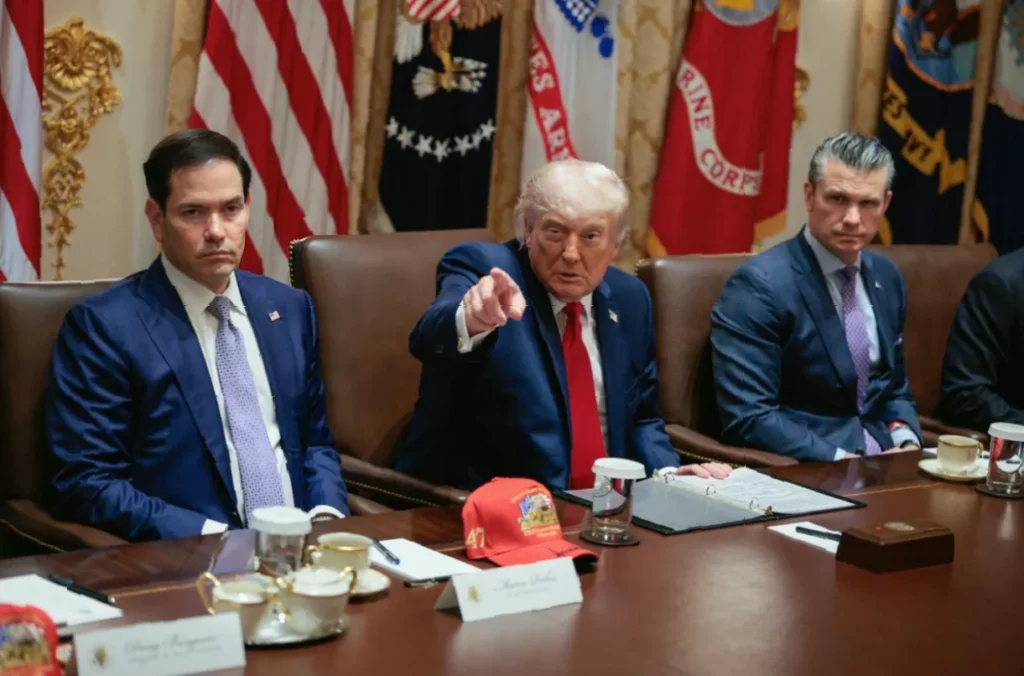
Secretary of State Marco Rubio confirmed the administration’s position for the first time during a House Appropriations Committee hearing on the State Department budget. Asked about the fate of the stockpile, he told Congress: “We’re not going to use them.” He added: “We are acting under executive directive [from President Donald Trump] not to take part in these programmes internationally. The United States is not going to fund this, it is as simple as that.”
Rubio said some of the supplies had already been disposed of. “I don’t know what the cost to storing them in the warehouses is,” he told the committee, “but we are not going to use them or the government of the United States is not going to be involved in distributing contraceptives and all these other things around the world.” He argued that foreign aid should be used to advance US national interests, not as charity: “The United States is not a charitable [organisation].”
Congressional opposition and rejected offers
The administration’s stance has drawn sharp criticism from members of Congress. In January, 67 lawmakers sent a letter to Rubio demanding an update on the contraceptives but received no response. Senators Jeanne Shaheen and Lisa Murkowski followed up with their own letter urging him to reverse the decision to destroy the supplies. Representatives Lois Frankel, Gregory Meeks, Diana DeGette, Ayanna Pressley and Grace Meng have also condemned the termination of international family planning programmes and demanded answers.
The letter from Congress put the projected human cost of blocking distribution at 362,000 additional unintended pregnancies, 110,000 unsafe abortions and 718 preventable maternal deaths. Broader estimates suggest that a one-year pause in US global family planning funding could deny modern contraceptives to 47.6 million women, leading to 17.1 million unintended pregnancies and 34,000 preventable deaths.
Humanitarian organisations including UNFPA, MSI Reproductive Choices, Médecins Sans Frontières and the International Planned Parenthood Federation have offered to purchase, transport and distribute the contraceptives at no cost to the US government. Even Belgium and the European Union attempted to negotiate solutions. All offers have been rejected. The US government owns the warehouse and the stock, and without its permission the supplies cannot be moved.
Humanitarian toll across sub-Saharan Africa
Reproductive health organisations warn that the consequences of the US withdrawal are already visible on the ground. According to MSI Reproductive Choices, as of March, 14 of the 16 African countries in which it operates reported being at risk of running out of at least one method of contraception. The problem is not simply one of stock levels; distribution networks that move contraceptives between health facilities have stopped functioning properly. Ministries of health that previously relied on USAID-funded logistics no longer have the budget lines to keep supply chains moving — in some cases, even fuel is unavailable.
In Zimbabwe, the situation has been compounded by the withdrawal of a second major donor. MSI lost its US funding entirely, leaving 1.3 million women without access to contraception services. Sweden stepped in to cover most of that gap, but has since announced a complete withdrawal from Zimbabwe. Sarah Shaw, from MSI Reproductive Choices, said: “Zimbabwe is a big, high-risk country for us. We are one of the biggest family planning providers there. If we’re not there, a lot of women are going to go without.”
In Ghana, MSI teams reported there had been no condoms available since late summer 2025. Civil society organisations eventually secured the release of a consignment that had been held up in port over a dispute about import taxes. Separately, $500,000 worth of UNFPA-procured contraceptives have been stuck at the port of Tema since August 2024.
The commodity funding gap for 2026 stands at $186 million across 54 countries, with 65 per cent of that concentrated in the Democratic Republic of Congo, Ethiopia, Kenya, Madagascar, Malawi, Nigeria, Tanzania, Uganda, Rwanda and Zambia. Other donors have not come close to filling the hole left by the US withdrawal. Shaw noted that while some national governments are increasing their own investment in family planning, “the scale of which they can step up is a drop in the ocean compared to the scale of the loss.”
PAI president and CEO Nabeeha Kazi Hutchins said Rubio’s declaration “suggests the administration is willing to pick and choose which laws and directives from Congress it will follow”, adding that letting the supplies expire “is not fiscal responsibility, it is wasteful, harmful, and contrary to the intent of Congress and the American people.” The cost of destroying the contraceptives has been estimated at at least $167,000.
Shaw said the legal situation was straightforward and bleak, and that the administration’s position was ideological. “The fact that they won’t give permission — in the face of such widespread shortages and such desperate, life-saving need — sends a very clear message. This is really an ideological position. This is about what they think about women’s place in society and what they think about reproductive health and rights.”