

Close Menu
    Useful
    • About Us
    • Contact Us
    • Advertise With Us
    • Health Explainers
    • Our Editorial Team
    Facebook
    HealthNewsDaily.co.uk
    • Home
      • Explainers
    • NHS

      British Medical Association may lay off up to a third of employees amid financial crisis

      4 July 2026

      GB Mums: lenient justice, NHS maternity and child abuse sentences leave children unprotected

      3 July 2026

      Advance heatwave plans needed, not last-minute fixes, Letters say

      3 July 2026

      NHS calls for PMOS checks in women with irregular periods

      1 July 2026

      Months-long neglect of four cancer signs by third of Britons blamed on GP appointment crisis

      30 June 2026
    • Health Policy

      Hospital waiting list patients to get three weeks’ advance warning under NHS England plans

      3 July 2026

      Britons back morning-after pill sales in corner shops, poll finds

      1 July 2026

      Maternity investigator Ockenden says Amos review offers no fresh insights

      30 June 2026

      Bereaved mother warns England maternity commissioner role poses danger

      30 June 2026

      Medicare to pay for weight-loss drugs soon

      30 June 2026
    • Mental Health

      Letter draws attention to parents of adult children neither employed nor studying

      3 July 2026

      England sees one million children seeking help for anxiety and autism

      29 June 2026

      Joanne McNally says bulimia and breakdown in her twenties ultimately transformed her

      27 June 2026

      Dopamine sites become internet’s most dismal craze

      27 June 2026

      Blue Heron film review: a serious, nuanced examination of childhood trauma in 1990s Canada

      25 June 2026
    • Wellness & Lifestyle

      Weight-loss drugs become new battleground after Brexit rows

      4 July 2026

      Hair transplant surgeon champions specific shampoo routine for greater volume and shine

      4 July 2026

      20-minute technique could help England fans stay awake for Mexico World Cup tie

      3 July 2026

      Doctor warns cutting back on fat could sabotage low-cholesterol diet

      3 July 2026

      NHS to cover cost of shopping for 30-minute daily walkers

      3 July 2026
    • Disease & Prevention

      South-east England forecast to reach 34C as week-long heatwave hits

      4 July 2026

      French fatalities jumped 30% during peak week of record June heatwave

      4 July 2026

      Toddler’s tantrums mistaken for typical toddler phase before grave diagnosis

      3 July 2026

      600,000 mosquitos released over Washington DC to exterminate biting pests

      2 July 2026

      Remaining seated for 30 minutes or more raises risk of cancer death

      2 July 2026
    • Treatment & Research

      Woman, 24, had 12 Botox vials injected into face for non-cosmetic reason

      4 July 2026

      Statins: the purpose and risks of cholesterol medication

      3 July 2026

      Extreme fatigue from Long Covid hampers business owner’s ability to run firm

      3 July 2026

      Five-minute habit can cut cancer risk by more than 20%

      2 July 2026

      Over-40s with obesity show cholesterol and blood pressure levels within normal BMI range, research finds

      2 July 2026
    HealthNewsDaily.co.uk
    • NHS
    • Health Policy
    • Mental Health
    • Wellness & Lifestyle
    • Disease & Prevention
    • Treatment & Research
    Home » Disease & Prevention » South Sudan may face fastest-growing Ebola outbreak within weeks, experts warn
    Disease & Prevention

    South Sudan may face fastest-growing Ebola outbreak within weeks, experts warn

    Sophie HargreavesBy Sophie Hargreaves26 June 2026
    Map of East Africa highlighting South Sudan's border with Ebola-affected areas

    Ebola could reach South Sudan within weeks, the World Health Organisation has warned, as modelling suggests the fast‑spreading outbreak in the Democratic Republic of the Congo and Uganda poses an almost 70 per cent chance of a case appearing in the war‑ravaged country within 12 weeks.

    Why South Sudan is the greatest worry

    South Sudan possesses some of the weakest public health infrastructure in the region, with critical gaps in border surveillance, contact tracing and safe burial practices. “I’m very worried about South Sudan,” said Dr Nahid Bhadelia, an infectious diseases physician and associate professor at Boston University School of Medicine who worked on previous Ebola outbreaks near the DRC and South Sudan borders. “There are large refugee and displacement camps. People live in close quarters and surveillance there is lagging and under‑resourced to begin with. I am concerned that we may miss cases and that it has already spread there.”

    The country, already struggling with the legacy of decades of conflict, has a health system that health experts say is simply not equipped to detect and contain a pathogen as dangerous as Ebola. The WHO’s modelling, published in The Lancet Infectious Diseases, also warned of a small risk of spread to Rwanda and Burundi, but stressed that all projections depend heavily on the speed of detection and response once cases cross borders.

    This is the 17th Ebola outbreak in the DRC since the virus was first identified in 1976. The current outbreak is caused by the rare Bundibugyo ebolavirus, a rarer species than the more common Zaire strain. Symptoms are less recognisably haemorrhagic, meaning it can be mistaken for other illnesses, delaying identification. There is no licensed vaccine or cure for the Bundibugyo strain, though several candidate vaccines and experimental treatments – including monoclonal antibodies and the antiviral remdesivir – are under development and being trialled in the DRC.

    The fastest‑recorded Ebola outbreak

    The outbreak was officially declared on 15 May, but retrospective investigations suggest transmission began in early April, meaning the virus circulated undetected for weeks. The WHO said it had the highest number of confirmed cases in its first month of any Ebola outbreak in Africa, echoing an earlier statement from Médecins Sans Frontières. During the current outbreak, it took just 37 days to reach 250 deaths – far faster than the 78 days needed in the 2014‑2016 West Africa outbreak and the 130 days in the 2018‑2019 outbreak.

    As of 22 June, the DRC had confirmed over 1,000 cases with nearly 300 deaths, making it the second‑largest Ebola outbreak on record. The epicentre is Ituri province, which borders South Sudan and Uganda. Cases have also been confirmed in North Kivu and South Kivu provinces in the DRC, as well as in Uganda – including in the capital, Kampala. Real case numbers are thought to be higher because of delays in testing and surveillance, meaning the outbreak was likely already widespread before it was detected, Dr Bhadelia said.

    Healthcare workers have been hit hard: nearly 80 infections have been reported, with a concerning mortality rate among them. Most are thought to have contracted the virus while treating patients before it was clear they had Ebola. Beyond the region, a doctor who returned from a humanitarian mission in the DRC tested positive in France – the first case confirmed in Europe – while an American surgeon who contracted Ebola in the DRC was treated and recovered in Germany. Health experts say the risk of widespread transmission to Europe remains low, but there is “real risk” of the outbreak expanding within the DRC or regionally.

    How aid cuts have fuelled the crisis

    Cuts to global aid following Donald Trump’s decision last year to effectively disband the US Agency for International Development have contributed directly to the severity of the outbreak. Health programmes that support infectious disease surveillance were reduced, weakening the capacity to detect and respond. “If all infectious diseases increase, it becomes harder to detect something like Ebola,” Dr Bhadelia said.

    The cuts have also been linked to worsening conflict. A study published last month revealed a significant increase in violence across several African nations. Last year, M23 rebels staged a violent takeover of the DRC’s Goma amid the aid reductions, triggering mass displacement that is further complicating the response. The DRC’s health system was already fragile, and the combination of conflict and funding gaps has created a situation where containment is nearly impossible.

    “Many things have been done,” said Adam Gonzalez, deputy director of operations for MSF, “but if we don’t have enough resources from the beginning, we are always going to be catching up.” MSF is running Ebola treatment centres in both the DRC and Uganda, and helping prepare neighbouring regions. Testing and treatment capacity has expanded, he said, but is still not sufficient to match the scale and pace of transmission. The strain on the health system has, in past outbreaks, led to rises in deaths from other diseases, such as malaria, as resources are diverted.

    The United States has provided significant funding for the Ebola response and preparedness, contributing over $220 million directly and an additional $350 million for humanitarian assistance in the DRC, South Sudan and Uganda, while also implementing enhanced travel screening and entry restrictions. The WHO has declared the outbreak a Public Health Emergency of International Concern and is coordinating the international response, including supporting research into candidate vaccines and therapeutics. But the World Health Organisation’s own modelling is clear: the window for preventing a catastrophic spread to South Sudan – and beyond – is measured in weeks, not months.

    “Outbreaks like this affect entire health systems, not just individuals, and the impact goes far beyond Ebola cases alone,” Dr Bhadelia said. “These are not numbers, they are families and communities.”

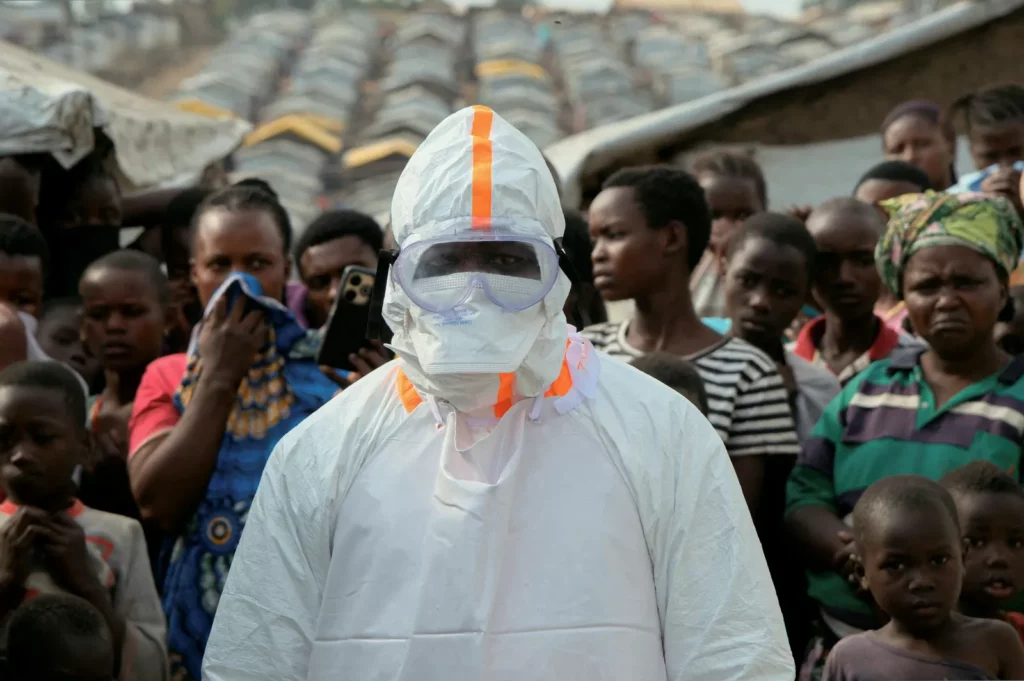
    Public Health Screening
    Share. Facebook Twitter LinkedIn WhatsApp Telegram
    Sophie Hargreaves
    Sophie Hargreaves

    Health Correspondent
    Sophie Hargreaves covers medical research, new treatments, disease outbreaks and prevention for Health News Daily. She holds a Master's degree in Health Sciences from the University of Leeds and has spent several years translating complex medical science into clear, accessible reporting for a general audience. Sophie focuses on the latest clinical trials, NICE and MHRA approvals, vaccination programmes and emerging health threats, always with an eye on what these developments mean for people in the UK.
    · MSc Health Sciences (University of Leeds), science communication volunteer, medical research literacy
    · Clinical trials and drug approvals (NICE, MHRA), cancer screening programmes, vaccination and outbreak response, women's health (endometriosis, PCOS, menopause), weight management treatments, AI in diagnostics

    Related Posts

    Disease & Prevention

    South-east England forecast to reach 34C as week-long heatwave hits

    4 July 2026
    Disease & Prevention

    French fatalities jumped 30% during peak week of record June heatwave

    4 July 2026
    Disease & Prevention

    Toddler’s tantrums mistaken for typical toddler phase before grave diagnosis

    3 July 2026
    Disease & Prevention

    600,000 mosquitos released over Washington DC to exterminate biting pests

    2 July 2026
    Join Our Community & Win

    Each month we select one lucky follower to receive a prize from our partners. Follow us on our social channels for your chance to win.

    • Facebook
    Latest
    Disease & Prevention

    South-east England forecast to reach 34C as week-long heatwave hits

    4 July 2026
    Treatment & Research

    Woman, 24, had 12 Botox vials injected into face for non-cosmetic reason

    4 July 2026
    NHS

    British Medical Association may lay off up to a third of employees amid financial crisis

    4 July 2026
    Wellness & Lifestyle

    Weight-loss drugs become new battleground after Brexit rows

    4 July 2026
    Wellness & Lifestyle

    Hair transplant surgeon champions specific shampoo routine for greater volume and shine

    4 July 2026
    Disease & Prevention

    French fatalities jumped 30% during peak week of record June heatwave

    4 July 2026
    News Categories
    • NHS
    • Health Policy
    • Mental Health
    • Wellness & Lifestyle
    • Disease & Prevention
    • Treatment & Research
    Help
    • About Us
    • Contact Us
    • Advertise With Us
    • Health Explainers
    • Our Editorial Team
    About Us
    About Us

    Health News Daily provides trusted UK health news, covering NHS updates, medical research, public health and wellbeing with clear and reliable reporting.

    Facebook
    • Cookie Policy
    • Privacy Policy
    • Complaints Policy
    • Corrections Policy
    • AI Disclosure Policy
    • Editorial Policy & Ethics
    • Accessibility Statement
    • Medical Disclaimer
    • Terms & Conditions
    • Sponsored Content Disclosure
    • Copyright Notice
    © 2026 Healthnewsdaily.co.uk. All rights reserved.

    Type above and press Enter to search. Press Esc to cancel.