

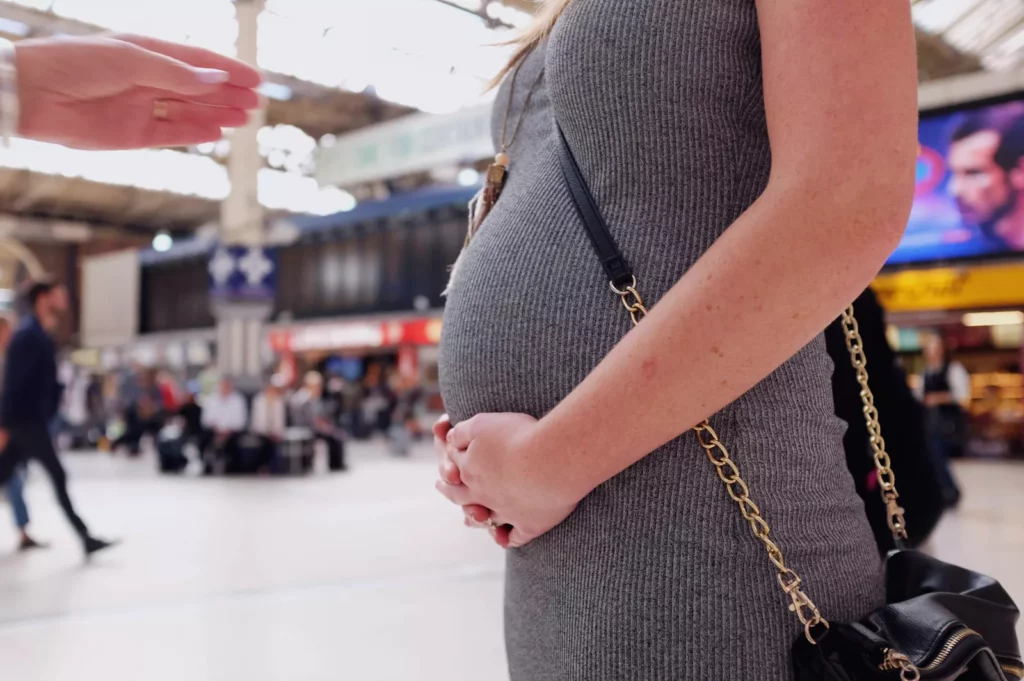
Conceptions among women over 40 in England and Wales have reached a record high, according to the latest figures from the Office for National Statistics (ONS). In 2023, there were 36,085 conceptions in this age group, equivalent to 17.6 per 1,000 women – surpassing the previous record of 17.3 per 1,000 set in 2021. The ONS said conception rates among the over-40s are on an upward trend, having risen by almost a third since 2010, when the rate stood at 13.4 per 1,000.
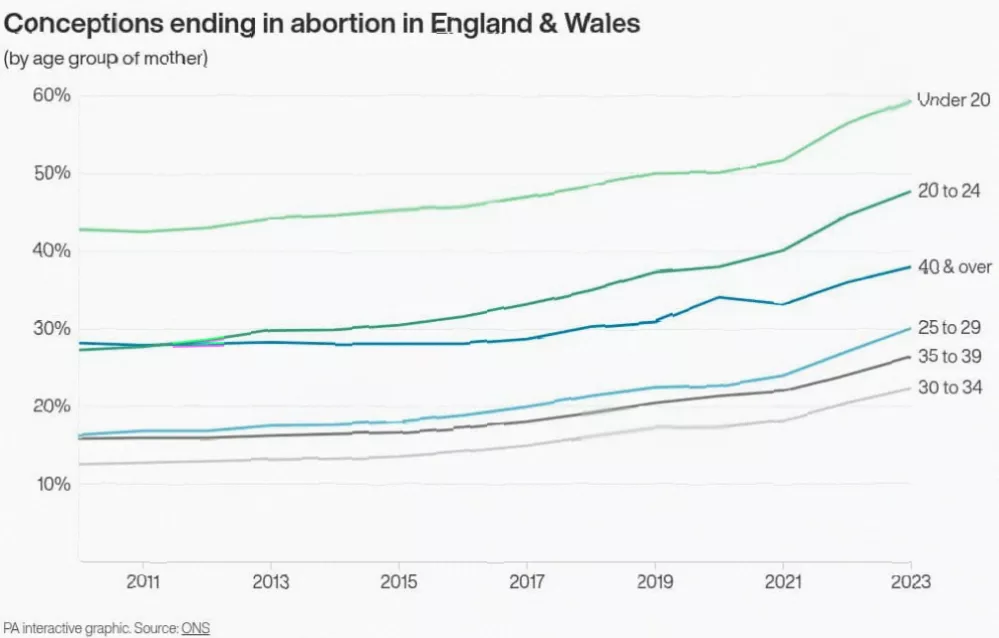
Of those 36,085 conceptions, 22,365 led to maternities – covering both live-born and stillborn children – while 13,725 ended in abortion. The proportion of conceptions ending in abortion among women over 40 has jumped sharply over the past decade, from 28.3% in 2013 to 38.0% in 2023, ONS data show.
This rise in older mothers runs counter to a broader decline in overall fertility. The total fertility rate in England and Wales fell to its lowest level since records began in 1938, reaching 1.44 children per woman in 2023, down from 1.49 the previous year. The average age of women having a child has also crept up, from 30.0 in 2013 to 30.9 in 2023. Research suggests that women turning 18 this year are likely to have an average of only 1.52 children in their lifetime, with many having their first child after the age of 30. Factors behind delayed childbearing include increased participation in higher education and the workforce, the importance of establishing a career, rising costs of housing and childcare, labour market uncertainty, finding a suitable partner, advances in fertility treatment, and greater control over family planning.
In total, there were 871,050 conceptions for women of all ages in England and Wales in 2023 – a rate of 72.7 per 1,000 – up from 834,260 the previous year and the third consecutive annual increase, the ONS said.
Rising abortion rate across all age groups
The percentage of conceptions leading to abortion has also hit a new record high. Nearly one in three conceptions (32.1%) ended in abortion in 2023, up from about one in four at the start of the decade (25.3% in 2020). The number of conceptions leading to abortion stood at 279,970.
Separate data published in January by the Department of Health showed 277,970 abortions were carried out in England and Wales in 2023 – also a record. The difference between the two figures arises because the ONS bases its data on the estimated date of conception, while the Government data uses the date the abortion took place. The age-standardised abortion rate for women was 23.0 per 1,000 residents, the highest since the Abortion Act of 1967.
Charities and health leaders responded to the Government data in January by pointing to economic pressures and the rising cost of living, as well as poor access to sexual health services. The British Pregnancy Advisory Service (BPAS) said financial factors influenced the decision to have an abortion for the majority of women surveyed, and noted long waits for contraceptive appointments and difficulties securing repeat prescriptions. The Royal College of Obstetricians and Gynaecologists (RCOG) emphasised the importance of high-quality abortion care for women’s health and reproductive autonomy.
Temporary measures approved during the Covid-19 pandemic, which permitted the use of both pills for early medical abortion at home without needing to attend a hospital or clinic, were made permanent in England and Wales in 2022. The use of medical abortion pills taken at home has become the most common method, accounting for 72% of abortions in 2023. A significant increase has been observed in abortions performed in the early stages of pregnancy (2 to 9 weeks).

In April 2026, an amendment to the Crime and Policing Bill removed women in England and Wales from criminal law when ending their own pregnancies, though the existing time limits and grounds for abortion remain unchanged. (In Northern Ireland, abortion was decriminalised in 2019, with a new legal framework coming into effect in 2020, making abortion unconditionally legal up to 12 weeks.)
Experts attribute the rising abortion rate to a combination of factors. Thirty-six percent of women reported being unable to obtain the contraception they wanted or facing delays, leading to unwanted pregnancies. There are also concerns about “hormonal hesitancy” due to misinformation, particularly on social media, leading some women to avoid effective hormonal contraception. Deprivation is strongly correlated: in 2022, women in the most deprived areas of England were almost twice as likely to have an abortion as those in the least deprived areas.
Looking at age groups, women aged 30 to 34 had the highest number of conceptions for the seventh year running (260,810 in 2023), and also the lowest percentage of conceptions ending in abortion (22.4%, or 58,335). At the other end of the spectrum, under-16s had the highest percentage of conceptions ending in abortion (66.3%), followed by 16-17 year olds (60.4%). The number of conceptions leading to maternities for women aged under 20 was the lowest on record at 19,820, down from 20,655 in 2022. The abortion rate for women aged 35 and over increased from 7.1 per 1,000 women in 2013 to 12.3 per 1,000 in 2023.
Conception rates for women under 18 have fallen dramatically over the longer term: between 2007 and 2022, the under-18 conception rate fell by 66%, from 42 per 1,000 women to 14 per 1,000, due to improved sex and relationship education, better access to contraceptives, and increased participation in higher education. However, there was a small increase in under-18 conceptions and abortions in the most recent year.
Regional variations
Local authority data show a wide variation in the proportion of conceptions ending in abortion. Liverpool had the highest percentage in 2023 at 43.3%, up from 40.3% in 2022, according to Press Association analysis of ONS data. Next was Knowsley in Merseyside at 40.4% (up from 37.9%), followed by Lambeth in London on 40.3% (up from 38.5%), Brighton & Hove in East Sussex on 40.1% (down from 40.3%), and Salford in Greater Manchester on 40.1% (up from 36.5%).
At the other end, Forest of Dean in Gloucestershire had the lowest percentage in 2023 at 19.9%, down from 24.2% in 2022. East Cambridgeshire followed on 20.0% (up from 18.5%), South Cambridgeshire on 20.0% (down from 20.1%), and Stroud in Gloucestershire on 21.2% (down from 21.3%).
The largest year-on-year increase in the proportion of conceptions ending in abortion was in Bolsover in Derbyshire, up by 8.5 percentage points from 20.3% in 2022 to 28.8%. The biggest fall was in Ceredigion in west Wales, down by 4.9 points from 32.4% to 27.5%.