

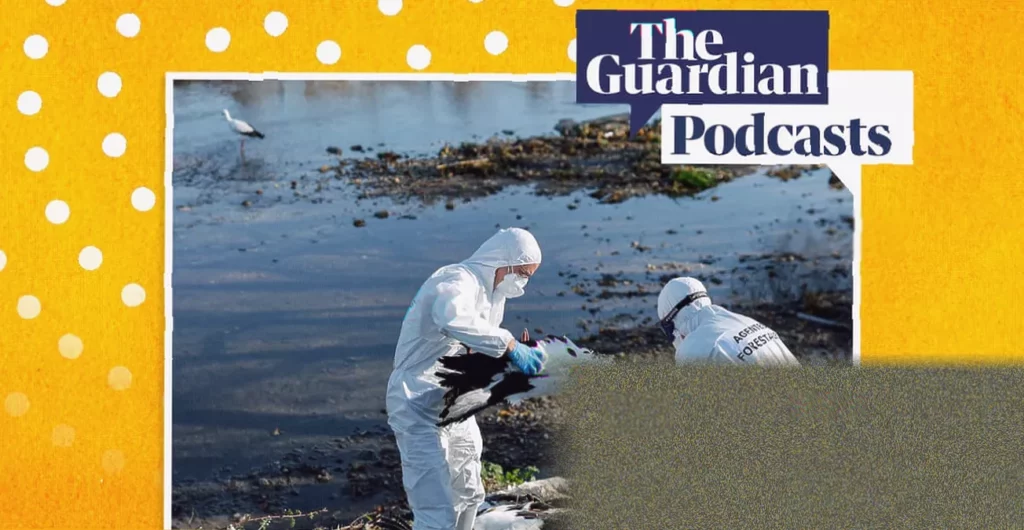
Western Australian poultry farms have been placed under lockdown after a second wild bird died from the H5N1 strain of bird flu, prompting authorities to tighten biosecurity measures amid the largest global outbreak of avian influenza ever recorded.
The latest case follows the discovery of brown skuas and giant petrels – species that rarely make landfall – in the state, a development scientists said was “bad news” for wildlife. The rare seabirds had carried the virus into a region that had previously been insulated from the worst of the outbreak, raising fears that the disease is now truly global in reach.
Lockdown in Western Australia
The lockdown applies to all commercial poultry farms in Western Australia, requiring keepers to confine birds indoors and follow strict hygiene protocols. The order came after a second wild bird tested positive for highly pathogenic avian influenza H5N1, following an earlier death that had already triggered surveillance operations. Authorities have not disclosed the species of the second bird, but the proximity to poultry farms has been deemed sufficient to impose a precautionary containment zone. The move mirrors similar housing orders that have become routine in the UK and Europe, where mandatory confinement of birds has been a cornerstone of disease control since the outbreak began in the summer of 2021.
In the UK, the outbreak started with Great Skuas dying in Scotland and escalated dramatically in the winter of 2021/22 when mass die-offs of Barnacle Geese occurred on the Solway Firth. Since then, the virus has spread to seabird colonies around the coast, causing hundreds of thousands of deaths, and has persisted beyond typical winter patterns. As of May 2026, Europe continues to report significant poultry and wild bird outbreaks, with Germany, Poland, France, the UK and Italy among the most affected countries. The UK government has established Avian Influenza Prevention Zones and disease control zones around infected premises, backed by a legal requirement to report suspected cases.
Scientists fear for wildlife
The detection of H5N1 in brown skuas and giant petrels in Western Australia highlights a worrying expansion of the virus into new ecosystems. These seabirds rarely come ashore, and their presence inland – dead or dying – signals that the disease is taking a heavy toll on remote populations. Scientists had already warned that seabirds are especially vulnerable because of their long lifespans, late breeding age and low chick-rearing rates, making population recovery extremely difficult.
Globally, a total of 78 UK bird species have tested positive for avian flu, including most breeding seabirds such as Great Skuas, Gannets, Roseate Terns and Black-headed Gulls. Birds of prey including Peregrine Falcons, Hen Harriers, Buzzards, White-tailed Eagles and Golden Eagles have also been infected. The virus has now reached the Antarctic region, and cases have been reported in mammals including foxes, otters, seals and – significantly – cattle. This ability to jump to new hosts has prompted scientists to monitor for further adaptation. A novel sub-lineage, designated EA-2024-DI.2.1, has emerged in Europe, and ongoing surveillance is focused on mammalian spillover events.
In response, a £1.5 million consortium of eight UK scientific organisations, led by the Animal and Plant Health Agency (APHA), is developing new strategies to understand virus evolution, transmission and immunity in wild birds, and to explore potential interventions such as vaccines and improved surveillance. The APHA also hosts the International Reference Laboratory for bird flu, coordinating global data sharing.
What are the risks to humans?
The most pressing question for the public is whether the current H5N1 strain poses a direct threat to human health. According to UK government and scientific assessments, human infections remain rare and typically occur only after close contact with infected birds, other animals or contaminated environments. The risk to the general public is currently assessed as very low, and there is no evidence of human-to-human transmission of the circulating H5N1 strains. However, the virus has demonstrated mutations that suggest some adaptation to mammals, including humans, and this warrants ongoing vigilance.
Symptoms in humans can range from mild – including conjunctivitis, sore throat and muscle aches – to severe pneumonia and death. Historically, about half of people infected with H5N1 have died, although more recent strains in the United States have shown a lower fatality rate. The virus can replicate at temperatures higher than a typical human fever, a characteristic that makes it potentially dangerous if it were ever to adapt efficiently to human hosts. Scientists caution that while the immediate risk is low, the sheer scale of the animal outbreak increases the opportunities for the virus to evolve.
Consumers can be reassured that properly cooked poultry and eggs are safe to eat. The bird flu virus is sensitive to heat, and standard cooking temperatures destroy it. The greatest risk of human infection comes not from eating cooked food but from handling diseased or dead birds before cooking. Public health advice in the UK – which authorities are now likely to extend to affected regions anywhere the virus appears – urges people to keep a distance from wild birds, not to touch or handle sick or dead wild birds, and to report any such findings to the relevant animal health agency. Feeding wild waterfowl, swans, geese or gulls is strongly discouraged because it encourages congregation and virus spread. Those who maintain backyard flocks or small egg-producing units are subject to the same regulations as commercial farms and must practice stringent biosecurity, including cleaning feeding stations and washing hands regularly.
The UK poultry sector has experienced numerous cases of highly pathogenic avian influenza since October 2021, with turkeys, ducks and geese particularly vulnerable. Mandatory housing measures and culling have affected supplies, raising consumer prices, especially for organic and free-range products, and complicating trade with the European Union due to export restrictions on products from birds within control zones – even when the products themselves pose no risk. Concerns have been raised about national food security if the virus continues to spread unchecked. For small-scale producers, the same rules apply: their flocks are at risk and must be managed with the same level of care.
Research is now under way to determine whether some seabird species are developing natural immunity to H5N1, which could offer a glimmer of hope for wildlife recovery. For the moment, however, the lockdown in Western Australia stands as the latest front in a pandemic that shows no sign of abating.