

UK experts are now on the ground in the Democratic Republic of Congo to combat the Ebola outbreak, as the government ramps up its response to a crisis that has spread at an unprecedented speed across the region.
The seven specialists from the UK Public Health Rapid Support Team (UK-PHRST), part of the UK Health Security Agency (UKHSA), arrived in the DRC and neighbouring countries this week. Their deployment comes as the World Health Organization declared the outbreak a Public Health Emergency of International Concern on 17 May 2026, and as the DRC government banned mass public gatherings in the capital Kinshasa and several affected provinces in an effort to contain the virus.
The current outbreak, caused by the Bundibugyo virus, has hit the DRC and Uganda hardest. As of 29 June 2026, the DRC had recorded 1,274 confirmed cases and 360 deaths. Uganda reported 20 cases and two deaths. The outbreak has spread to a fourth DRC province, Haut-Uele, after a patient travelled from Ituri province, the epicentre. Haut-Uele borders South Sudan and the Central African Republic, raising fears of further cross-border transmission. The World Health Organization has noted that this outbreak is spreading faster than any previous Ebola outbreak in Africa: it took just 37 days to reach 250 deaths, compared to 78 days during the West Africa outbreak and 130 days during the 2018–2019 outbreak.
UK deployment and financial commitment
The UK has committed up to £21 million ($26 million) to support the DRC government-led Ebola response. The funds, drawn from the Department of Health and Social Care’s Official Development Assistance budget, are intended to strengthen local capacity, protect frontline workers, and safeguard communities. The UK Health Security Agency, the government agency responsible for protecting public health against external threats, has also announced an expansion of the academic partnership underpinning the UK-PHRST, with the London School of Hygiene and Tropical Medicine leading a new multi-institutional consortium for applied research on epidemic preparedness and response.
Jenny Chapman, Minister for Africa and International Development, and Preet Kaur Gill, Health Innovation and Safety Minister, have been briefed on the deployment.
Experts’ specific roles on the ground
The deployed team brings a range of specialist expertise critical to containing the outbreak: epidemiology, risk communications and community engagement, infection prevention and control, and data modelling. Their functions are tailored to the outbreak’s geography and the needs of local and international responders.
Four of the seven specialists are based in eastern DRC, where they are supporting World Health Organization field operations in the most heavily affected areas — Ituri, North Kivu, and South Kivu. One risk communications and community engagement specialist is stationed in the WHO country office in Kinshasa, working on public messaging and building trust in affected communities. An epidemiologist has been deployed to the Republic of the Congo to provide regional support and help monitor potential spread across borders. A data modelling expert is providing remote assistance, feeding real-time analysis into the response.
Dr Edmund Newman, director of the UK Public Health Rapid Support Team at UKHSA, said: “This deployment will help strengthen the existing response to the Ebola outbreak in the DRC and across the region, with experts in epidemiology, risk communications and community engagement, infection prevention and control and data modelling now on the ground to support.”
The UK-PHRST is no stranger to the region. The team mounted ten deployments to eastern DRC during the 2018–2019 North Kivu Ebola outbreak and has carried out more than 50 deployments worldwide over the past nine years. This experience, combined with its academic partnership, is designed to ensure a rapid, evidence-based response.
Glasgow suspected case underscores global risk
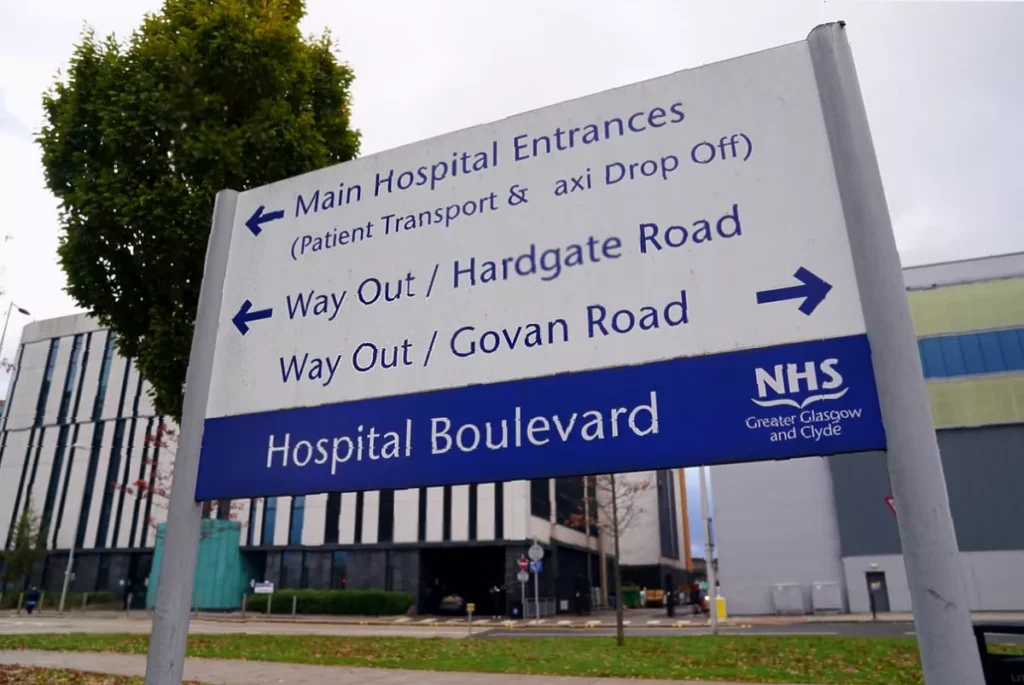
The seriousness of the outbreak was brought closer to home as a patient was admitted to the Acute Receiving Unit at Queen Elizabeth University Hospital in Glasgow in the early hours of Tuesday, 30 June 2026, and is being tested for suspected Ebola. Public Health Scotland confirmed that the patient had recently returned from overseas travel to a country affected by the ongoing outbreak and presented with symptoms. The agency stressed that there are “no confirmed cases of Ebola” in Scotland at present and that the risk to the general public in the UK is low. NHS and Public Health Scotland have protocols in place for assessing and testing travellers from Ebola-affected areas. If the case is confirmed, contact tracing will be initiated, and contacts may undergo clinical assessment and precautionary testing.
If confirmed, this would be the first Ebola case in the UK since nurse Pauline Cafferkey underwent treatment in 2016 for a recurrence of the illness she contracted while working at an Ebola Treatment Centre in Sierra Leone in 2014.
The UK Health Security Agency is working closely with Public Health Scotland and other partners to assess travel routes into the UK from affected countries and to ensure all necessary precautions are in place. The ultimate objective of the UK deployment, as Dr Newman outlined, is to strengthen the existing response on the ground in the DRC and across the region — protecting communities, supporting frontline health workers, and containing a fast-moving outbreak before it spreads further.