

Middle-aged Londoners face the same risk of dying in a heatwave as pensioners, according to a government study that has identified a striking departure from the national pattern. While across most of Britain vulnerability rises steadily with older age, the UK Health Security Agency (UKHSA) found that in the capital the danger is spread far more evenly – with those aged 45 to 65 every bit as exposed as people over 65.
Age risk in London
The research, presented by officials working for Sir Sadiq Khan to a London Assembly committee, analysed patterns of heat-related excess mortality. “Most heat-related excess deaths in England are in those aged 65+ years,” the officials noted. “Whilst heat risk is strongly correlated with older age, there is evidence that younger adults in London have a disproportionate level of risk, with Londoners aged 45–65 years having the same risk of dying during hot weather as those aged 65+ years.”
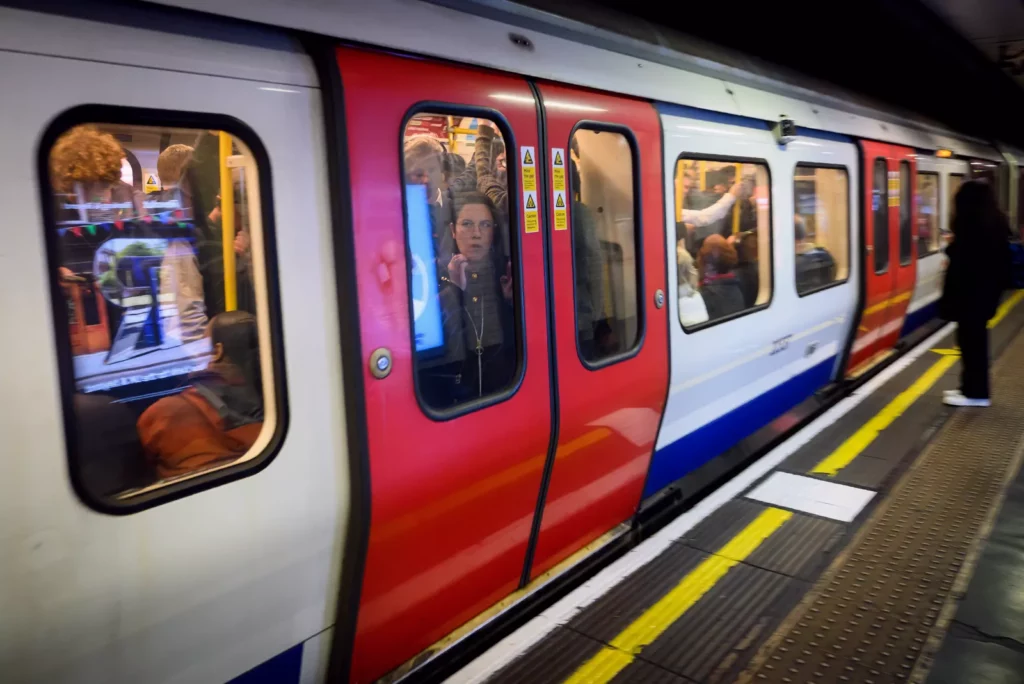
The UKHSA team behind the study said the finding appeared to be driven by a “complex combination of many factors” that make London unique. They pointed to the capital’s “unique population profile and complex migratory patterns of movement into and out” of the city across age groups. Many people, they noted, may have no choice but to travel to work on the Tube, buses or trains in very hot conditions.
Experts distinguish between two main forms of heat risk. Classic heat stroke – where the body can no longer regulate its temperature even without physical exertion – is by far the most common cause of heat-related premature death and is primarily linked to older age and existing physical and mental health conditions. Exertional heat risk occurs when internal heat produced by physical activity overwhelms the body’s cooling capacity, particularly in hot or humid conditions, and can affect even younger, otherwise healthy people.

The socioeconomic picture
The findings suggest that London’s particular vulnerability cannot be explained by age alone. Instead, the UKHSA researchers highlighted a set of socioeconomic pressures “unique to the capital” that may limit people’s ability to protect themselves. Chief among these are the high cost of living, high rates of household overcrowding, security concerns and the “necessity of income” – forcing many to keep working or commuting despite dangerous conditions.
London has the highest rate of overcrowded dwellings in England. Census figures show 11.1% of households in the capital are overcrowded, compared with just 4.3% in the West Midlands and 2.0% in the North East. More than half of Londoners live in flats or maisonettes, and 13.7% of these are overcrowded. The problem is most acute in social rented accommodation, where 19.4% of homes are overcrowded, followed by private rentals at 15%. In specific boroughs the figures are even starker: Newham (25.33%), Tower Hamlets (22.68%) and Brent (22.57%). Overcrowding has remained relatively stable in the capital over the past decade but has actually increased in social rented households.
The Greater London Authority has warned that more than a million existing homes across London may need retrofitting for heat resilience in the medium to long term. Social housing tenants are especially exposed; the GLA estimates that nearly three-quarters of social homes are at high risk of overheating.
Inequality in London is far higher than in any other UK region. More than a quarter of Londoners live in poverty – a rate significantly above the national average of 22% before the pandemic – while over 15% of residents are in the top 10% of earners nationally. The cost of living crisis is making matters worse, pushing more people into poverty and widening health inequalities. Lower-income groups spend a larger share of their income on essentials such as food and energy, which have risen faster than inflation. Poverty is linked to higher rates of anxiety, depression, diabetes and asthma. During the pandemic, the COVID-19 death rate was 30% higher in the most deprived neighbourhoods of London than in the least deprived.

The urban heat island effect adds another layer of danger. London’s built-up surfaces – roads, buildings, concrete – absorb and trap heat, making the city centre up to 10°C warmer than surrounding rural areas, especially at night. Satellite data has shown that the effect hits lower-income areas hardest: the five most deprived neighbourhoods in London were, on average, 3.3°C hotter than the five least deprived. A 2023 survey by Arup ranked London’s urban centre as the joint-fourth most extreme heat-island “hot spot” among six global cities, with temperatures 4.5°C higher than its rural surroundings. The heat is exacerbated by a shortage of shade and high building density.
Transport adds its own risks. Transport for London has warned of significant disruption to rail and Tube services during heatwaves because extreme temperatures affect infrastructure. Steel tracks can expand, leading to speed restrictions and delays; rail temperatures can be more than 20°C above air temperature. On the London Underground, heat from braking systems and electrical equipment becomes trapped in deep-level tunnels, pushing temperatures on some lines regularly above 30°C in summer. TfL has advised passengers to check travel information, carry water and allow extra time for journeys.
The UKHSA researchers acknowledged the difficulty of teasing out precise causes. “The potential complexity of contributing factors to heat risk … just demonstrates the difficulty of ensuring any interventions that are deployed are both adequately targeted and equitable,” they concluded. Given the range of factors, they said it was also hard to draw firm conclusions from the data alone.
Heatwave context
The study’s findings come as a “heat-dome” settles over western Europe, bringing what the Met Office has described as a rare red extreme heat warning for parts of England and Wales. Temperatures in London are forecast to reach 34°C on Tuesday, 39°C on Wednesday, 34°C on Thursday and 33°C on Friday, according to BBC Weather. The June record of 35.6°C – set in Hampshire in 1976 – is expected to be broken by several degrees, and the mercury could come close to the UK’s all-time high of 40.3°C, recorded in July 2022. In some parts of England and Wales, temperatures could hit 40°C.

England’s Chief Medical Officer, Professor Sir Chris Whitty, stressed the seriousness of the alert. “Extreme heat can be dangerous for young children, elderly and vulnerable people,” he posted on X. “Rehydrating and cooling can be life saving.”
Dozens of schools across the country have been forced to close, and transport bosses have warned against all but essential travel amid the red warnings. The heatwave is being intensified by climate change, with Met Office projections indicating that hot spells will become more frequent, particularly in the south-east. A plausible scenario for June 2056, based on 2.5°C of global warming, predicts peak temperatures of 45°C in England.
The London Assembly’s Planning and Regeneration Committee is investigating how overheating affects Londoners, why some homes are more vulnerable than others, and whether current planning rules and building standards are keeping pace with global warming. The committee’s inquiry is called “London is overheating – are our homes ready for rising temperatures?” Passive cooling measures such as shading and ventilation are being emphasised over air conditioning, which has far lower adoption rates in the UK than in other European countries.