


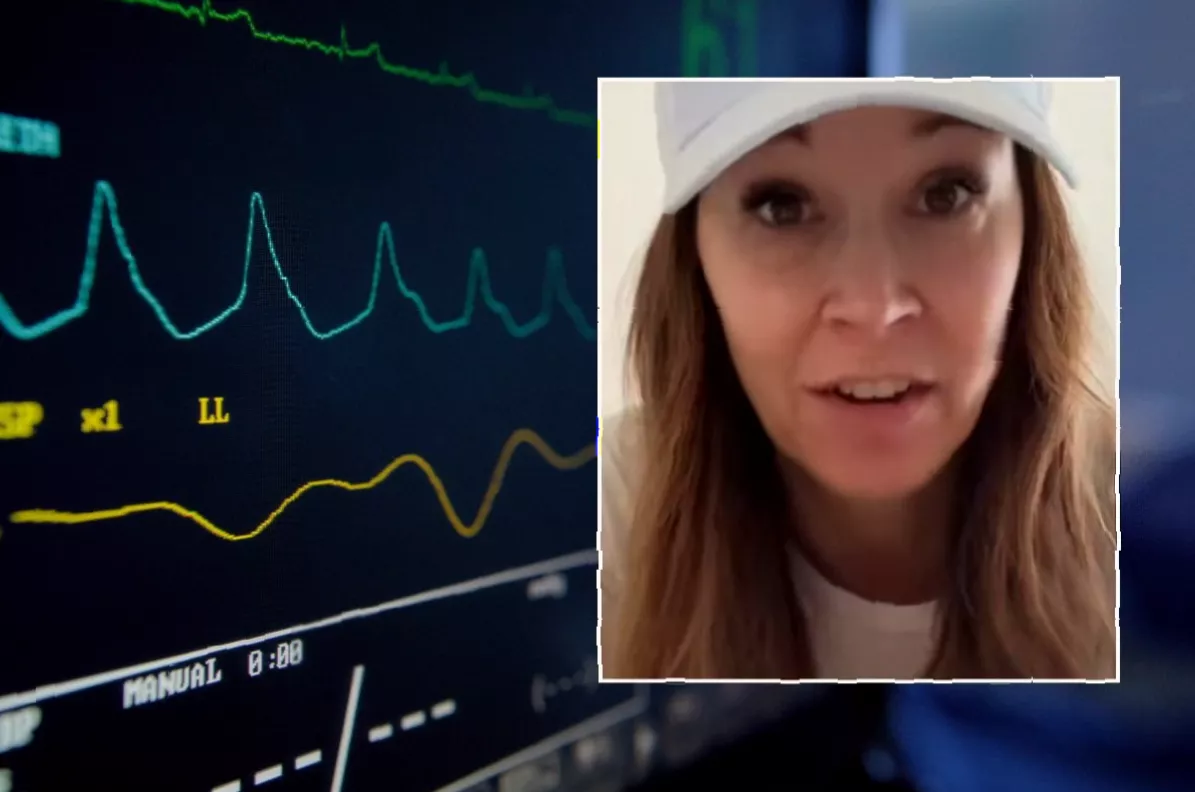
Heart attacks can occur without blocked arteries, as demonstrated by a runner’s experience. Stacey, a mother who documents her life as a running and hockey-playing parent under the handle @runninghockeymum, suffered a heart attack five years ago — not because of a vascular obstruction, but due to a sudden, temporary tightening of her coronary arteries known as a coronary artery spasm.
Stacey described the moment it happened in a TikTok video, detailing a sensation she had never felt before. “There was a tightness in my chest that I have never felt before,” she told followers. She was simply cleaning the house, changing the bedsheets, when she began to feel light-headed. The pain then radiated down her arm and, almost immediately, into her jaw. “I thought ‘that doesn’t seem right’,” she said. Alarmed, she called a friend, and the friend’s husband insisted she call 911 immediately — a suggestion she initially thought was a joke.
When the police arrived before the ambulance, an officer asked Stacey if she was sure the symptoms were not anxiety. “It was not anxiety,” she recalled. Paramedics soon arrived and hooked her up to monitors, but the readings showed nothing abnormal. Nevertheless, they gave her nitroglycerin, saying, “Why don’t you take this anyway,” and placed her in the back of the ambulance. At the hospital, she waited in the hallway while tests were run. Then the doctor came to her with startling news: “You’re actively having a heart attack.”
The attack, Stacey explained, was not caused by blocked arteries but by a coronary artery spasm — a condition that brings its own unique anxiety because it can strike again without warning. “It’s most likely to happen at rest,” she said. “I came out of it, but it was very, very scary — and it messed with my head for a long time. It doesn’t matter how fit you are. It could still happen to you, even if you take care of yourself.”
What is a coronary artery spasm?
Coronary artery spasm, also known as vasospastic angina or Prinzmetal angina, is a temporary tightening or constriction of the coronary arteries — the blood vessels that supply the heart muscle with blood and oxygen. This sudden narrowing reduces or temporarily blocks blood flow to the heart, causing chest pain (angina) and, in severe cases, a heart attack (myocardial infarction). Unlike the more familiar angina caused by plaque buildup (atherosclerosis), coronary artery spasm typically occurs at rest, often in the late night or early morning hours, and can even wake individuals from sleep. The arteries involved may appear entirely normal during diagnostic tests such as angiography, yet they do not function properly at other times.
The condition falls under the broader medical umbrella of “Ischaemia with Non-Obstructive Coronary Arteries” (INOCA). This means the heart’s arteries may be clear of significant plaque, the usual culprit in heart attacks, but still cause dangerous reductions in blood flow. According to the British Heart Foundation, a coronary artery spasm triggers chest pain by causing the artery walls to suddenly constrict — most often set off by a release of chemicals in the body, although spasms can also stem from areas of inflammation within the blood vessel wall.
Symptoms of a coronary artery spasm can include chest tightness, squeezing, pressure, or a burning sensation, often located in the centre of the chest. The pain can radiate to the neck, arms, or jaw, and some individuals may experience nausea or shortness of breath. In some cases, the condition can be asymptomatic, with episodes only detected through specific testing. Episodes can occur in “clusters,” meaning a person might experience several spasms over a short period, followed by longer stretches with no symptoms.
A number of triggers are associated with coronary artery spasm. These include high blood pressure, high cholesterol, and existing heart conditions, though many individuals have no traditional risk factors. Common triggers include smoking or tobacco use, stimulant drugs such as cocaine and amphetamines, alcohol withdrawal, exposure to cold temperatures, extreme emotional stress, hyperventilation, and even the menstrual cycle in some cases. Certain medications that cause blood vessels to narrow — such as some antimigraine drugs — can also provoke spasms, as can magnesium deficiency, migraines, and undergoing cardiac procedures like coronary angiography or stenting.
Coronary artery spasm remains a largely undiagnosed condition, according to Professor Colin Berry of the British Heart Foundation. Professor Berry, who holds a Chair in Cardiology and Imaging at the University of Glasgow and is Director of the BHF Centre of Research Excellence, has highlighted that half of patients undergoing coronary angiograms do not have blockages. Approximately 2% of people experiencing angina have coronary artery spasm, and studies suggest that at least one in three patients with angina but no blockages actually have the condition. It can affect any age but is more common in adults over 50. Some research indicates it may be more prevalent in women and younger individuals, though men still constitute the majority of patients in certain studies. There is also evidence of a higher prevalence in East Asian populations, who tend to present with diffuse and multi-vascular spasms, compared to Caucasians who more often present with focal spasms.
Diagnosis, treatment and expert advice
Diagnosing coronary artery spasm is challenging because spasms are transient, and arteries may appear normal during standard tests. The gold standard is coronary angiography with provocation testing, where a chemical such as acetylcholine is injected during the angiogram to provoke a spasm. If the artery constricts instead of relaxing, the diagnosis can be confirmed. An electrocardiogram (ECG) taken during an episode can show characteristic changes, and Holter monitoring is used for longer-term observation, particularly if fainting is a symptom. Other tests including echocardiograms and stress tests may also be employed.
Treatment aims to relieve chest pain and prevent heart attacks. Calcium channel blockers such as verapamil, diltiazem, or amlodipine are the mainstay of therapy, working by relaxing the blood vessels. Nitrates, including glyceryl trinitrate (GTN) spray or long-acting nitrates, are used for immediate relief or as a preventative measure. ACE inhibitors, statins, and ranolazine may also be prescribed to support blood vessel health or manage other conditions. Beta-blockers, however, should generally be avoided as they may worsen the condition. In rare cases where spasms are severe and persistent, procedures such as coronary angioplasty with stenting might be considered, especially if there is coexisting plaque. For those at risk of life-threatening arrhythmias, an implantable cardioverter-defibrillator (ICD) may be necessary.
Lifestyle changes are also crucial. Smoking cessation is essential, as smoking is a significant trigger. A heart-healthy diet low in sodium, added sugars, and unhealthy fats, along with moderate alcohol consumption and stress management, can help reduce the frequency of episodes. Identifying and avoiding personal triggers — such as cold weather or specific substances — is strongly recommended.
The British Heart Foundation-funded CorMicA study found that half of patients with angina and no blockages had either coronary artery spasm or microvascular angina, prompting the inclusion of spasm testing in European and American guidelines. Coronary artery spasm is now recognised under the broader terms INOCA and Myocardial Infarction with Non-Obstructive Coronary Arteries (MINOCA). In the UK, coronary heart disease is a leading cause of death, responsible for approximately 63,000 to 94,000 deaths annually. While most of these are linked to atherosclerosis, coronary artery spasm represents a significant subset of cases, particularly those with non-obstructive disease. Acute coronary syndromes account for over 150,000 hospitalisations in the UK each year.
Despite the advances in understanding, there is currently very little support for patients with coronary artery spasm. The British Heart Foundation notes that this lack of support can lead to misdiagnosis and prolonged periods of recurrent chest pain. Support networks, such as Facebook groups and the BHF’s HealthUnlocked community, are available for patients to connect and share experiences. Professor Berry has emphasised that the condition remains largely undiagnosed, and the BHF provides a helpline and online resources for those affected.
For Stacey, the psychological toll has been profound. The fear that a spasm could happen again — especially at rest, when she least expects it — has lingered for years. “It messed with my head for a long time,” she said. Her story stands as a stark reminder that heart attacks do not always announce themselves with clogged arteries, and that fitness and health are no guarantee of immunity. The condition can strike anyone, at any time, often when they are simply going about their day.