

Close Menu
    Useful
    • About Us
    • Contact Us
    • Advertise With Us
    • Health Explainers
    • Our Editorial Team
    Facebook
    HealthNewsDaily.co.uk
    • Home
      • Explainers
    • NHS

      British Medical Association may lay off up to a third of employees amid financial crisis

      4 July 2026

      GB Mums: lenient justice, NHS maternity and child abuse sentences leave children unprotected

      3 July 2026

      Advance heatwave plans needed, not last-minute fixes, Letters say

      3 July 2026

      NHS calls for PMOS checks in women with irregular periods

      1 July 2026

      Months-long neglect of four cancer signs by third of Britons blamed on GP appointment crisis

      30 June 2026
    • Health Policy

      Hospital waiting list patients to get three weeks’ advance warning under NHS England plans

      3 July 2026

      Britons back morning-after pill sales in corner shops, poll finds

      1 July 2026

      Maternity investigator Ockenden says Amos review offers no fresh insights

      30 June 2026

      Bereaved mother warns England maternity commissioner role poses danger

      30 June 2026

      Medicare to pay for weight-loss drugs soon

      30 June 2026
    • Mental Health

      Letter draws attention to parents of adult children neither employed nor studying

      3 July 2026

      England sees one million children seeking help for anxiety and autism

      29 June 2026

      Joanne McNally says bulimia and breakdown in her twenties ultimately transformed her

      27 June 2026

      Dopamine sites become internet’s most dismal craze

      27 June 2026

      Blue Heron film review: a serious, nuanced examination of childhood trauma in 1990s Canada

      25 June 2026
    • Wellness & Lifestyle

      Weight-loss drugs become new battleground after Brexit rows

      4 July 2026

      Hair transplant surgeon champions specific shampoo routine for greater volume and shine

      4 July 2026

      20-minute technique could help England fans stay awake for Mexico World Cup tie

      3 July 2026

      Doctor warns cutting back on fat could sabotage low-cholesterol diet

      3 July 2026

      NHS to cover cost of shopping for 30-minute daily walkers

      3 July 2026
    • Disease & Prevention

      South-east England forecast to reach 34C as week-long heatwave hits

      4 July 2026

      French fatalities jumped 30% during peak week of record June heatwave

      4 July 2026

      Toddler’s tantrums mistaken for typical toddler phase before grave diagnosis

      3 July 2026

      600,000 mosquitos released over Washington DC to exterminate biting pests

      2 July 2026

      Remaining seated for 30 minutes or more raises risk of cancer death

      2 July 2026
    • Treatment & Research

      Woman, 24, had 12 Botox vials injected into face for non-cosmetic reason

      4 July 2026

      Statins: the purpose and risks of cholesterol medication

      3 July 2026

      Extreme fatigue from Long Covid hampers business owner’s ability to run firm

      3 July 2026

      Five-minute habit can cut cancer risk by more than 20%

      2 July 2026

      Over-40s with obesity show cholesterol and blood pressure levels within normal BMI range, research finds

      2 July 2026
    HealthNewsDaily.co.uk
    • NHS
    • Health Policy
    • Mental Health
    • Wellness & Lifestyle
    • Disease & Prevention
    • Treatment & Research
    Home » Disease & Prevention » Hantavirus catastrophe prevented, letter writers say
    Disease & Prevention

    Hantavirus catastrophe prevented, letter writers say

    Sophie HargreavesBy Sophie Hargreaves19 June 2026
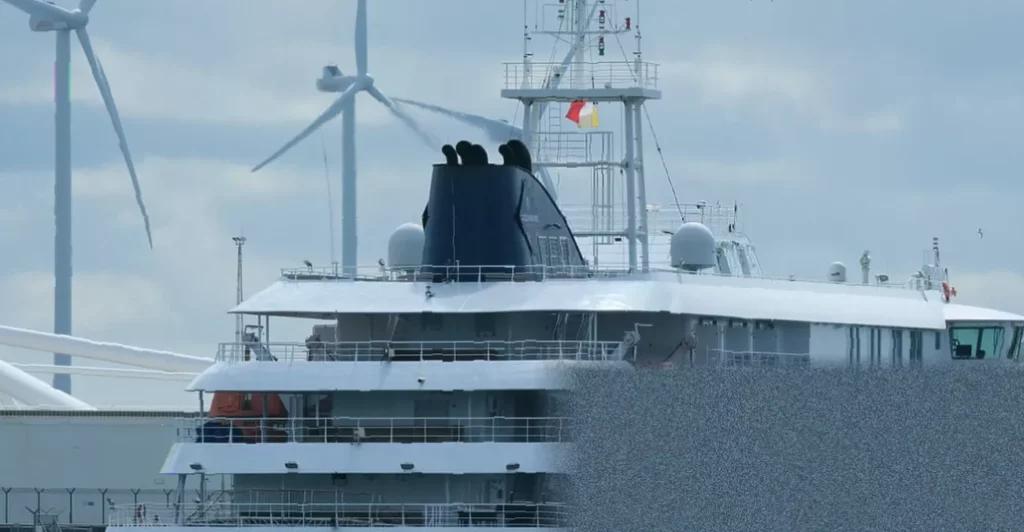
    Cruise ship MV Hondius anchored near Ascension Island after a hantavirus outbreak

    The quick thinking of a doctor on Ascension Island, supported by newly installed diagnostic equipment, averted what could have spiralled into a global hantavirus disaster. When a sick passenger from the Dutch cruise ship MV Hondius was brought ashore, the physician recognised an unusual cluster of cases and rapidly ruled out common causes using the island’s fresh diagnostic capability. This moment of clinical vigilance, as Dr Matthew Dryden, a consultant in infection for the UK Health Security Agency’s (UKHSA) UK Overseas Territories (UKOTs) programme, later explained, set in motion a chain of international collaboration that prevented the virus from spreading far beyond the vessel.

    A Global Disaster Averted

    The passenger who fell ill on Ascension Island was one of several linked to the MV Hondius, which had departed Ushuaia, Argentina, on 1 April 2026. The outbreak involved the Andes virus, the only hantavirus known to transmit between humans, typically through close and sustained contact and possibly through airborne particles. According to the World Health Organization (WHO), as of 13 May 2026 there were 11 cases – eight confirmed, one inconclusive and two probable – with three deaths (two confirmed and one probable), giving a case fatality ratio of roughly 27%. The incubation period for Hantavirus Pulmonary Syndrome ranges from one to six weeks, and can extend to eight weeks, meaning passengers who appeared healthy could have carried the virus to multiple destinations.

    The initial tragedy unfolded on board: a passenger died on 11 April and his body was disembarked at St Helena on 24 April. His wife, who accompanied the repatriation, later died in a South African hospital on 27 April, with hantavirus identified in her case. A British national became critically ill and was medically evacuated to South Africa on 27 April, requiring intensive care. A German passenger died on board on 2 May. When the ship anchored off Cape Verde from 3 May, local facilities could not manage a safe evacuation. Spain eventually allowed the MV Hondius to dock in Tenerife on 6 May, enabling medical evacuations and the disembarkation of all passengers, who were then repatriated to European nations and Canada.

    The UKHSA coordinated the return of British nationals, with some placed in isolation for 45 days in the UK. Ten Britons from St Helena and Ascension Island were relocated to the UK for precautionary self-isolation and access to specialist medical care. The US Centers for Disease Control and Prevention (CDC) repatriated 18 individuals to the National Quarantine Unit at the University of Nebraska Medical Center for monitoring.

    It was the early recognition on Ascension Island that proved decisive. The doctor used newly developed diagnostic equipment, part of the UKOTs programme funded by the Foreign, Commonwealth and Development Office (FCDO) through the Integrated Security Fund and managed by the UKHSA, to exclude common causes. Realising something unusual was at hand, a meeting was convened across continents involving the Ascension physician, the UKOT programme’s infection doctor, the ship company’s medical adviser and a colleague at the National Institute for Communicable Diseases in South Africa. That colleague tracked down samples from two patients who had been medevaced to South Africa, leading to the diagnosis of hantavirus. This breakthrough alerted the WHO and national public health organisations. As Dr Dryden noted, without that swift diagnosis, the ship would have sailed on to Cape Verde, passengers incubating the virus would have disembarked and travelled home, and the outbreak would have been far wider.

    The UKOTs programme is designed precisely for such moments. It supports health services in all UK Overseas Territories – small, vulnerable communities with very limited medical services. The programme’s recent work includes helping territories comply with International Health Regulations, strengthening emergency preparedness, and providing training in data management, surveillance and outbreak investigation. The success of this lean operation, Dr Dryden emphasised, lies in close communication and the deliberate reinforcement of local health services.

    The Unequal Frontline: Ebola in Central Africa

    The good fortune that attended the hantavirus cruise ship, however, does not extend to every outbreak. Dr Brian Jones, a correspondent from Yarcombe, Devon, drew attention to the stark contrast faced by the Batwa pygmies in Uganda and communities in the Democratic Republic of the Congo (DRC) fighting the Bundibugyo strain of Ebola virus. This variant, first identified in western Uganda in 2007, causes severe viral haemorrhagic fever with case fatality rates historically between 30% and 50%. Crucially, there is currently no approved vaccine or specific treatment for Bundibugyo ebolavirus.

    In May 2026, an epidemic of Ebola disease caused by the Bundibugyo virus in the DRC and Uganda was declared a public health emergency of international concern. As of 16 May 2026, the DRC had reported eight laboratory-confirmed cases, 246 suspected cases and 80 suspected deaths. The Batwa pygmies, an indigenous forest-dwelling people forcibly evicted from their ancestral lands, are among the most vulnerable. Their geographic isolation, discrimination and language barriers severely limit access to healthcare, leaving them acutely exposed to the virus. The outbreak has also affected their food supply because of a reduction in tourism.

    This disparity is not accidental. Research consistently shows that poverty, weak health systems and social determinants of health create conditions that foster the transmission of infectious diseases. Pandemic preparedness plans often fail to engage with disadvantaged populations, even though those groups bear a disproportionate burden. Inequality undermines national and global responses, making outbreaks more disruptive, more deadly and longer in duration, while pandemics in turn deepen existing inequalities. Unequal access to healthcare, medicines and vaccines contributes to preventable infections and increases the risk of emerging variants and resistant strains.

    Dr Jones argued that until every person worldwide has equal access to public health measures against novel infectious diseases, the entire world remains vulnerable to the next unexpected product of a system stressed by inequality and a privileged elite. The hantavirus incident was a success story of early diagnosis and international communication, but it stands in stark relief against the ongoing crisis in Central Africa, where a rare and deadly virus continues to spread among those with the least protection.

    Public Health UKHSA
    Share. Facebook Twitter LinkedIn WhatsApp Telegram
    Sophie Hargreaves
    Sophie Hargreaves

    Health Correspondent
    Sophie Hargreaves covers medical research, new treatments, disease outbreaks and prevention for Health News Daily. She holds a Master's degree in Health Sciences from the University of Leeds and has spent several years translating complex medical science into clear, accessible reporting for a general audience. Sophie focuses on the latest clinical trials, NICE and MHRA approvals, vaccination programmes and emerging health threats, always with an eye on what these developments mean for people in the UK.
    · MSc Health Sciences (University of Leeds), science communication volunteer, medical research literacy
    · Clinical trials and drug approvals (NICE, MHRA), cancer screening programmes, vaccination and outbreak response, women's health (endometriosis, PCOS, menopause), weight management treatments, AI in diagnostics

    Related Posts

    Disease & Prevention

    South-east England forecast to reach 34C as week-long heatwave hits

    4 July 2026
    Disease & Prevention

    French fatalities jumped 30% during peak week of record June heatwave

    4 July 2026
    Disease & Prevention

    Toddler’s tantrums mistaken for typical toddler phase before grave diagnosis

    3 July 2026
    Disease & Prevention

    600,000 mosquitos released over Washington DC to exterminate biting pests

    2 July 2026
    Join Our Community & Win

    Each month we select one lucky follower to receive a prize from our partners. Follow us on our social channels for your chance to win.

    • Facebook
    Latest
    Disease & Prevention

    South-east England forecast to reach 34C as week-long heatwave hits

    4 July 2026
    Treatment & Research

    Woman, 24, had 12 Botox vials injected into face for non-cosmetic reason

    4 July 2026
    NHS

    British Medical Association may lay off up to a third of employees amid financial crisis

    4 July 2026
    Wellness & Lifestyle

    Weight-loss drugs become new battleground after Brexit rows

    4 July 2026
    Wellness & Lifestyle

    Hair transplant surgeon champions specific shampoo routine for greater volume and shine

    4 July 2026
    Disease & Prevention

    French fatalities jumped 30% during peak week of record June heatwave

    4 July 2026
    News Categories
    • NHS
    • Health Policy
    • Mental Health
    • Wellness & Lifestyle
    • Disease & Prevention
    • Treatment & Research
    Help
    • About Us
    • Contact Us
    • Advertise With Us
    • Health Explainers
    • Our Editorial Team
    About Us
    About Us

    Health News Daily provides trusted UK health news, covering NHS updates, medical research, public health and wellbeing with clear and reliable reporting.

    Facebook
    • Cookie Policy
    • Privacy Policy
    • Complaints Policy
    • Corrections Policy
    • AI Disclosure Policy
    • Editorial Policy & Ethics
    • Accessibility Statement
    • Medical Disclaimer
    • Terms & Conditions
    • Sponsored Content Disclosure
    • Copyright Notice
    © 2026 Healthnewsdaily.co.uk. All rights reserved.

    Type above and press Enter to search. Press Esc to cancel.