

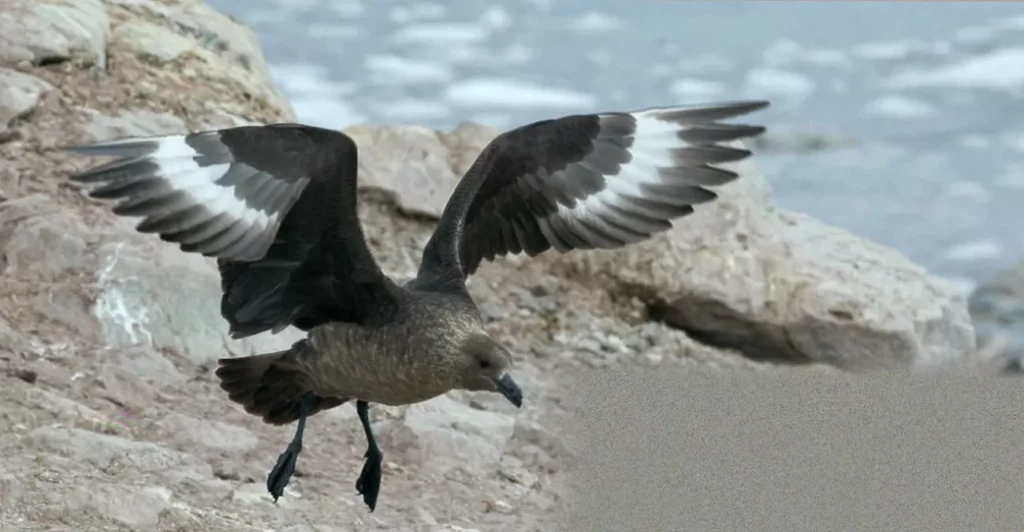
Australia is no longer free of the deadly H5 bird flu. The federal agriculture minister, Julie Collins, confirmed this weekend that a brown skua found sick in Western Australia has died from the H5N1 strain, ending the continent’s status as the only landmass on Earth to have escaped the virus.
Confirmation of the first case
The infected bird, a brown skua (Stercorarius antarcticus), was discovered sick on 14 June 2026 in Cape Le Grand National Park near Esperance. It died shortly afterwards. The CSIRO’s Australian Centre for Disease Preparedness conducted initial tests and returned a positive result for highly pathogenic H5N1. A second bird, a giant petrel found in the same vicinity, has also tested positive and is undergoing final confirmation, according to Minister Collins.
The arrival on the mainland follows the detection of H5N1 in late 2025 on Heard Island, an Australian sub-Antarctic territory roughly 4,000 km south-west of Perth. That outbreak caused significant mortality among southern elephant seal pups and king penguins. Experts had long considered a mainland incursion inevitable given the virus’s relentless global spread.
Global context: a panzootic virus
The H5N1 strain, belonging to clade 2.3.4.4b, is described as a panzootic — meaning it has swept across multiple continents and affected an extraordinary range of species. Since it began its global march in 2021, the virus has killed millions of birds and tens of thousands of mammals worldwide. It has now been recorded in more than 560 wild bird species and over 100 mammal species.
Originating in Asia, H5N1 spread to Europe, the Americas and eventually Antarctica, where it arrived during the 2023–24 summer. Migratory bird flyways carried it from Heard Island to the Australian mainland. The virus is highly pathogenic: it causes severe, often fatal disease in birds and is highly contagious in poultry flocks. Globally, agricultural industries have been forced to cull hundreds of millions of birds in a bid to contain outbreaks.
Implications for Australia’s wildlife and agriculture
Australia’s unique wildlife is considered particularly vulnerable. Overseas, H5N1 has caused mass mortalities among waterfowl, shorebirds, seabirds, predatory birds, seals and sea lions. Conservationists fear that, without effective intervention, the virus could precipitate a wildlife disaster on the scale of the Black Summer bushfires.
One species of acute concern is the endangered Australian sea lion, whose population numbers only about 12,000. Given that H5N1 has already decimated colonies of seals and sea lions in South America — where the virus even evolved to spread between mammals — the arrival on Australian shores raises the possibility of local extinctions among vulnerable marine mammals. Brown skuas and giant petrels, both opportunistic feeders, are known to scavenge on seal carcasses, creating a potential transmission pathway from infected marine mammals to birds and back.
The giant petrel found near the skua is likely the Southern Giant Petrel (Macronectes giganteus), a species listed as endangered in New South Wales and at the Commonwealth level. Its Australian population has already decreased significantly. The Northern Giant Petrel (Macronectes halli) also overlaps in range, and both species nest on Antarctic and sub-Antarctic islands, including Heard Island.
In the agricultural sector, there is currently no evidence of infection in Australia’s poultry or commercial egg-laying farms. However, backyard and free-range flocks are considered most at risk because they are exposed to wild birds. Australia has experienced seven outbreaks of highly pathogenic avian influenza in poultry since 1976, all involving H7 strains rather than H5N1, and all were successfully contained and eradicated. The arrival of H5N1 — which has devastated poultry industries overseas — presents a far greater challenge because of its persistence in wild bird populations.
Human health risk and government response
The risk to the general public in Australia remains low, according to health authorities. Bird flu infections in people are rare and almost always result from direct contact with infected poultry or, in the United States, dairy cattle. Human-to-human transmission is extremely rare. Nonetheless, the increasing number of infections in mammals and people globally has raised concern that the virus could evolve to spread more easily among humans. Between 2003 and early 2026, the World Health Organization recorded 997 reported human H5 infections across 25 countries, with 478 fatalities. Australia reported its first human case in 2024 — a child who acquired the infection overseas and subsequently recovered.
The Australian Government has invested more than $113 million to strengthen national preparedness for H5 bird flu. A dedicated taskforce, established in 2024, is jointly led by the Departments of Agriculture, Fisheries and Forestry; Climate Change, Energy, the Environment and Water; the Australian Centre for Disease Control; and the National Emergency Management Agency. National simulation exercises have been held since 2024. In response to the mainland detection, a nationally coordinated effort is under way to determine the extent of the outbreak in wildlife.
Authorities are urging members of the public not to touch or approach sick or dead birds, and to report any such findings to the Emergency Animal Disease Hotline on 1800 675 888. The brown skua, a migratory seabird that breeds on sub-Antarctic islands and migrates to Antarctic waters, may have carried the virus northwards as it moved to warmer waters during the austral winter. Its opportunistic feeding habits — including scavenging and stealing food from other birds — make it an effective vector for the disease. The giant petrel, a circumpolar scavenger, further increases the risk of sustained transmission within Australia’s seabird and marine mammal populations.