

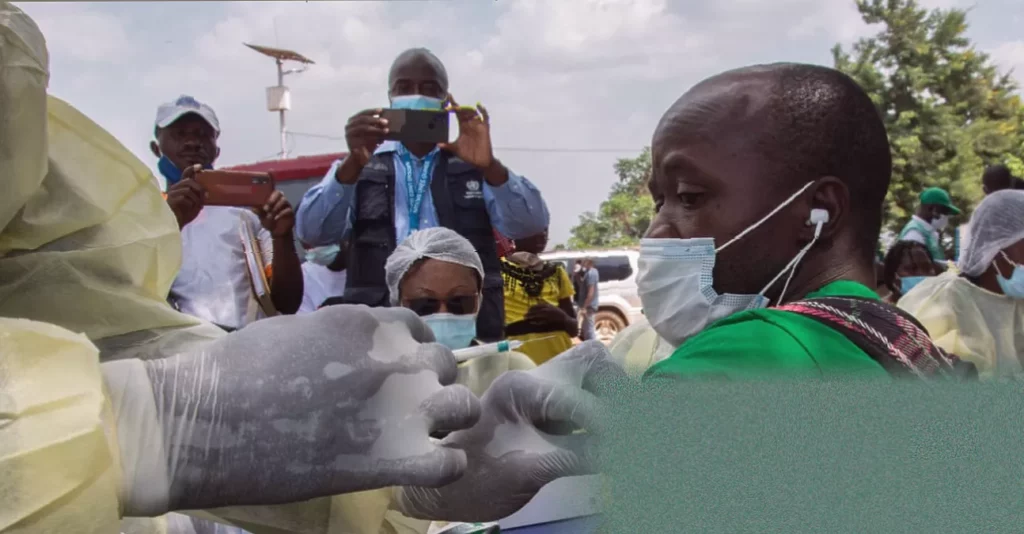
Three vaccine developers have been awarded $60m (£45m) in emergency funding as scientists race to contain the largest documented outbreak of the Bundibugyo strain of Ebola, which is spreading across the Democratic Republic of the Congo and into Uganda. The Coalition for Epidemic Preparedness Innovations (CEPI) announced the grants on Monday, backing candidates from Moderna, the University of Oxford (manufactured by the Serum Institute of India) and the International AIDS Vaccine Initiative (IAVI). No licensed vaccine or specific treatment currently exists for the Bundibugyo strain, and the existing Ebola vaccine, Ervebo, targets the Zaire strain and is not expected to protect against this virus.
Security crisis hampers response in eastern DRC
The affected region in the DRC, particularly Ituri province, is in the grip of a multifaceted security crisis that has severely complicated efforts to set up drug trials and deliver care. Active militias and armed groups operate across the area, and some Ebola treatment centres have been attacked, fuelling fear and discouraging local residents from seeking medical help. The conflict, which has displaced tens of thousands of people — nearly one million in Ituri province alone — has created overcrowded camps where infectious diseases thrive and contact tracing becomes almost impossible. Studies cited by responders indicate that violent events are significantly associated with an increased risk of Ebola virus cases, with effects persisting for weeks afterwards, as biosecurity, safe burials and vaccination efforts are disrupted.
Community distrust is widespread, with some local beliefs that the outbreak is fabricated or politically motivated, leading to resistance and occasional attacks on response teams. The World Health Organization (WHO), which has declared the outbreak a public health emergency of international concern, has warned that only about 45 per cent of contacts are being followed up — far below the threshold of over 90 per cent needed to contain the virus. The high level of cross-border movement between the DRC, Uganda and South Sudan, often through informal routes, further heightens the risk of transmission. Decades of conflict have also weakened already fragile health systems, and funding cuts have worsened the situation, leaving the region ill-equipped to handle a new outbreak.
Researcher teams have said they are ready to begin clinical trials as soon as conditions allow. “Every day counts in the race against this deadly disease,” said Dr Richard Hatchett, chief executive of CEPI.
Vaccine development: three platforms, differing timelines
The emergency funding aims to accelerate vaccine candidates that target the Bundibugyo strain directly. Moderna received the largest award, up to $50m, to advance its mRNA-based vaccine candidate, leveraging the same technology used for its Covid-19 vaccine. The funding supports preclinical development, Phase 1 clinical testing and manufacturing. The University of Oxford and the Serum Institute of India were awarded up to $8.6m for a candidate based on the ChAdOx1 viral vector platform, which was also used for the Oxford/AstraZeneca Covid-19 vaccine. This candidate could be ready for clinical trials within two to three months, although further animal data is still required. IAVI received up to $3.2m for a recombinant vesicular stomatitis virus (rVSV)-based vaccine, the same platform used in an approved vaccine against the Zaire strain. The WHO has described IAVI’s single-dose candidate as the “most promising”, but it is expected to take seven to nine months before clinical trials can assess its efficacy.
Gavi, the Vaccine Alliance, has committed up to $50m to support the response, including $40m to accelerate vaccine access through mechanisms such as Advance Purchase Commitments and $10m for outbreak response and routine immunisation services. The Pandemic Fund has announced up to $220.6m in grants to address critical gaps in the response.
Treatments and prevention under investigation
Beyond vaccines, scientists are working on treatments and prophylactics specifically for the Bundibugyo strain. WHO-convened experts have recommended prioritising three candidate therapeutics for clinical trials: the monoclonal antibodies MBP134 and maftivimab (the latter is a component of Regeneron’s Inmazeb, which is approved for Zaire ebolavirus and has shown broad activity against Bundibugyo in laboratory studies); the antiviral remdesivir; and a combination of a monoclonal antibody and remdesivir. For post-exposure prophylaxis among contacts of confirmed cases, the oral antiviral obeldesivir is a priority candidate, though its effectiveness depends on robust contact tracing, which remains a major challenge in the affected areas. In monkey studies, obeldesivir showed up to 100 per cent protection when given daily for ten days within 24 hours of exposure.
Existing treatments for the Zaire strain of Ebola — such as Inmazeb and Ebanga — are not assumed to be effective against the Bundibugyo virus. The WHO Director-General, Tedros Adhanom Ghebreyesus, has also called for the lifting of blanket travel restrictions imposed by some countries, including the United States, arguing that they disrupt supply chains and hinder the overall response.