

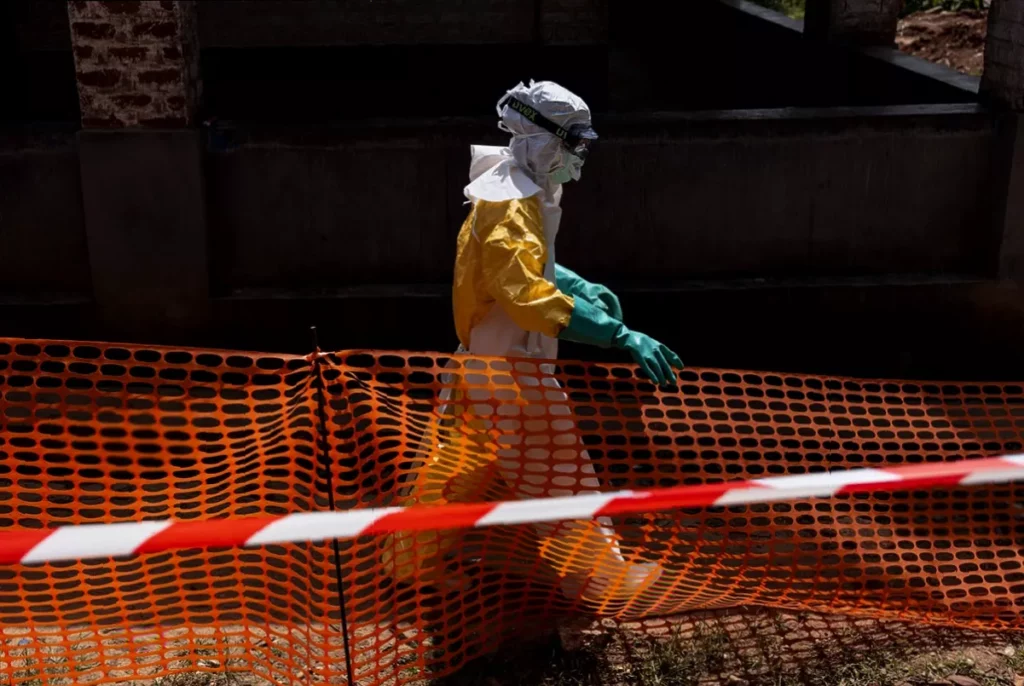
The United States, Mexico and Canada have announced a coordinated package of public health travel measures aimed at the highest-risk Ebola zones, marking the first time the three World Cup co-hosts have united on border restrictions ahead of next month’s tournament.
In a joint statement, the three governments affirmed that “the health and safety of every person in the region remains our highest priority as we welcome the world to North America”. The statement did not, however, set out the specific aligned measures that each nation would pursue, leaving individual capitals to detail their own restrictions.
The announcement follows the World Health Organization’s declaration on 17 May that the Ebola outbreak in the Democratic Republic of the Congo and Uganda constitutes a Public Health Emergency of International Concern. The WHO has warned of a high risk of the disease spreading to neighbouring countries, though it has not recommended any ban on international travel or trade. The organisation has instead advised affected countries to conduct exit screening of all persons at international airports, seaports and major land crossings for unexplained febrile illness consistent with potential Ebola infection.
United States: expanded entry ban and rerouted screenings
Washington last week imposed a ban on non-citizens who had recently travelled to the DRC, Uganda or South Sudan. That ban was subsequently extended by the US Centers for Disease Control and Prevention to include green card holders who have been in those countries within the previous 21 days. The CDC temporarily removed the lawful permanent resident exception from its public health entry ban regulation, a rule revision that took effect on 22 May and is scheduled to expire on 27 November unless terminated earlier.
The CDC and the Department of Homeland Security have also announced enhanced travel screening and entry restrictions. Affected air passengers from the DRC, South Sudan and Uganda will have their travel rerouted to one of four designated international airports — Washington-Dulles, Atlanta Hartsfield-Jackson, George Bush Intercontinental in Houston, and John F. Kennedy in New York — for health screenings.
The original article also noted that the Trump administration reportedly intended to send US citizens exposed to the Ebola virus to Kenya for observation and quarantine, with plans to provide treatment there.
Canada: 90-day resident ban and mandatory quarantine
Canada has implemented a 90-day ban on residents from the DRC, Uganda and South Sudan, which commenced on Wednesday, 27 May. Even those with previously approved temporary resident visas, electronic travel authorisations or permanent resident visas will not be allowed to travel to Canada during this period.
Canadian citizens, permanent residents and other foreign nationals who have visited affected areas in recent weeks and are asymptomatic will be required to quarantine for 21 days from 30 May, according to Canada’s public health agency. Those who do not have a safe place to quarantine will be provided with an appropriate location, while travellers with symptoms will be isolated at a hospital for further assessment.
The Canadian government is also suspending immigration documents for residents of the DRC, Uganda and South Sudan for 90 days from 27 May, and pausing final decisions on their applications during that period.
Mexico: airport screening and quarantine recommendation
Mexico’s Health Secretary David Kershenobich outlined tighter Ebola screening measures at airports on Monday, 25 May. Officials are reinforcing prevention efforts and monitoring protocols at points of entry, though no formal travel bans have been enacted. Citizens living in impacted regions are permitted to return to Mexico without constraints.
Mexico has issued an Ebola-based travel advisory urging travellers to exercise epidemiological vigilance and caution, particularly for those intending to travel to the DRC and Uganda. The government is also urging arrivals from the DRC to observe a 21-day quarantine period. Authorities state that no Ebola cases have been detected in the country and that the risk of transmission remains “very low”.
World Cup context
The first match of the 2026 FIFA World Cup is scheduled for 11 June between Mexico and South Africa at the Azteca Stadium in Mexico City. Mauricio Pochettino’s US team will begin their campaign against Paraguay on 12 June, while Canada are set to play Bosnia and Herzegovina on the same date. The tournament, the first to feature 48 teams, runs until the final on 19 July at MetLife Stadium in East Rutherford, New Jersey. The three host nations — Canada, Mexico and the United States — have automatically qualified.
Currently, the WHO considers the risk of Ebola transmission during air travel to be low, as the virus requires direct contact with bodily fluids of an infected person. The International Health Regulations emphasise avoiding “unnecessary interference with international traffic and trade”, and the WHO has noted that during the 2013-16 West Africa epidemic countries showed variable adoption of its international travel recommendations, with some exceeding or disregarding them.