

Close Menu
    Useful
    • About Us
    • Contact Us
    • Advertise With Us
    • Health Explainers
    • Our Editorial Team
    Facebook
    HealthNewsDaily.co.uk
    • Home
    • NHS

      Patient spends £62,851 on height increase surgery to 6ft despite agonising and potentially fatal side effects

      3 June 2026

      Four in five frail pensioners missing essential NHS checks due to regional disparities

      3 June 2026

      Critical care patients at King’s College Hospital given new rooftop garden

      31 May 2026

      Resident doctors in England plan four-day June walkout

      27 May 2026

      New surgical assistant caught off guard by relaxed atmosphere in operating theatre

      25 May 2026
    • Health Policy

      Government stops short of promising no further aid cuts in letter to parliamentary committee

      3 June 2026

      Anti-abortion activists in NSW signal push to further restrict abortion access

      3 June 2026

      Health officials urged to probe fatalities connected with illicit diet injections

      3 June 2026

      Trial overhaul to provide prostate cancer screening for black men

      2 June 2026

      Asda and Amazon recall children’s sand kits over asbestos risk

      1 June 2026
    • Mental Health

      Federal workers suffer trauma after Trump administration’s unlawful sackings

      3 June 2026

      2026’s monk mode: manosphere trick or imperative

      2 June 2026

      Husband’s rare condition leaves him unable to produce sperm

      31 May 2026

      Diagnosis halted monthly rage attacks that had been tearing my family apart

      31 May 2026

      Nottingham killer’s mother says family tried to get help before triple murder

      29 May 2026
    • Wellness & Lifestyle

      Tenth of employees forgoing meals to afford fuel

      3 June 2026

      Disturbing statistic could bring social media scrolling to a halt

      3 June 2026

      GP stocks five freezer staples to extend life

      2 June 2026

      Doctor pinpoints triggers for after-lunch tiredness and remedies

      2 June 2026

      Peril in dismissing wellness influencers while doctors remain unsure, warns Ranjana Srivastava

      2 June 2026
    • Disease & Prevention

      Major US Covid vaccine probe to hear from two UK doctors

      3 June 2026

      At 27 weeks pregnant, mother began chemotherapy and insists she never surrendered

      3 June 2026

      GLP-1 drug use linked to 30% lower breast cancer risk in women

      2 June 2026

      Cause of twin’s sudden 3st weight gain emerged post-mortem

      2 June 2026

      South West Water hit with £1.85m fine for Devon parasite outbreak

      2 June 2026
    • Treatment & Research

      Poor sleep quality tied to feeling older than one’s actual age

      3 June 2026

      Drug allows bladder cancer patients to avoid surgery, doctors say

      2 June 2026

      Melanoma recurrence could be cut by new vaccine and drug combination

      1 June 2026

      Devi Sridhar: Cancer brings promise, trouble, horror and hope

      1 June 2026

      MHRA seizes 12,000 unlicensed weight-loss medicines in biggest operation to date

      1 June 2026
    HealthNewsDaily.co.uk
    • NHS
    • Health Policy
    • Mental Health
    • Wellness & Lifestyle
    • Disease & Prevention
    • Treatment & Research
    Home » Disease & Prevention » Doctor outlines key skin cancer sign as UK diagnoses hit 20,000 for first time
    Disease & Prevention

    Doctor outlines key skin cancer sign as UK diagnoses hit 20,000 for first time

    Sophie HargreavesBy Sophie Hargreaves27 May 2026
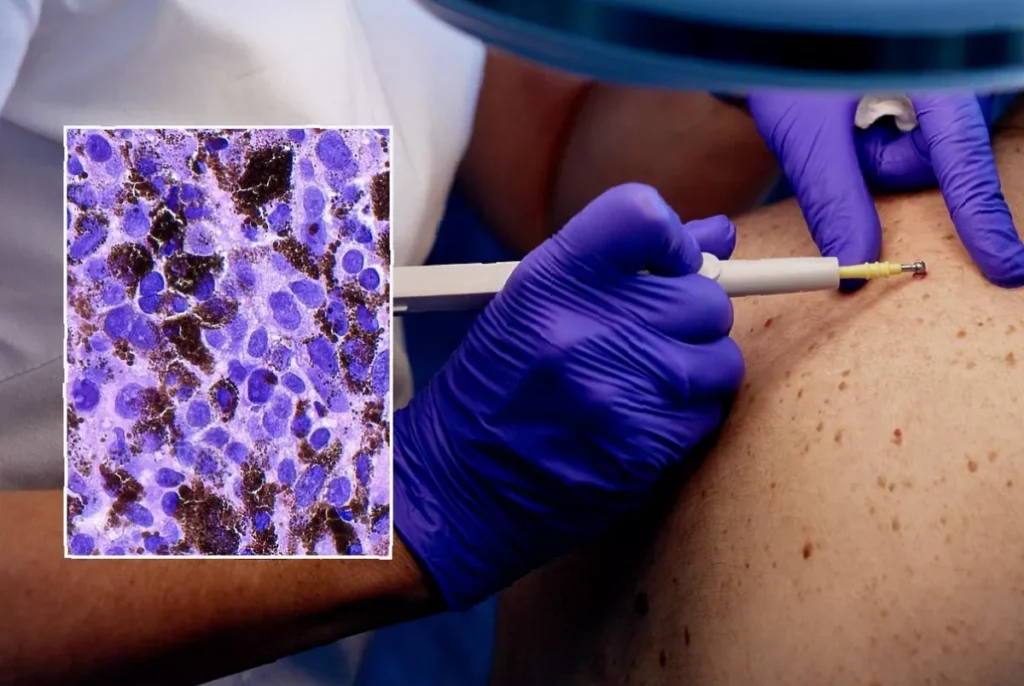
    Consultant examining a patient’s skin with a dermatoscope in a UK clinic.

    Melanoma diagnoses in the UK have hit a record high, with 20,980 people receiving a diagnosis of the most serious form of skin cancer in 2022 – the first time the annual figure has surpassed 20,000, according to analysis by Cancer Research UK.

    The charity projects that by 2040 the number could rise to 26,500 cases per year, representing increases of 23 per cent among men and 26 per cent among women. Incidence rates have soared by more than two and a half times (164 per cent) since the early 1990s and by approximately 26 per cent in the last decade alone.

    Melanoma now ranks as the fifth most common cancer in Britain and the most common cancer worldwide. Around 2,600 deaths from melanoma occur annually in the UK, with mortality rates having increased significantly since the 1970s, particularly for men.

    Why cases are rising – and how to prevent them

    Cancer Research UK attributes the rising number of diagnoses largely to Britain’s expanding and ageing population. Michelle Mitchell, the charity’s chief executive, said: “The fact that most of these cases are preventable underlines the importance of people taking sun safety seriously.”

    Approximately nine out of ten UK melanoma cases are linked to excessive exposure to ultraviolet (UV) radiation from sunlight or sunbeds. Intermittent, high-intensity sun exposure – such as during holidays – is more strongly linked to melanoma than chronic exposure. Experiencing five or more sunburns doubles an individual’s risk, and research shows that getting sunburned just once every two years can triple the risk of developing skin cancer. Sunbed use also significantly increases risk, especially for those who start before the age of 35.

    Climate change is also playing a role, with hotter summers increasing outdoor activity and UV exposure. For every 1 per cent decrease in ozone concentration, melanoma incidence could rise by 1 to 2 per cent.

    The UK Health Security Agency and the Met Office have issued heat health alerts across England, signalling conditions that may pose risks to vulnerable individuals. Prof Peter Johnson, national clinical director for cancer at NHS England, said: “Melanoma skin cancer is one of the most preventable cancers and these figures are a stark reminder of the importance of staying safe in the sun.” He added: “With sunny weather forecast this bank holiday, we want people to enjoy the sunshine sensibly by using high-factor sunscreen, covering up and seeking shade, especially during the hottest parts of the day.”

    Health experts recommend seeking shade between 11am and 3pm, covering shoulders and wearing hats and sunglasses, and applying sunscreen with at least SPF 30 and four or five stars. Sun damage can occur even on cooler or overcast days, as UV rays penetrate clouds, warned Fiona Osgun, head of health information at Cancer Research UK. An estimated 86 per cent of melanoma cases are preventable.

    Spotting the signs: the ABCDE method

    Early detection is critical for survival, yet early melanoma symptoms are often subtle and can be mistaken for harmless skin changes, according to Dr Ayesha Bryant, clinical advisor at Alpas Wellness.

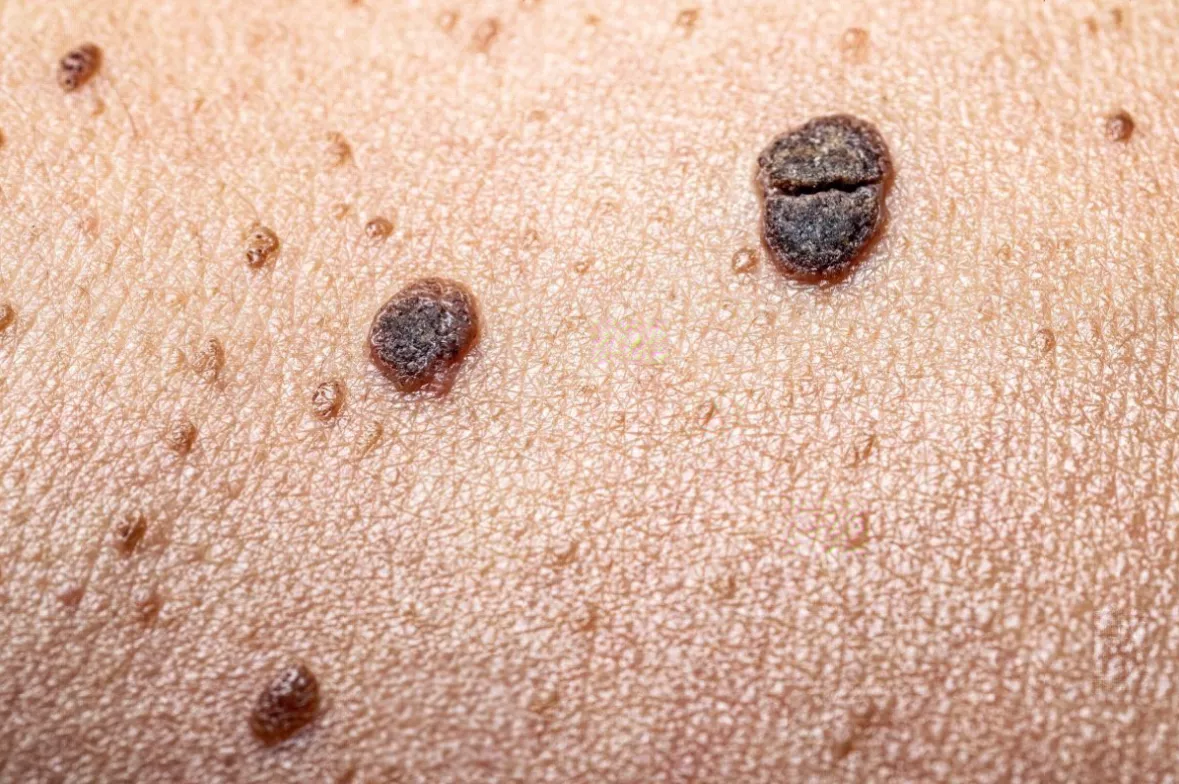
    Medical professionals recommend the ABCDE method for checking moles and skin spots. Each letter stands for a warning sign:

    A – Asymmetry. One half of the mole does not match the other half.

    B – Border. The edges are irregular, ragged, or blurred rather than smooth and even.
    Sunbathers on a British beach during a summer heatwave.

    C – Colour. The colour is not uniform across the mole. It may contain shades of brown, black, pink, red, or white.

    D – Diameter. The spot is larger than roughly 6mm across – about the size of a pencil eraser.

    E – Evolving. The mole is changing in size, shape, or colour over weeks or months.

    Dr Bryant cautioned that not all melanomas display dark pigmentation. Amelanotic varieties may present as red, pink, or match the surrounding skin tone, which can delay detection.

    She urged people to examine often-overlooked areas: “Self-examinations should include the scalp, the spaces between toes, and beneath fingernails.”

    Research shows that melanoma distribution differs by sex. Around four in ten cases among men develop on the torso – the back, chest and stomach – while approximately 35 per cent of female cases appear on the lower limbs.

    Individuals with fair skin, light hair, blue or green eyes, or who burn easily are at higher risk. People with 100 or more common moles, large or unusually shaped moles, or a family history of melanoma should also be vigilant. Reduced immunity and certain workplace chemicals are additional risk factors.

    Dr Bryant stressed that early-stage melanoma generally presents without pain. “You shouldn’t wait for pain to seek medical evaluation. Early diagnosis offers better treatment options,” she said.

    Fiona Osgun added: “Sunburn is a clear sign your skin has been damaged. Whether you are enjoying being outside abroad or at home, it’s important to protect yourself from the sun.”

    Michelle Mitchell urged anyone noticing unusual skin changes – such as a new mole, an existing mole that changes, or a sore that does not heal – to contact their GP promptly. Survival rates for early-stage melanoma are extremely high: for Stage 1, nearly 100 per cent of patients survive for five years or more, and overall ten-year survival rates now exceed 9 in 10.

    Ageing Cancer NHS England
    Share. Facebook Twitter LinkedIn WhatsApp Telegram
    Sophie Hargreaves
    Sophie Hargreaves

    Health Correspondent
    Sophie Hargreaves covers medical research, new treatments, disease outbreaks and prevention for Health News Daily. She holds a Master's degree in Health Sciences from the University of Leeds and has spent several years translating complex medical science into clear, accessible reporting for a general audience. Sophie focuses on the latest clinical trials, NICE and MHRA approvals, vaccination programmes and emerging health threats, always with an eye on what these developments mean for people in the UK.
    · MSc Health Sciences (University of Leeds), science communication volunteer, medical research literacy
    · Clinical trials and drug approvals (NICE, MHRA), cancer screening programmes, vaccination and outbreak response, women's health (endometriosis, PCOS, menopause), weight management treatments, AI in diagnostics

    Related Posts

    Disease & Prevention

    Major US Covid vaccine probe to hear from two UK doctors

    3 June 2026
    Disease & Prevention

    At 27 weeks pregnant, mother began chemotherapy and insists she never surrendered

    3 June 2026
    Disease & Prevention

    GLP-1 drug use linked to 30% lower breast cancer risk in women

    2 June 2026
    Disease & Prevention

    Cause of twin’s sudden 3st weight gain emerged post-mortem

    2 June 2026
    Join Our Community & Win

    Each month we select one lucky follower to receive a prize from our partners. Follow us on our social channels for your chance to win.

    • Facebook
    Latest
    Wellness & Lifestyle

    Tenth of employees forgoing meals to afford fuel

    3 June 2026
    Health Policy

    Government stops short of promising no further aid cuts in letter to parliamentary committee

    3 June 2026
    NHS

    Patient spends £62,851 on height increase surgery to 6ft despite agonising and potentially fatal side effects

    3 June 2026
    Health Policy

    Anti-abortion activists in NSW signal push to further restrict abortion access

    3 June 2026
    Disease & Prevention

    Major US Covid vaccine probe to hear from two UK doctors

    3 June 2026
    Health Policy

    Health officials urged to probe fatalities connected with illicit diet injections

    3 June 2026
    News Categories
    • NHS
    • Health Policy
    • Mental Health
    • Wellness & Lifestyle
    • Disease & Prevention
    • Treatment & Research
    Help
    • About Us
    • Contact Us
    • Advertise With Us
    • Health Explainers
    • Our Editorial Team
    About Us
    About Us

    Health News Daily provides trusted UK health news, covering NHS updates, medical research, public health and wellbeing with clear and reliable reporting.

    Facebook
    • Cookie Policy
    • Privacy Policy
    • Complaints Policy
    • Corrections Policy
    • AI Disclosure Policy
    • Editorial Policy & Ethics
    • Accessibility Statement
    • Medical Disclaimer
    • Terms & Conditions
    • Sponsored Content Disclosure
    • Copyright Notice
    © 2026 Healthnewsdaily.co.uk. All rights reserved.

    Type above and press Enter to search. Press Esc to cancel.